Farm Newsletter
Week #1; Weekly & EOW/green members
- On: May 25, 2022
 1
1
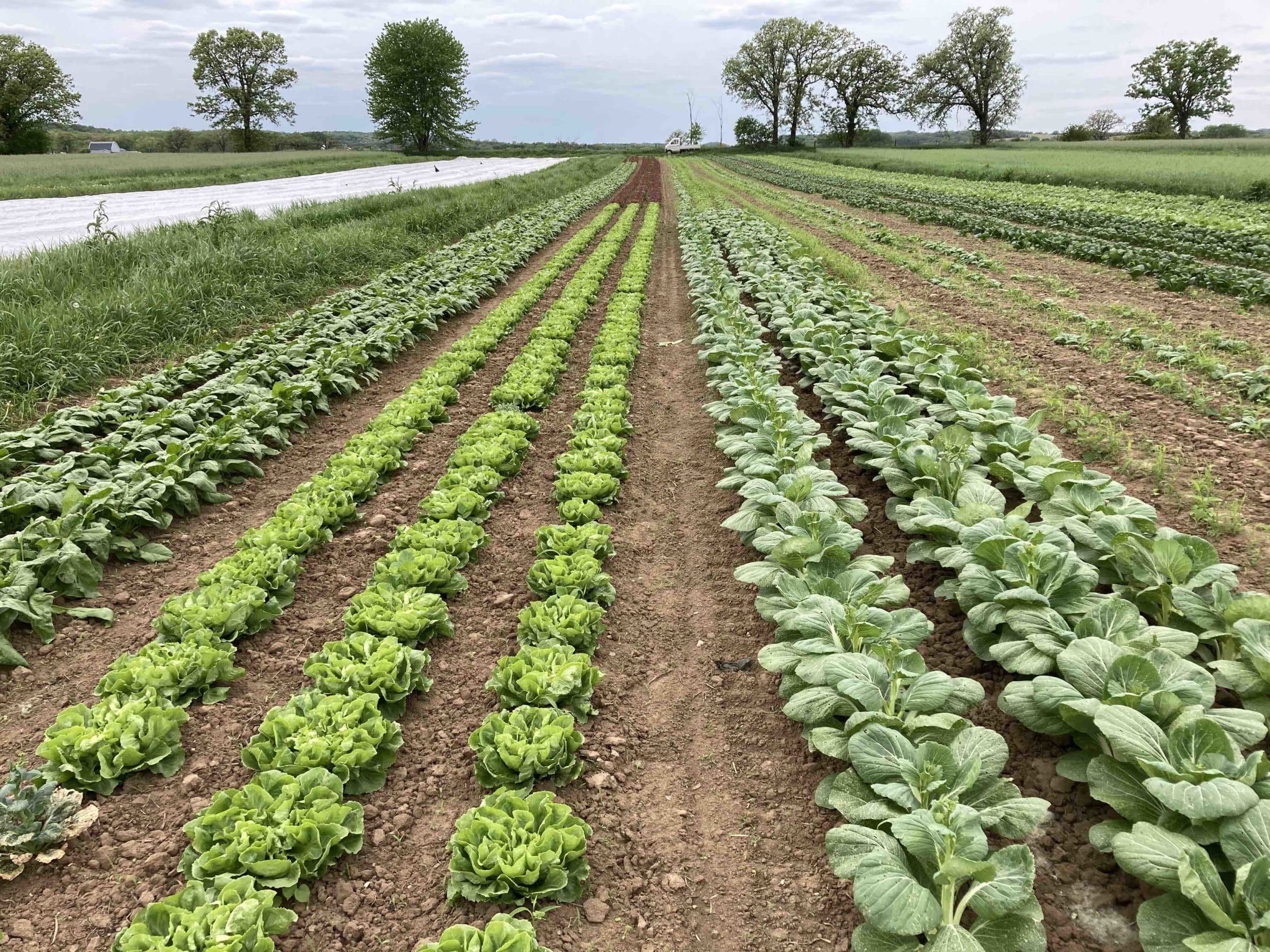
Much of your produce came from this field planted in mid April. From left, spinach, escarole (for a future delivery), bok choy. Radishes are far to the right and the red block at the back is red leaf lettuce.
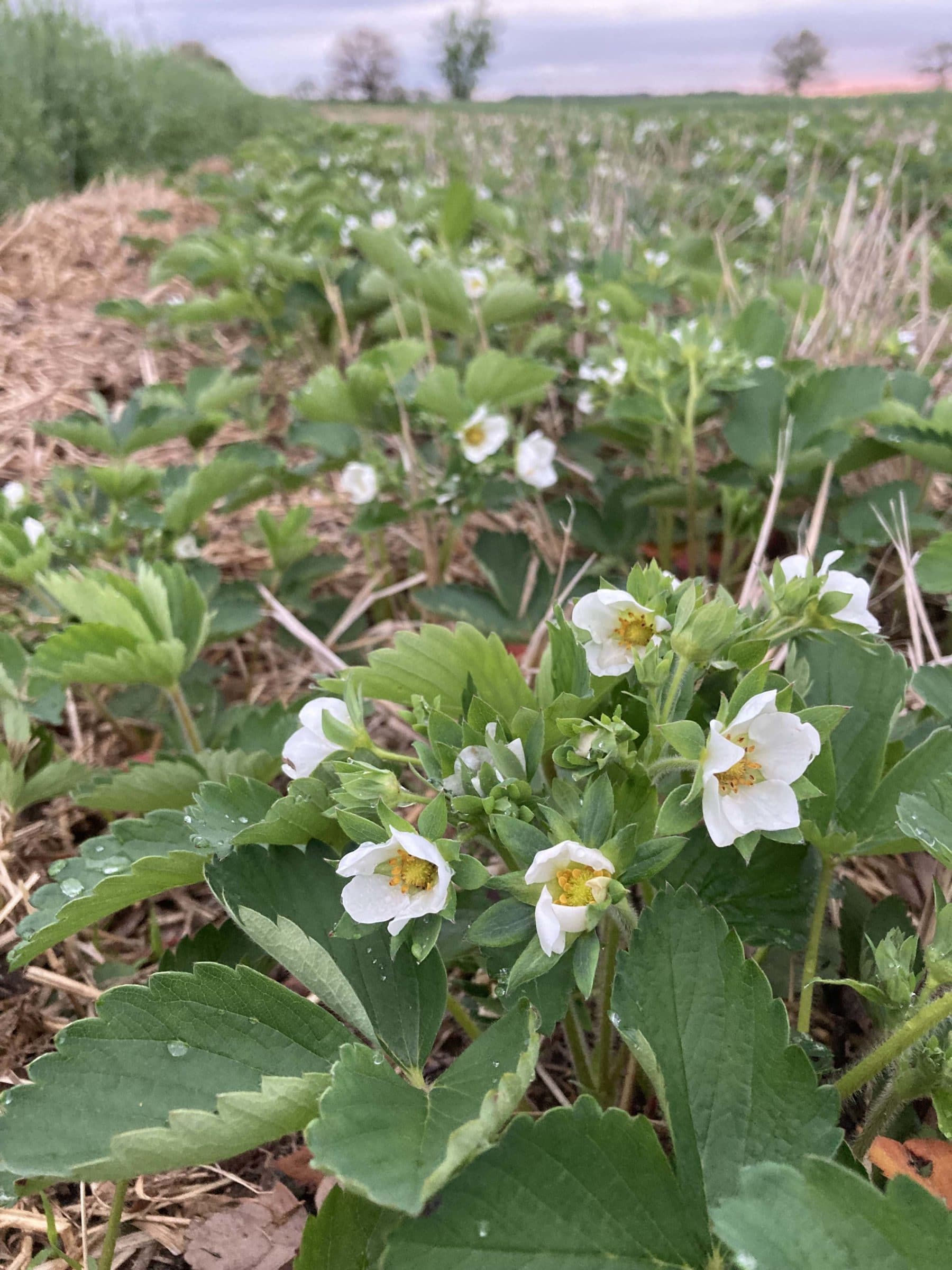
The strawberries are blossoming and look great! Berries won’t ripen until later June but it’s exciting to see lots of blossoms.
Farm News
We are busy starting our harvest season and training new employees. I’ll write more about the farm in future but wanted to share the photos above. We have kept to our usual planting schedule but crops are growing slowly because of the cool, cloudy weather.
Deliveries begin this week for our Weekly and Every-other-week/green members, on May 26/27 (Thurs/Fri sites)
If you are uncertain of your schedule, log into your account and view the calendar on your dashboard. If you’ve forgotten your password, use the password re-set. Having a live calendar for each member is pretty darn nice.
Things you need to know.
♦ On Thursday, we deliver CSA boxes to Evansville, Fitchburg, Madison, McFarland, Middleton, Oregon and Verona.
♦ On Friday, we deliver CSA boxes to Janesville.
♦ We post this newsletter/blog each Wednesday night, with a list of veggies for the week, quantities, information about storage and preparation, news of the farm, recipes, and a forecast for the next week’s box. I’ll send an email on Wednesday night once the newsletter is posted and ready to read. I send the Wednesday email to everyone, not just the people receiving a box that week.
♦ EOW, Sampler and Weekly members, we assume you read all the newsletters, even on your “off” weeks. This newsletter (and our emails to you) are our means to communicate with you.
♦ Want earlier notice of what will be in the box? Check the sidebar on our website homepage around 7 – 8 p.m. on Wednesday night. I’ll post the list under “Box Contents.” Also, the Veggie List section of this newsletter each week contains a forecast for the following week. The list is rarely complete but the items listed are ones we feel confident about.
♦ The first few boxes of the season are often the lightest. EOW members, do not worry that you have signed up for the wrong share! Our deliveries get heavier and more abundant as the season progresses.
How to wash greens efficiently and to maximize storage life
Washing and drying your lettuce, spinach, and other greens prolongs their storage life. Here’s our approach. It works.
1. Fill your sink or a basin halfway with cold tap water. If you have two sinks, fill one sink partway with cold water.
2. Chop your lettuce, spinach, escarole or other green to the size you wish.
3. Dump it into the water and swish around gently but thoroughly.
4. Working in two batches (for average lettuce head) or more batches (big spinach bunches, Romaine), pull handfuls out of the water and drain in the basket of a salad spinner.
5. After all the greens have been rinsed one time, dump the water. Rinse the sink/basin and refill with cold tap water.
6. Repeat the process.
7. Spin your greens dry and store in a dry container. They store much longer when spun dry.
This works because …
– pre-chopping the greens frees soil trapped in the head.
– the large amount of water washes and dilutes away the grit.
– By pulling the greens out of the water, you take advantage of the draining action to pull the grit with it.
– Drying (spinning) the greens before storage reduces spoilage.
Veggie List & Veggie Notes
Week #1, May 26/27, 2022
– Weekly shares
– EOW/ green
Asparagus, ~1 lb
Bok choy, 1 medium
Green garlic, 1 bunch
Lettuce, red leaf, 2 heads
Potatoes, Dark Red Norlands, ~3.5 lb
Rhubarb, 1.75 lb
Salad radishes, 1 bunch
Spinach, 1 bunch
Next week’s box will probably contain asparagus, green garlic, lettuce, rhubarb, salad radishes, spinach, and mushrooms and more.
Asparagus – This is my favorite spring treat! Some of the asparagus is from our farm and some is from our friends Tim and April’s Lotfotl Farm. They have a larger asparagus field than they need, so we go and pick it for them once a week.
Prep: Wash your asparagus thoroughly to remove hidden grit. Submerge in water with the tips pointing down, soak briefly, then swish vigorously and pull out of the water. The draining action helps pull the grit out of the asparagus tips. Repeat several times.
Storage: Asparagus is perishable, so eat it as soon as possible. Store in a paper towel, cloth or paper bag, then wrap loosely in a plastic bag. The paper bag protects the asparagus tips from direct contact with the plastic bag. The plastic bag keeps the asparagus from wilting.
Preparation: We snap our asparagus at harvest, rather than cutting. Therefore, there is no need to snap the stalks to remove fibrous ends. For the same reason, it is not necessary to peel the asparagus stalks. It’s OK to trim the cut end a bit.
Cooking: If your asparagus stalks vary greatly in size, you will want to cook the thicker ones longer. Put an empty steamer pot over water, and bring the water to a boil. Add the asparagus. Cover and steam over medium heat until just tender. Use two forks or a spatula to turn the asparagus during cooking, rotating the bottom spears to the top. Drain and serve. Alternatively, you can lay spears flat in the bottom of a broad pan, with ½ inch of water. Also excellent broiled or grilled. Good dressed with vinaigrette, or with lime juice, salt and pepper.
Bok choy (rosette with thick white stems and green leaves) – This Asian green is good for stir-frying or sautéing or in soup. You can think of the stems and leaves as two separate vegetables. The stems require longer cooking. The leaves will cook almost as quickly as spinach. Bok choy stores well, so feel free to pull off leaves as you need them, or use the whole head at once. Storage: Refrigerate in a plastic bag or other container.
Some heads have small flower stalks which you can eat or remove. The plants have begun flowering in response to cold – hot – cold weather this spring.
Green garlic (looks like scallions, tastes like garlic) – Last fall, we planted garlic cloves that grew into the stalks we harvested this week. If left to grow until mid-summer, the slim white bulb on this week’s garlic will divide and form the usual cluster of cloves in a garlic bulb.
Preparation: Green garlic is more pungent than scallions, so slice thinly and use sparingly when raw. It mellows when cooked. Chop and add to any cooked dish that would benefit from garlic. Use the white bulbs and pale green stems. Avoid the dark green stems and leaves, as these are fibrous.
Lettuce – See notes about about washing and spinning dry. Storage: Refrigerate in a bag or other container.
Potatoes, Dark Red Norlands – Please refrigerate these potatoes. They are in great shape now but will sprout within days if stored at room temperature! They’ve been stored all winter and want to grow. Store in a paper bag to protect from light, even in the fridge. We grow everything we send in our CSA boxes except potatoes, mushrooms and some asparagus, all of which we buy from organic growers that we trust. We purchased these potatoes from Jesse & Jonnah Perkins at Mythic Farm (formerly Vermont Valley Farm.) Jesse says the potatoes have a higher sugar content because of starch to sugar conversion during cold storage. That means the potatoes taste a bit sweet, and will darken slightly when fried. It’s a harmless color change due to the sugar conversion.
Rhubarb – Storage: Refrigerate in a plastic bag. FYI, 1.75 lb of rhubarb yields 5 – 5.5 cups when chopped.
Stewed rhubarb: This is the simplest way to prepare rhubarb. Chop rhubarb into one inch chunks. Stir over medium heat with a small amount of water in the bottom of the pan. The rhubarb will release moisture as it cooks. Stew until it softens and falls apart. Sweeten to taste with honey or sugar. Eat warm on its own, over vanilla ice cream, on pancakes, etc.
Preserve: Rhubarb is so easy to freeze. Wash, chop and pop it in a freezer bag. That’s it; no need for blanching. When baking muffins or cakes, add the frozen rhubarb directly to the batter.
Salad radishes – These are so good right now; tender, crisp and not too spicy. They are great in salads or thinly sliced on sandwiches. A few years ago, I was served open-faced radish and butter sandwiches on toast and was impressed with how tasty they were. Use good quality butter.
Storage: Cover and refrigerate.
Spinach – This batch is tender and excellent for salads cooking.
RECIPES from PHOEBE
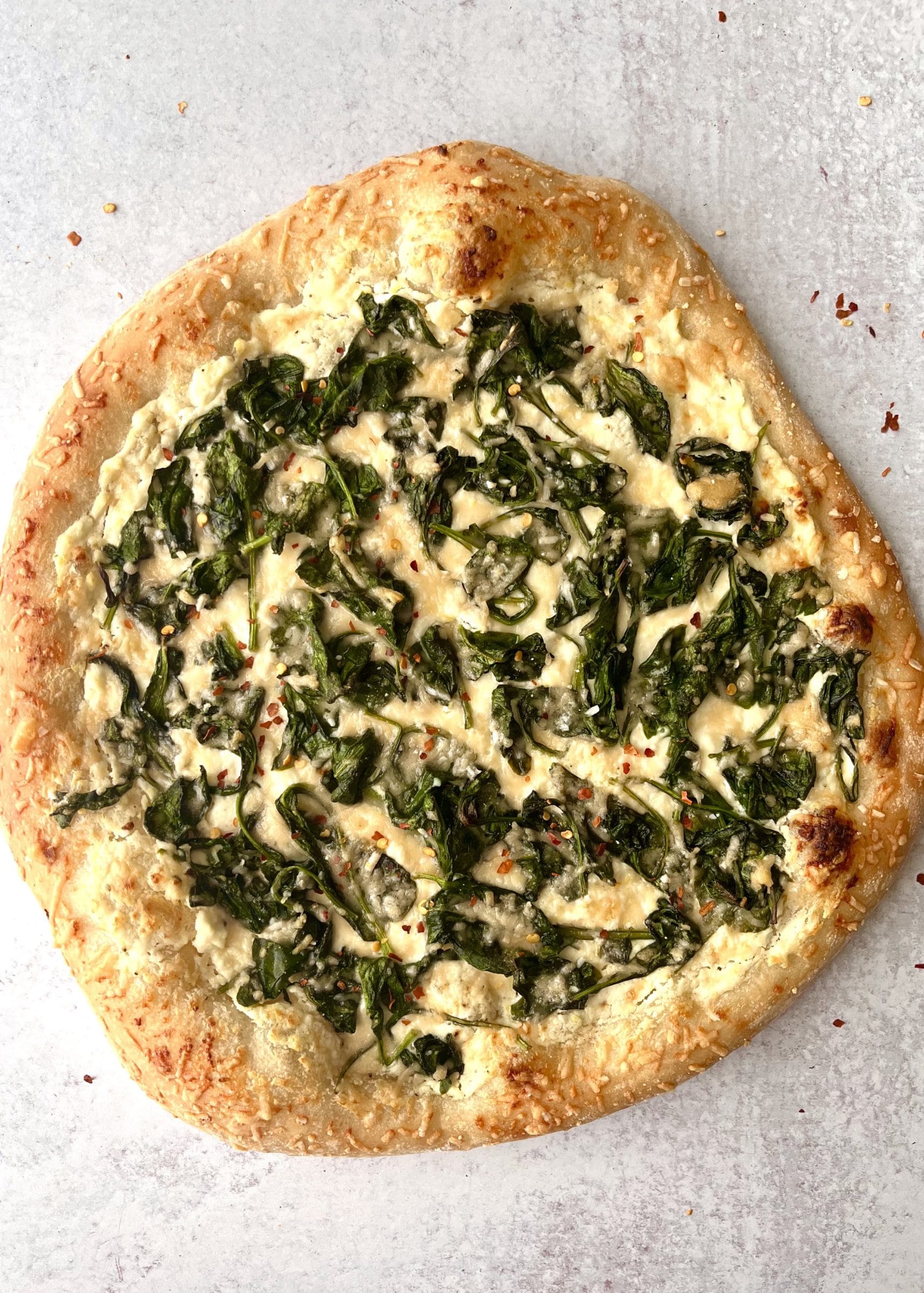
Spinach & Ricotta Pizza
I started making this pizza after eating a similar one at Spacca Napoli, a great Italian restaurant in our neighborhood. I love that it’s both super simple and super flavorful, topped with a creamy layer of lemon ricotta, lots of sautéed spinach, and a shower of Parmesan cheese. Look for fresh pizza dough at your grocery store, or try making your own. I’ve had success with this recipe and this recipe.
Serves: 2-3
Prep time: 15 minutes
Cook time: 15 minutes
Cornmeal, for the pan
1 cup whole milk ricotta cheese
2 teaspoons lemon zest
1 garlic clove, grated
¼ teaspoon sea salt
1 teaspoon extra-virgin olive oil
3 cups fresh spinach
1 pound pizza dough
½ cup freshly grated Parmesan cheese
Red pepper flakes
Freshly ground black pepper
- Preheat the oven to 500°F and dust a large baking sheet or pizza pan with cornmeal.
- In a medium bowl, stir together the ricotta, lemon zest, garlic, salt, and several grinds of pepper. Set aside.
- Heat the olive oil in large skillet over medium heat. Add the spinach and a pinch of salt and cook, tossing, until just wilted, 1 to 2 minutes.
- Place the pizza dough on the prepared pan and stretch it into a large circle about 12 inches in diameter. Spread the ricotta mixture evenly over the dough, leaving a ½-inch border around the edges. Top with the spinach, then sprinkle on the Parmesan cheese.
- Bake until the crust is golden brown, about 12 minutes, rotating the pan halfway through.
- Sprinkle with red pepper flakes, slice, and serve.
.
.
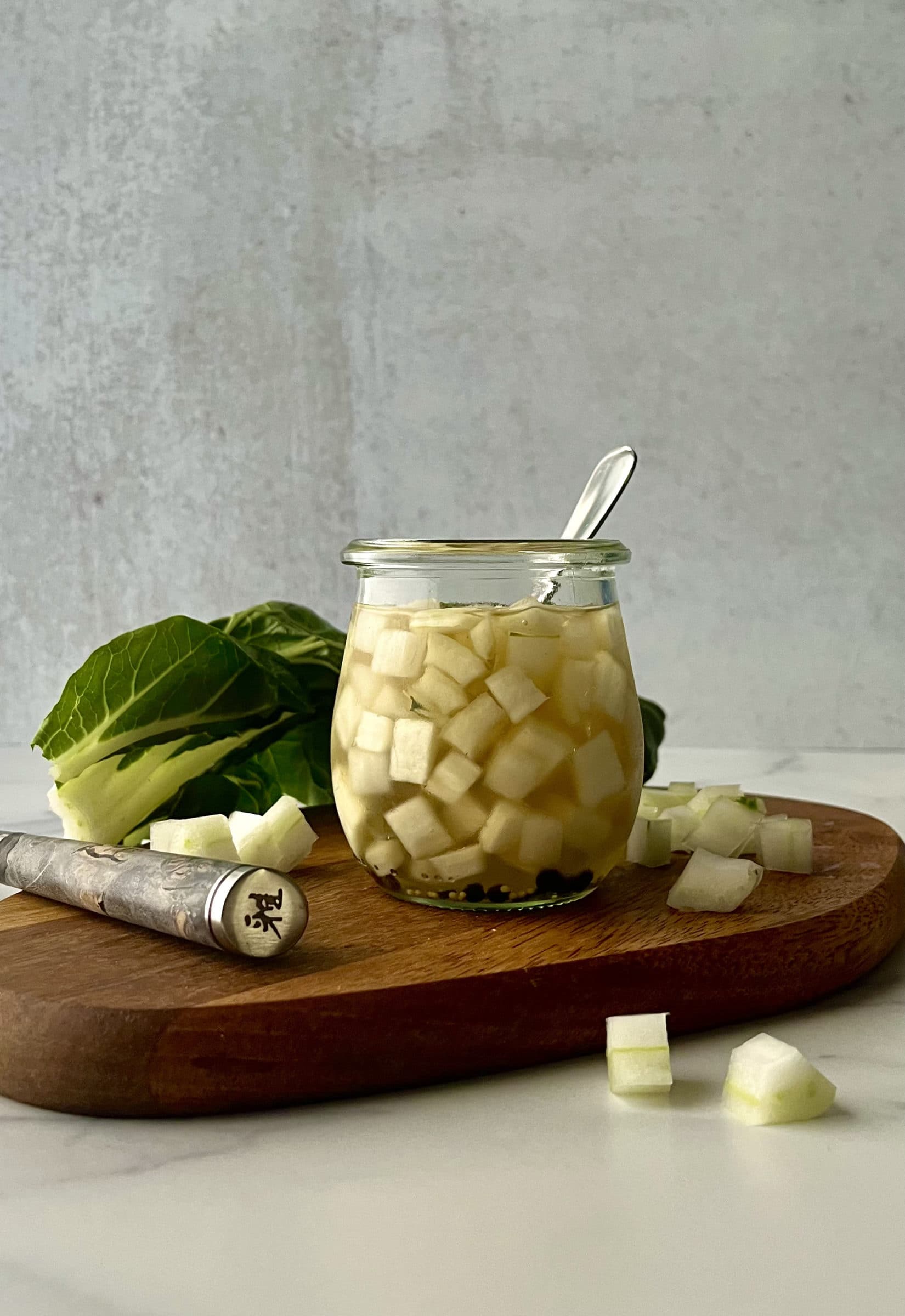
Pickled Bok Choy Stems
Juicy, crunchy bok choy stems are perfect for pickling! Try adding these sweet and tangy pickles to salads, sandwiches, and wraps like the one below.
Prep time: overnight
Cook time: 1 minute
1½ cups diced bok choy stems
½ teaspoon black peppercorns
¼ teaspoon mustard seeds
⅔ cup water
⅓ cup distilled white vinegar
1½ tablespoons cane sugar
1 teaspoon sea salt
- Place the bok choy stems, peppercorns, and mustard seeds in a lidded jar and set aside.
- Heat the water, vinegar, sugar, and salt in a small saucepan over low heat. Stir until the sugar and salt dissolve, then pour the brine over the bok choy stems. Cover the jar and shake, then uncover and allow to cool to room temperature.
- Transfer to the fridge to chill overnight. The pickles should keep in the fridge for about 2 weeks.
.
.
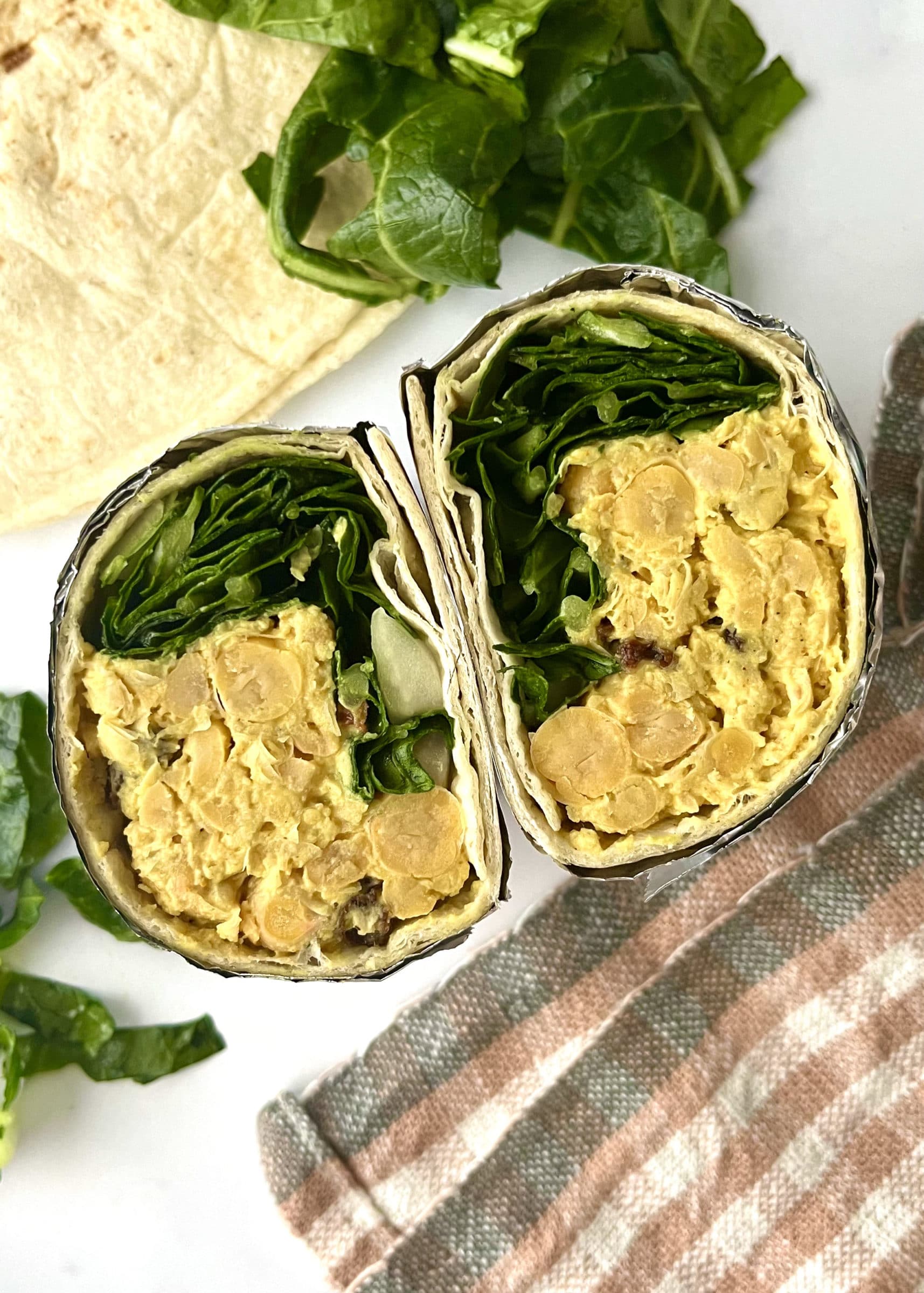
Curried Chickpea & Bok Choy Wraps
These refreshing wraps have been one of our go-to lunches this spring. A creamy curried chickpea salad contrasts with crisp bok choy leaves and crunchy, tangy pickled bok choy stems. If you make the bok choy stem pickles ahead of time, the wraps only take a few minutes to put together, but for even quicker assembly, you can also prep the chickpea salad and the greens up to two days in advance.
Serves: 2
Prep time: 15 minutes with pre-made pickled bok choy stems
1½ cups cooked chickpeas, drained and rinsed
¼ cup whole milk Greek yogurt
2 teaspoons extra-virgin olive oil, plus more for drizzling
1 teaspoon fresh lemon juice
1 teaspoon curry powder
½ teaspoon sea salt
Freshly ground black pepper
2 tablespoons raisins
8 medium bok choy leaves, roughly chopped
2 large tortillas
¼ cup Pickled Bok Choy Stems (recipe above)
- In a medium bowl, place the chickpeas, yogurt, olive oil, lemon juice, curry powder, salt, and several grinds of pepper. Stir to combine, then mash with a potato masher until the mixture is thick and creamy with some whole chickpeas still intact. Fold in the raisins.
- In another medium bowl, toss the bok choy leaves with a drizzle of olive oil and a pinch of salt.
- Fill each tortilla with half the chickpea salad, half the bok choy leaves, and half the pickled bok choy stems. Fold the left and right sides of the tortillas over the fillings, then tuck and roll the wraps closed. Slice in half, if desired, and serve.
.
.
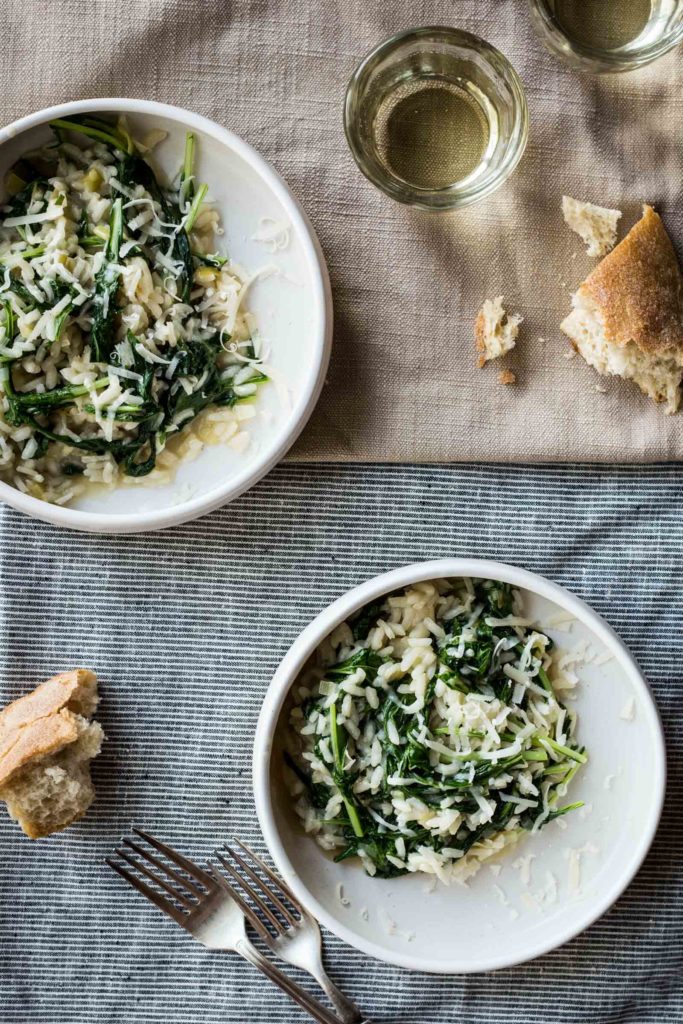
Photo by Andrea Bemis
Green Garlic Risotto
From Dishing Up The Dirt
This creamy spring risotto is a perfect way to showcase the green garlic in this week’s box. The recipe calls for mizuna, but a big handful of spinach (or even thinly sliced asparagus) would work just as well.
.
.
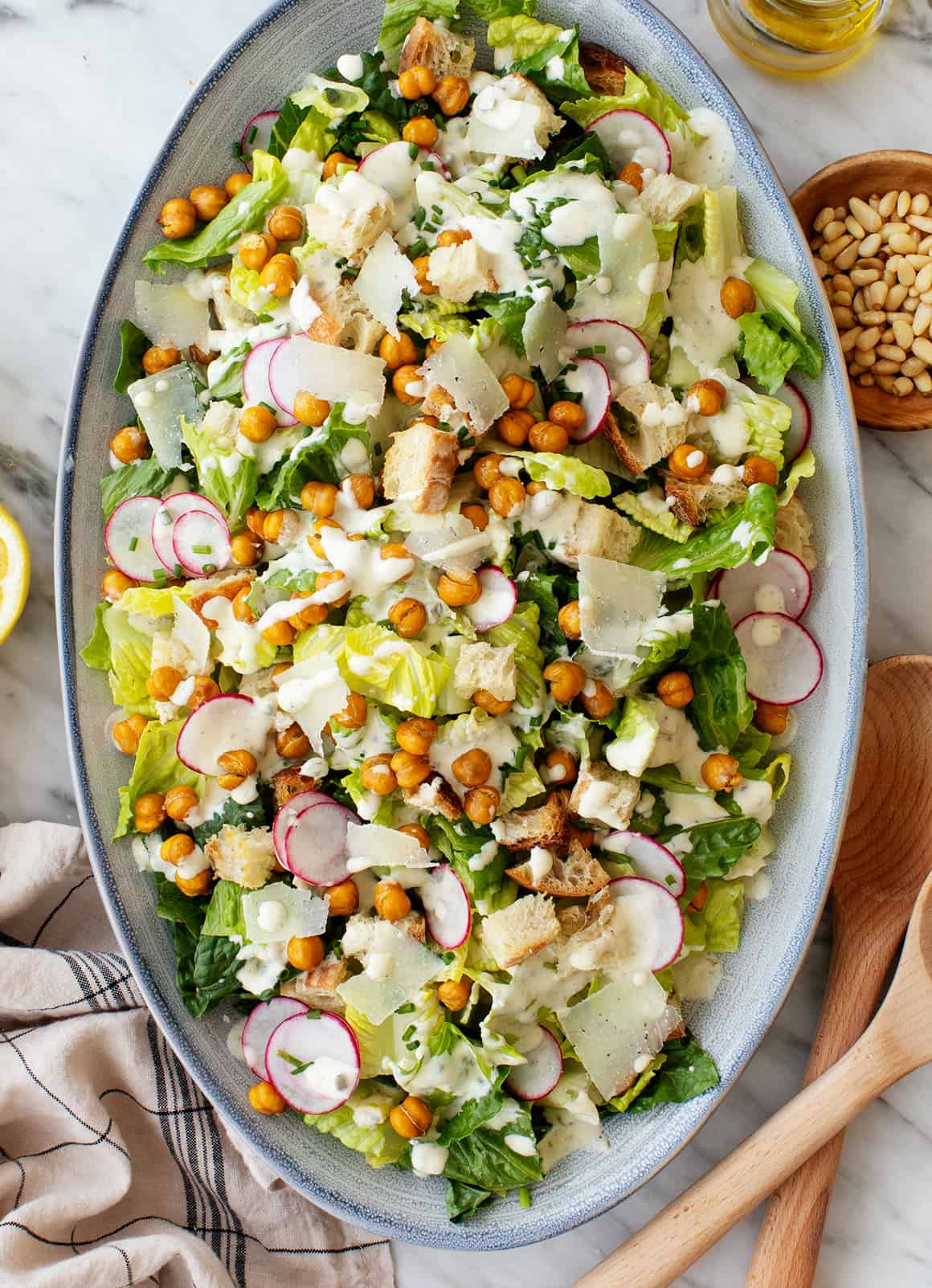
Photo by Jeanine Donofrio & Phoebe Moore
Caesar Salad
From Love & Lemons
Romaine is traditional for Caesar salad, but the red leaf lettuce from this week’s box would taste fantastic in this recipe, too! Radishes, roasted chickpeas, and croutons give it lots of crunch, and a creamy homemade dressing packs it with tangy, briny flavor. For more ideas on how to dress your lettuce, check out this roundup of easy homemade salad dressings from Love & Lemons.
.
.
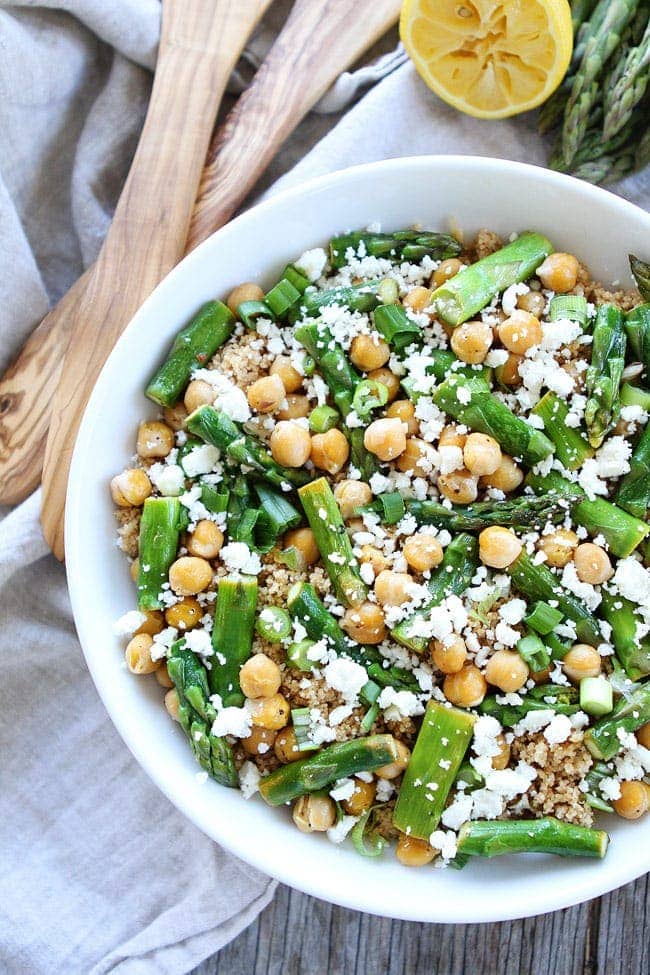
Photo by Two Peas & Their Pod
Asparagus Chickpea Quinoa Salad
From Two Peas & Their Pod
This lemony asparagus, feta, and grain salad would be a great make-ahead lunch or picnic side dish! The recipe calls for green onions, but you could easily substitute thinly sliced green garlic from this week’s box.
.
.
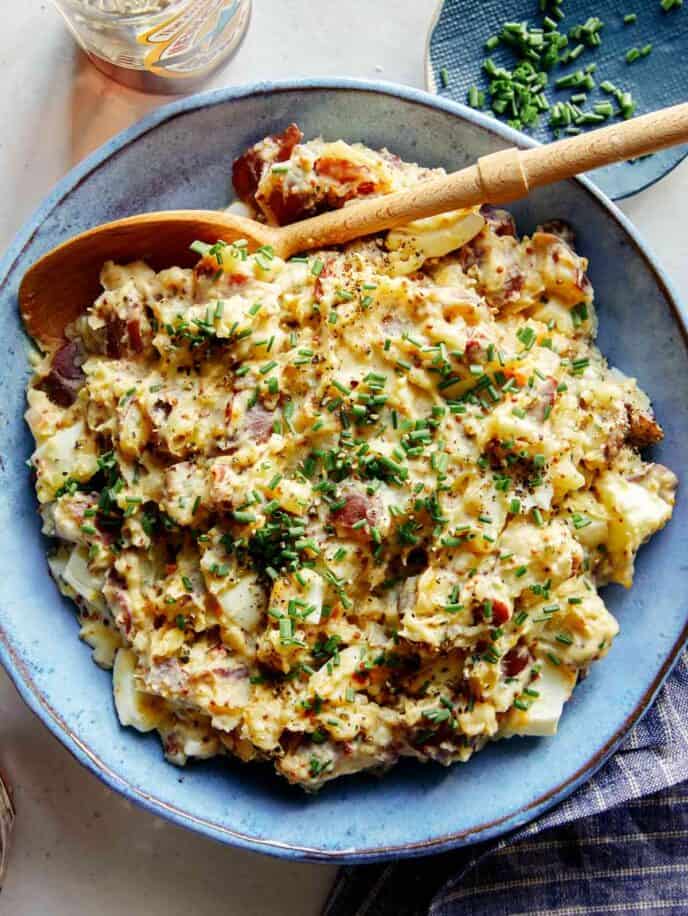
Photo by Spoon Fork Bacon
Creamy Potato Salad
From Spoon Fork Bacon
Perfect for a weekend cookout! This recipe calls for mashing some of the potatoes, which gives the salad an extra-creamy texture. If you don’t have a shallot or chives, add a few tablespoons of minced green garlic instead.
.
.

Photo by Jeanine Donofrio & Jack Mathews
Oven Roasted Potatoes
From Love & Lemons
In this mouthwatering side dish, crispy roasted potatoes are tossed in a zingy lemon dressing. If you don’t have fresh rosemary, substitute 1 teaspoon dried, or feel free to skip it. The dressing is still plenty flavorful without it!
.
.
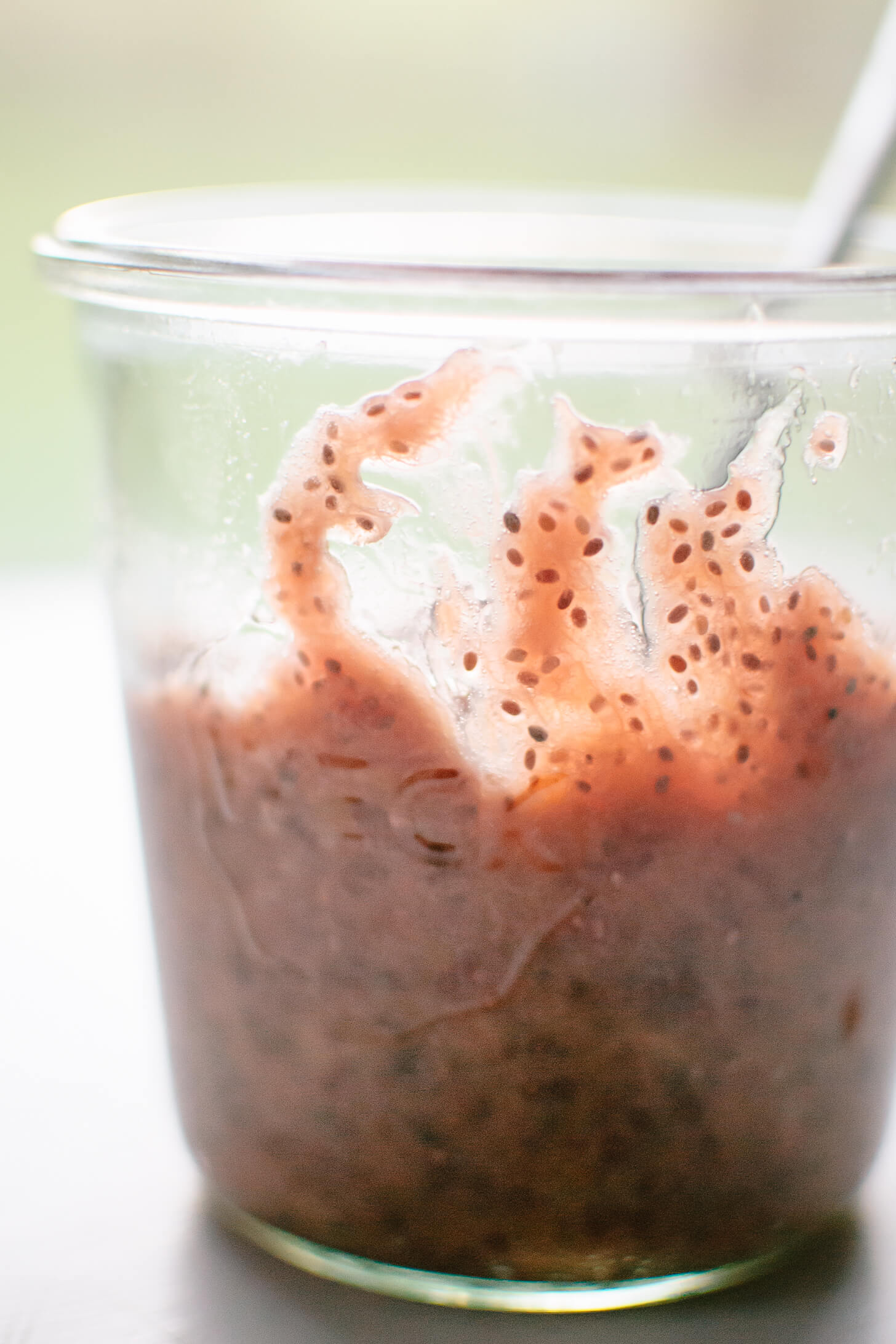
Photo by Cookie + Kate
Rhubarb Chia Jam
From Cookie + Kate
A really simple way to enjoy your rhubarb! This sweet and sour jam would be fantastic on oatmeal, yogurt, toast, and more.
.

Storage Share, Nov 18/19, 2021
- On: November 17, 2021
- 0
Good bye for now!
Thank you so much for joining our farm this season. We hope you stay safe and warm this winter, and that this big delivery brightens your winter meals.
Beth and Steve
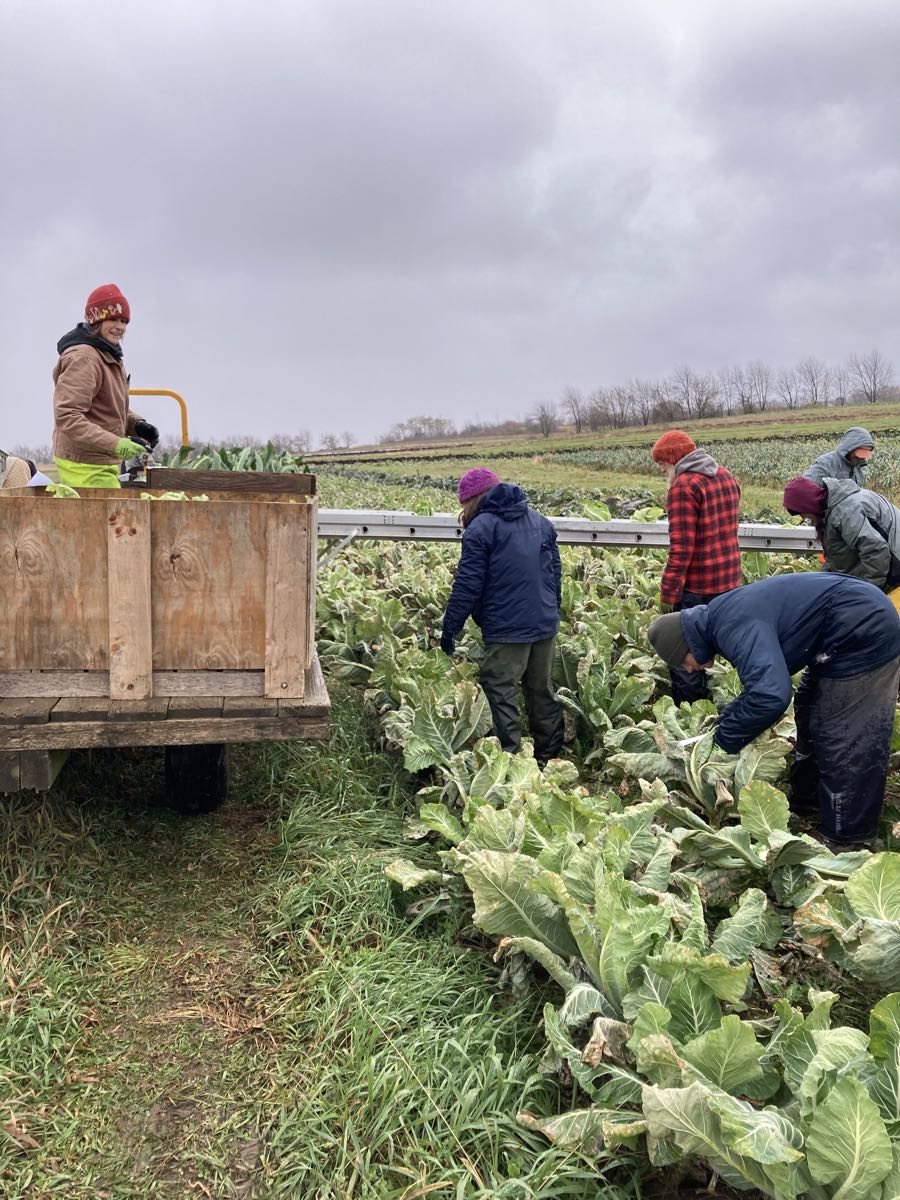
We’ve packed both cauliflower and Romanesco in the Storage shares. These crops were late this year because of the warm weather in September and October but the heads sized up eventually! The outer leaves were nipped by frost but the heads were not.

A beautiful November sunset
Storage Share this week
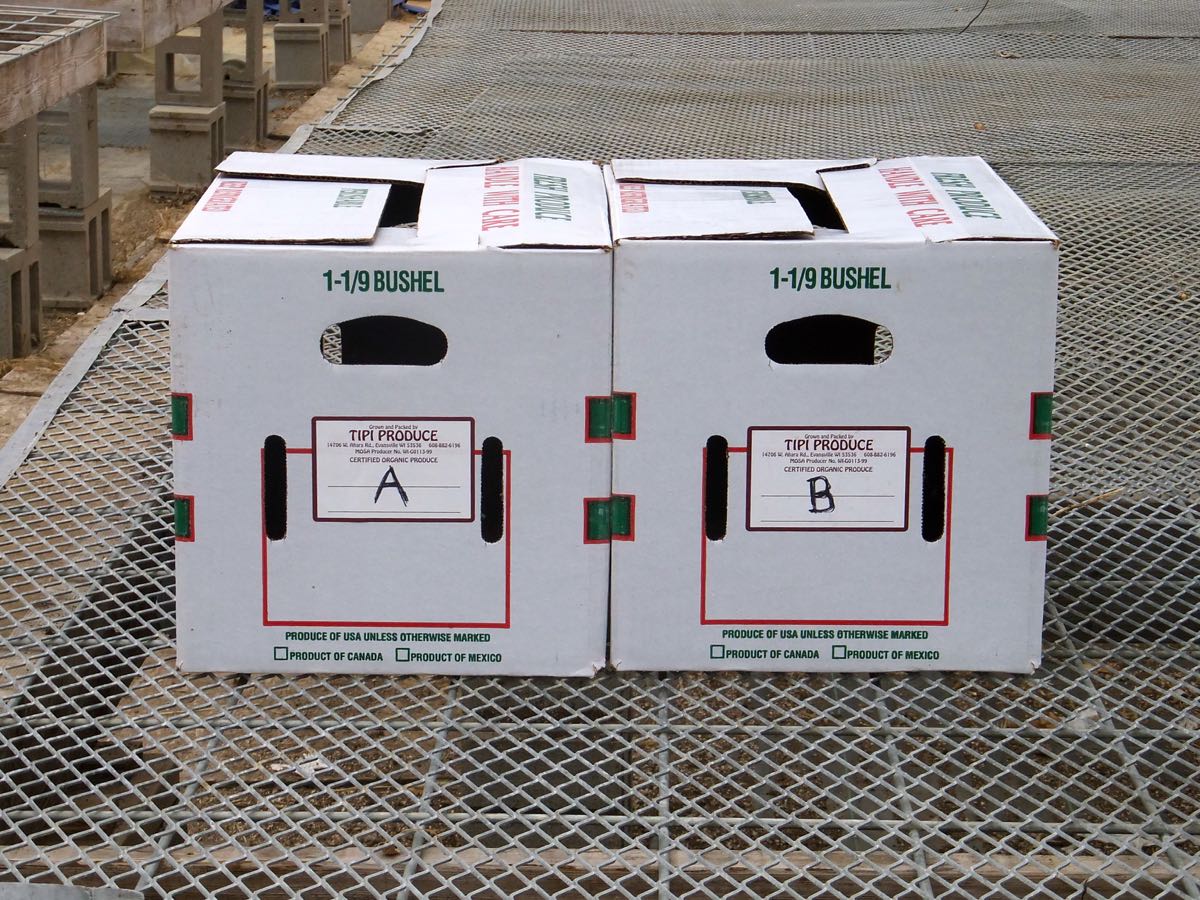
Your produce is in one box labelled “A” and one box labelled “B”. Bring lots of bags and containers.
Things you need to know about your winter share
* Your delivery will consist of two different boxes, labeled “A” and “B”. Take produce from one “A” box and one “B” box. The boxes contain different vegetables.
* Please pick up your boxes on the day of delivery, during the normal hours for your site.
* Bring extra bags or containers this time. Leave the Tipi boxes at your site, take the produce home in your own bags/containers.
* If you send someone to pick up your produce, make sure they know what to do.
Strategy
We hope you enjoy this shipment of veggies. Strategize to use them well, as some will last longer than others.
* These are the most perishable vegetables: Brussels sprouts, cauliflower.
* These are the next-most perishable: Leeks, Romanesco. Keep an eye on your butternut, potatoes and sweet potatoes. The last two are susceptible to drying out. Expect the largest butternuts to last the longest.
* These will last the longest: beets, cabbage, carrots, celeriac, garlic, red & yellow onions, parsnips and shallots.
Veggie List (Nov. 18/19, 2021)
Box “A”
Everything in this box can be stored cool or at room temperature. See notes below for more detail.
(Combined squash & sweet potatoes weigh 20 to 22 lb.)
Butternut squash, several
Special winter squash (‘Autumn Frost’ OR ‘Winter Sweet’)
Sweet potatoes, mixed ‘Beauregard’, ‘Covington’ & ‘Orleans’
Russet potatoes, 5 lb
Shallots, ~1 lb
Garlic, 3 – 4 bulbs (in shallot bag)
Box “B”
Refrigerate everything in this box, except the onions.
Beets, 3 lb
Brussels sprouts, 1 lb
Carrots, 5 lb
Cauliflower, 1 medium head
Celeriac, 1
Green cabbage, 1 head
Leeks, ~2.25 lb
Onions, 5 lb total
….. a mix of red ‘Blush’ and yellow onions
Parsnips, ~2 lb
Romanesco cauliflower, 1 medium head
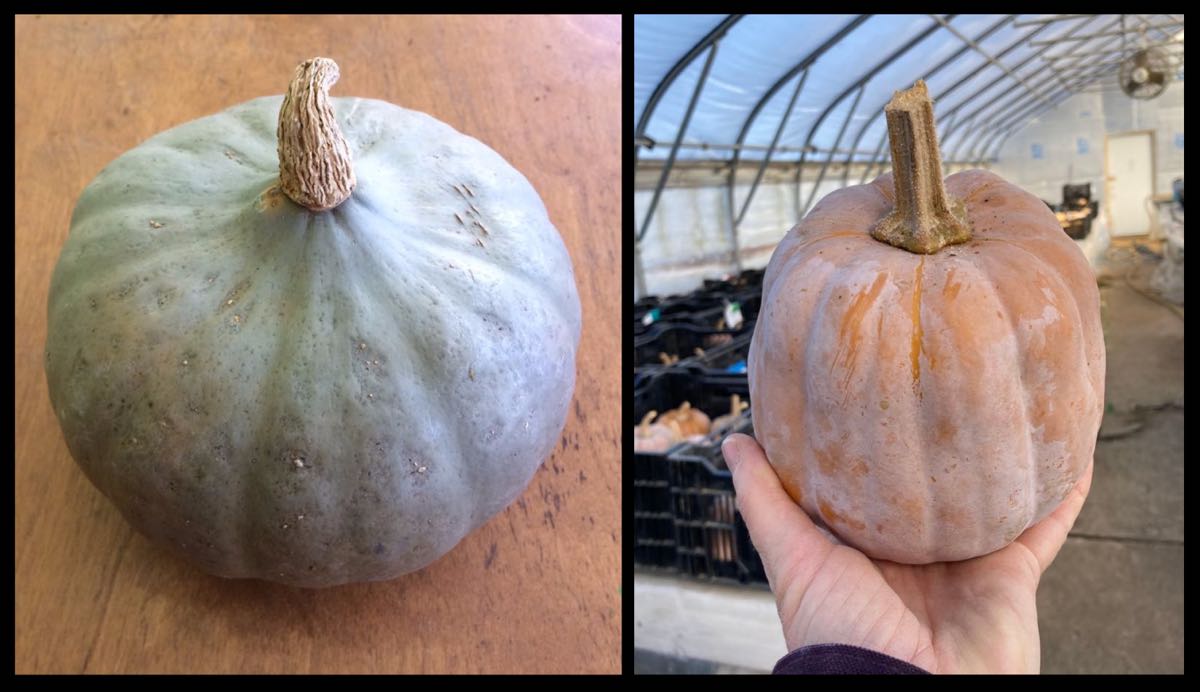
Everyone gets Winter Sweet (left) OR Autumn Frost squash (right) plus several butternuts.
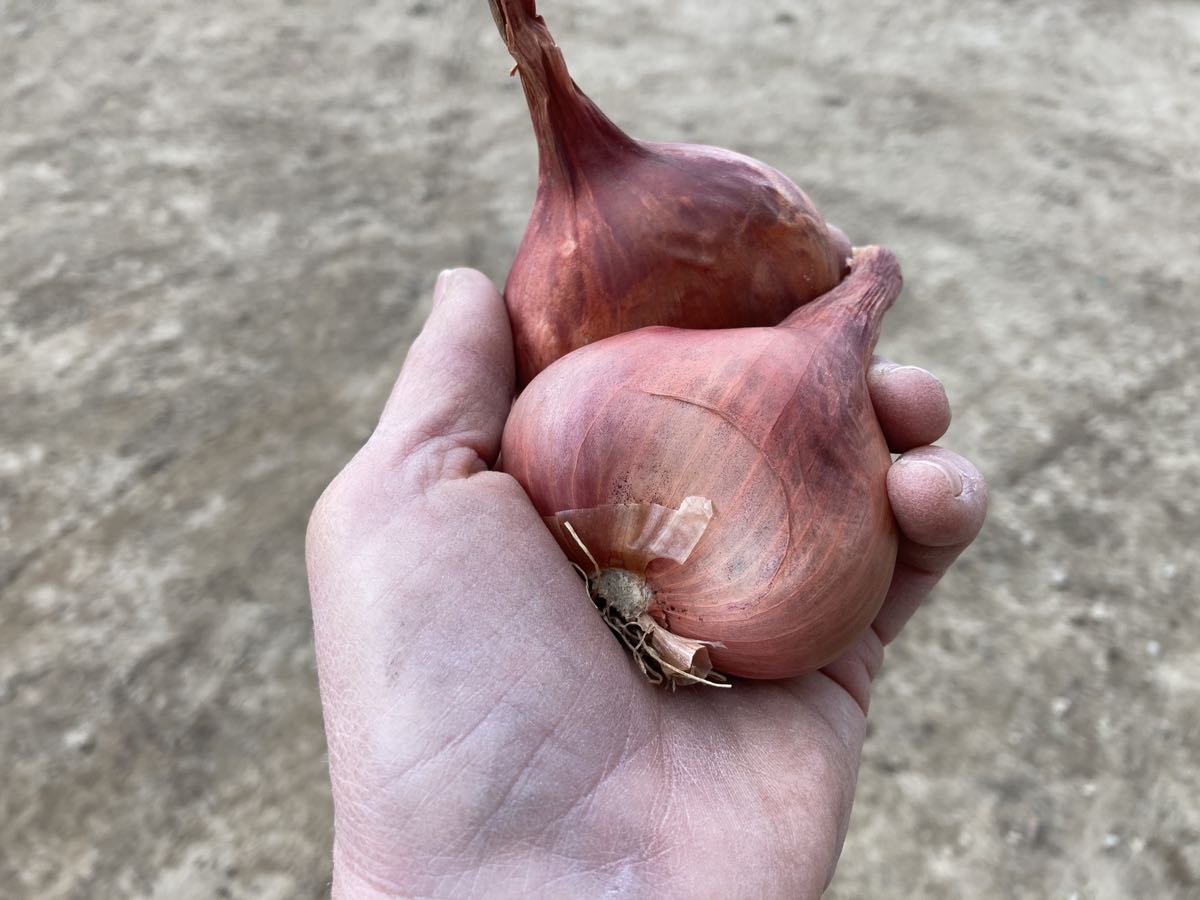
Shallots. Yours are packed in a paper bag with the garlic.
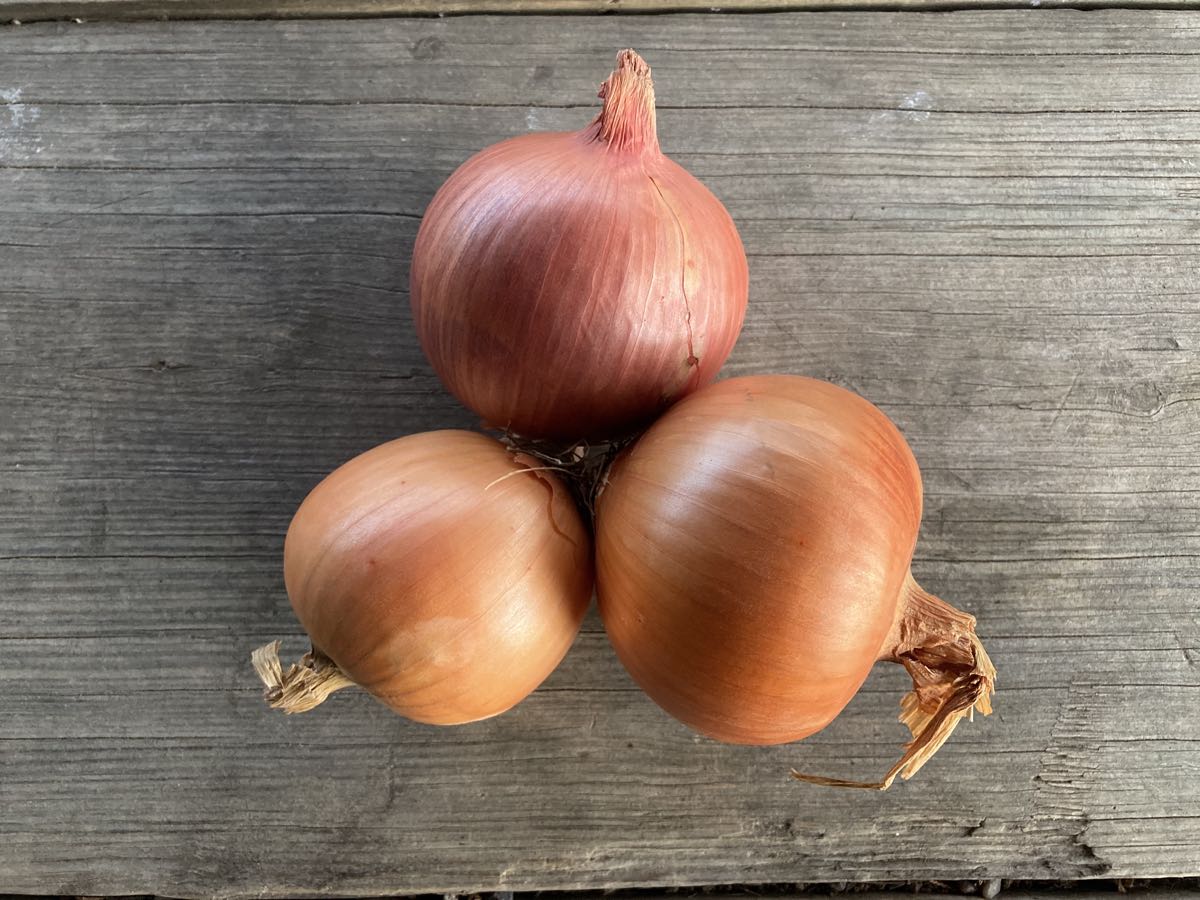
Top, ‘Blush’ red onion
Bottom, yellow onions
The ‘Blush’ onions are more pink than red, and excellent for long storage.
Beets – Refrigerate in a bag or container. Beets will store for two months or longer.
Brussels sprouts – Eat within 2 to 3 weeks.
Cabbage – Refrigerate.
Carrots, orange. Refrigerate in a plastic bag. Will keep for several weeks.
Cauliflower – Refrigerate. These should store for two weeks. Don’t be alarmed by the frost damage on the wrapper leaves. The heads are fine.
Celeriac – Will store for months in your fridge. Cut off chunks as needed. Peel before using. I find it easiest to cut the celeriac into flat slices, then peel.
Garlic – Store at room temperature. Some of your bulbs might be in halves. We continue opening the bulbs to check for any internal problems.
Green cabbage – Refrigerate. These are big. It’s OK to cut off chunks as needed.
Leeks. Refrigerate. In general, leeks are not a long-storage crop. You may need to strip off one or two outer leaves to freshen the leeks before you cook them.
Onions: Refrigerate or store in a cool, dark spot and protect from light. Exposure to light stimulates sprouting.
Parsnips (These look like large white carrots.) – Refrigerate in a plastic bag. Parsnips will store for several months but will darken in color. That is a harmless change.
Potatoes; russets – Can be stored at room temperature or in a cool spot, but must be kept in the dark so they do not turn green. A cloth or loose plastic bag draped over the paper bag will slow moisture loss, but do not close the plastic bag. Potatoes store longer if kept cool. Around 40 – 50 F is ideal. These potatoes were grown by the Igl family near Antigo.
Russets– We got the big ‘baking’ grade so you have nice bakers for Thanksgiving. Excellent for baked or mashed potatoes.
Romanesco cauliflower (beautiful chartreuse green, spiraled head) – Refrigerate. These should store well, eg for a few weeks.
Shallots (look like small red onions) – Good for salad dressing. We’re still learning how to grow shallots and are thrilled to have a small bag for everyone!
Sweet potatoes – We’re sending a mix of two indistinguishable varieties, Beauregard and Covington. Both have excellent flavor and sweetness. Store at room temperature, no lower than 55 F, but 60+ F is better. Keep them on your kitchen counter where it’s easy to keep an eye on them. I like to keep ours in a paper bag so they don’t dehydrate. Cook promptly if they start to soften. The roots come in a wide ranges of sizes and all are good.
WINTER SQUASH – Store all winter squash cool and dry. 60 F is ideal. Do not put in a plastic bag. Check your squash regularly and eat promptly if flaws develop.
Autumn Frost (For some sites, frosted pumpkin) – These beautiful frosted squash have both pumpkin and butternut squash breeding in them. They cook and taste like an unusually good butternut, with rich, smooth texture. They are quite nice. The skin is elible.
Winter Sweet (For some sites; dark grey) – These storage squash will be ready to eat in December or January. The metal-gray exterior hides deep orange, flaky flesh. Simple preparation is best for this flavorful squash. Cut into slices or chunks, rub with oil and roast in 400 degree oven. We like to eat the squash with a garlic-yogurt dipping sauce. The skin is edible.
Butternut winter squash (All sites; tan, oblong) – We’ve sent several varieties, some of which store better than others. Expect the largest butternuts to store the longest. If your butternuts show signs of drying or wrinkling, use them promptly. They will still taste great, but it’s a sign that they are nearing the end of their storage life. Remember, you can cook, mash and freeze the squash for future use. I find that you can refrigerate cut raw squash for up to one week. This runs counter to the accepted way to store squash, but is useful if you want to cook just half a squash. Some of them are big! Try microwaving your squash for one to two minutes before cutting or peeling. This softens the squash and makes a large butternut easier to handle.
Thanksgiving Menus
It’s time for our annual Thanksgiving menu round-up! Right now, websites are loaded with great recipes suited to your Storage Share vegetables. Peruse and bookmark soon. The Thanksgiving collections are usually taken down quickly after the holiday but individual recipes are not. I’ve gathered a long list of recipes to try this winter.
Smitten Kitchen
I love Deb Perelman! She has an extensive list of Thanksgiving recipes collected over the years. I really trust her recipes.
Food52.com
Once again, the lively Food52.com site has outdone itself with an extensive Thanksgiving recipe collection. They’ve named it “AutoMagic Holiday Menu Maker“. It’s organized by type of dish. Scroll down to these sections for lots of veggie-centric dishes. There are soooo many appealing dishes.
3. Soups & Salads
4. Main Attractions/ Not meat subsection
5. Starchy Things
6. Vegetables
Thanksgiving meals by recent immigrants
https://www.rachaelraymag.com/recipes/a-totally-american-thanksgiving-immigrant-style
In this 2017 post, Rachel Ray asked first- and second-generation American chefs to tell us how they mix cultures and cuisines to create Thanksgiving dinners. The recipes include:
Persian-Style Roast Turkey with Pomegranate-Walnut Gravy
Beet & Tahini Dip (Khlat)
Jerk Sweet Potatoes
.
.
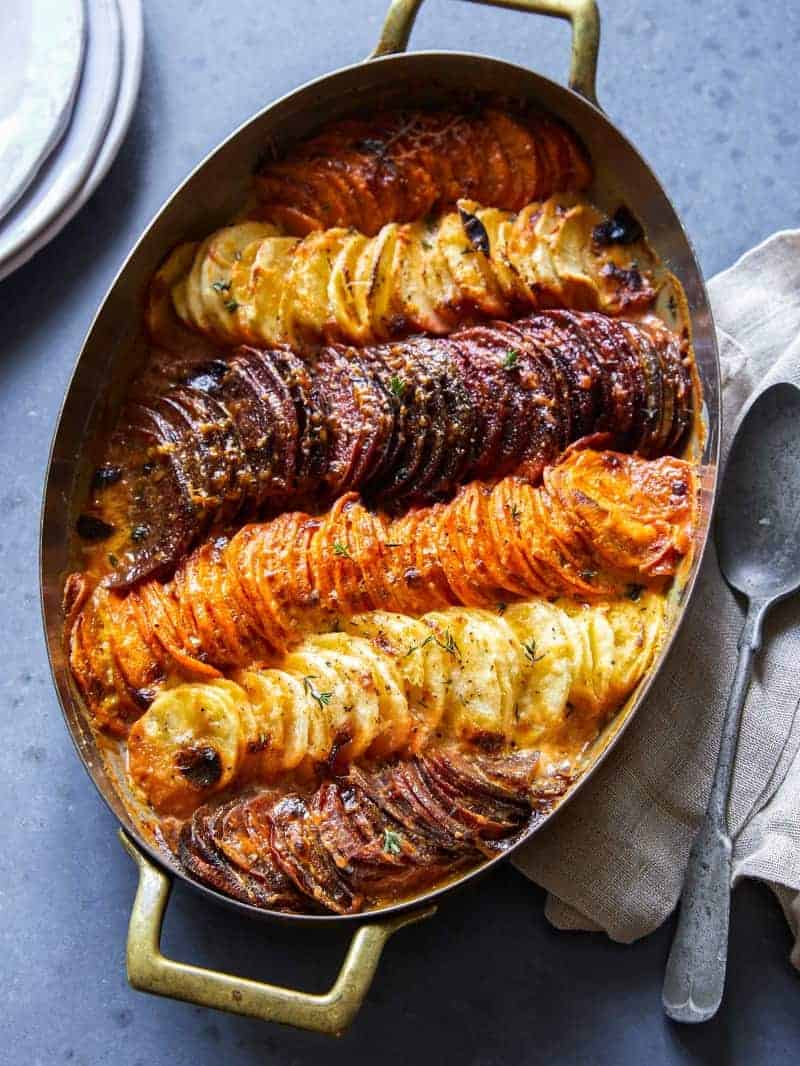
Cheesy Root Vegetable Gratin
From Spoon Fork Bacon
Look at that gorgeous casserole. The recipe has well-thought-out instructions. I have a difficult history with these kinds of dishes (4 hours in the oven, too much butter, etc) but this one worked great. See my version below.
.
.
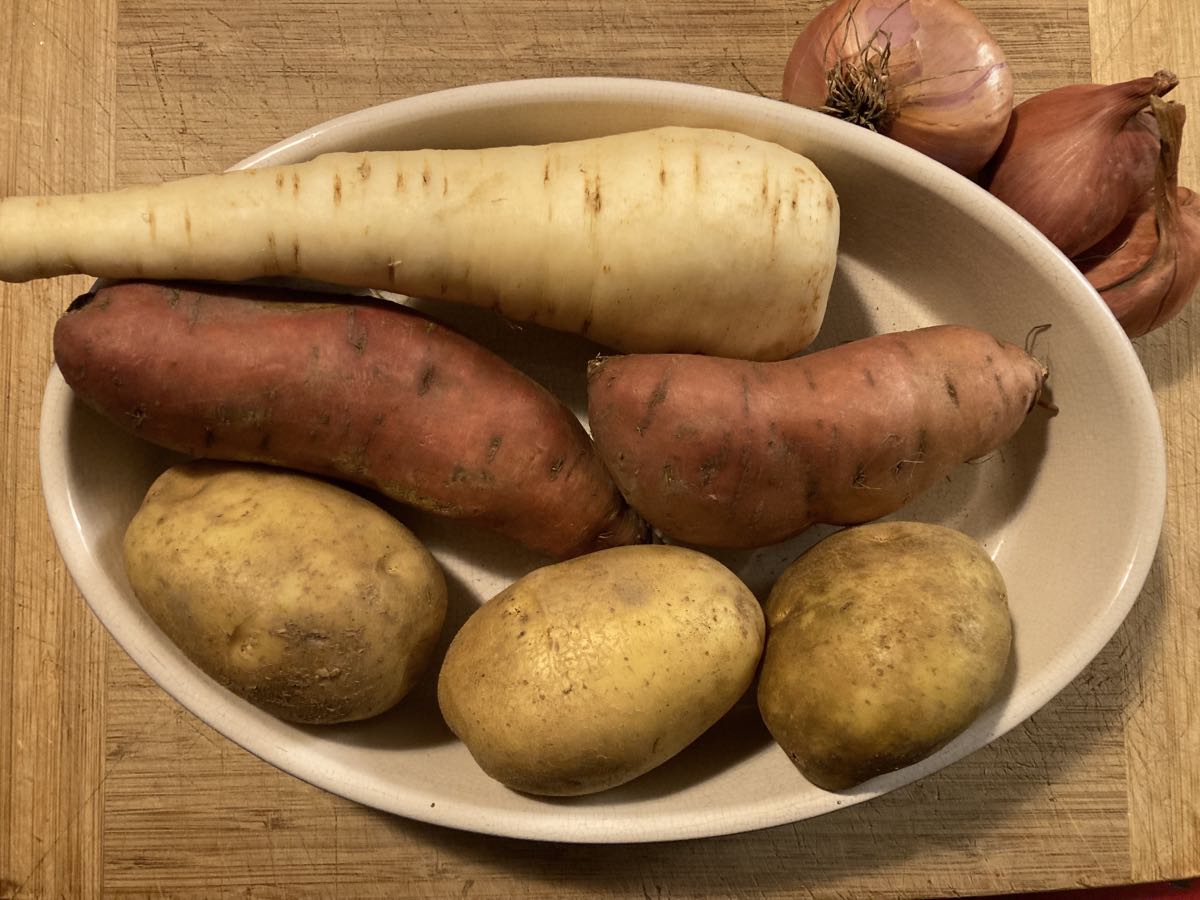
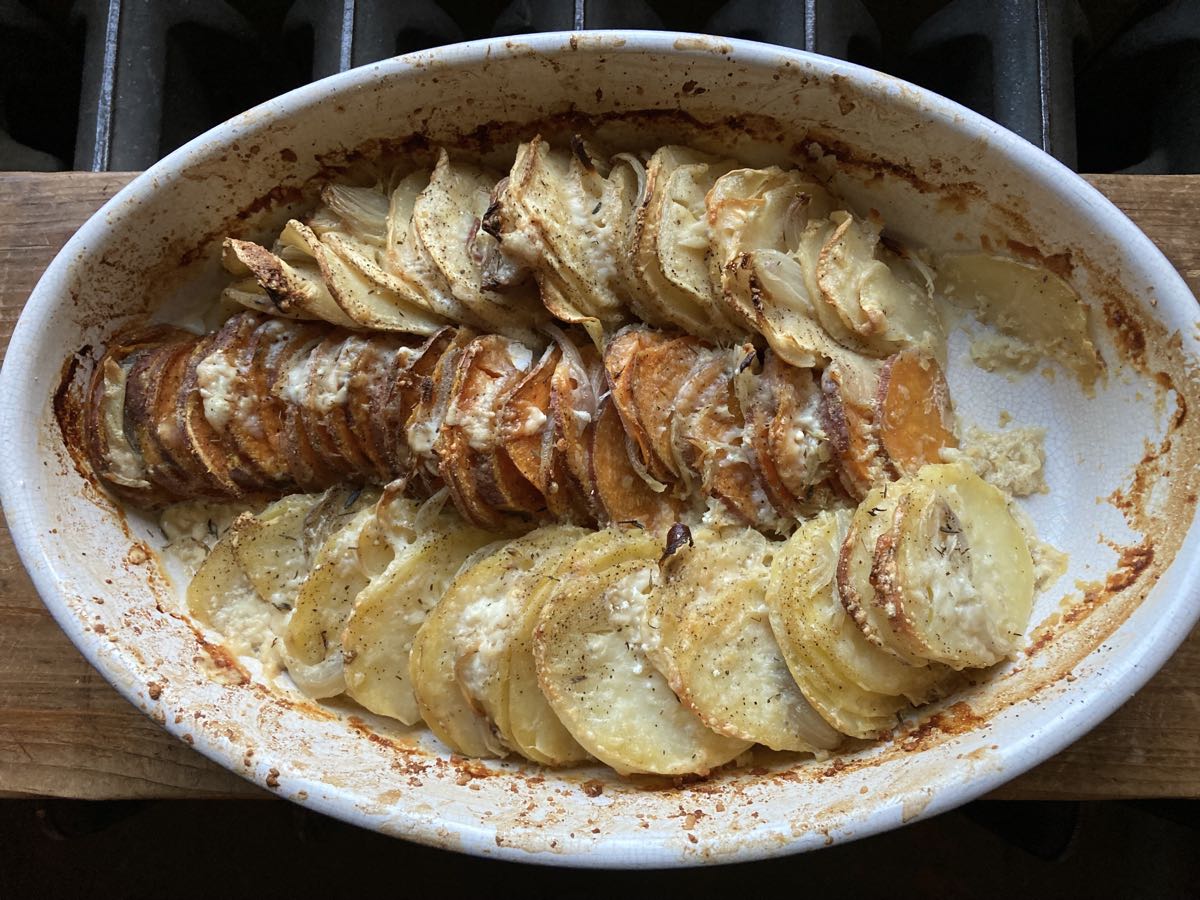
Beth’s Gratin
I made the recipe above with these adaptions and it was still delicious! And pretty!
– I substituted oat milk for the heavy cream but didn’t change the amounts of cheese. Honestly, skipping the cream did not matter.
– I used potatoes, sweet potatoes and parsnips, skipping beets to avoid the bleeding issues described in the original recipe.
– I added sliced shallots between every few slices.
– I baked it covered with foil for 45 minutes, then added gruyere cheese as directed and baked an additional 15 minutes.
It worked well to lay the raw vegetables in my baking dish to judge how much to slice. I used all shown in the top photo except one potato, including the shallots visible at the edge of the dish. We liked all three vegetables but the parsnips were the star so I’m making a sweet potato and parsnip version for Thanksgiving.
Extension Share
- On: November 03, 2021
- 0
Just three more weeks. Please don’t let it snow!
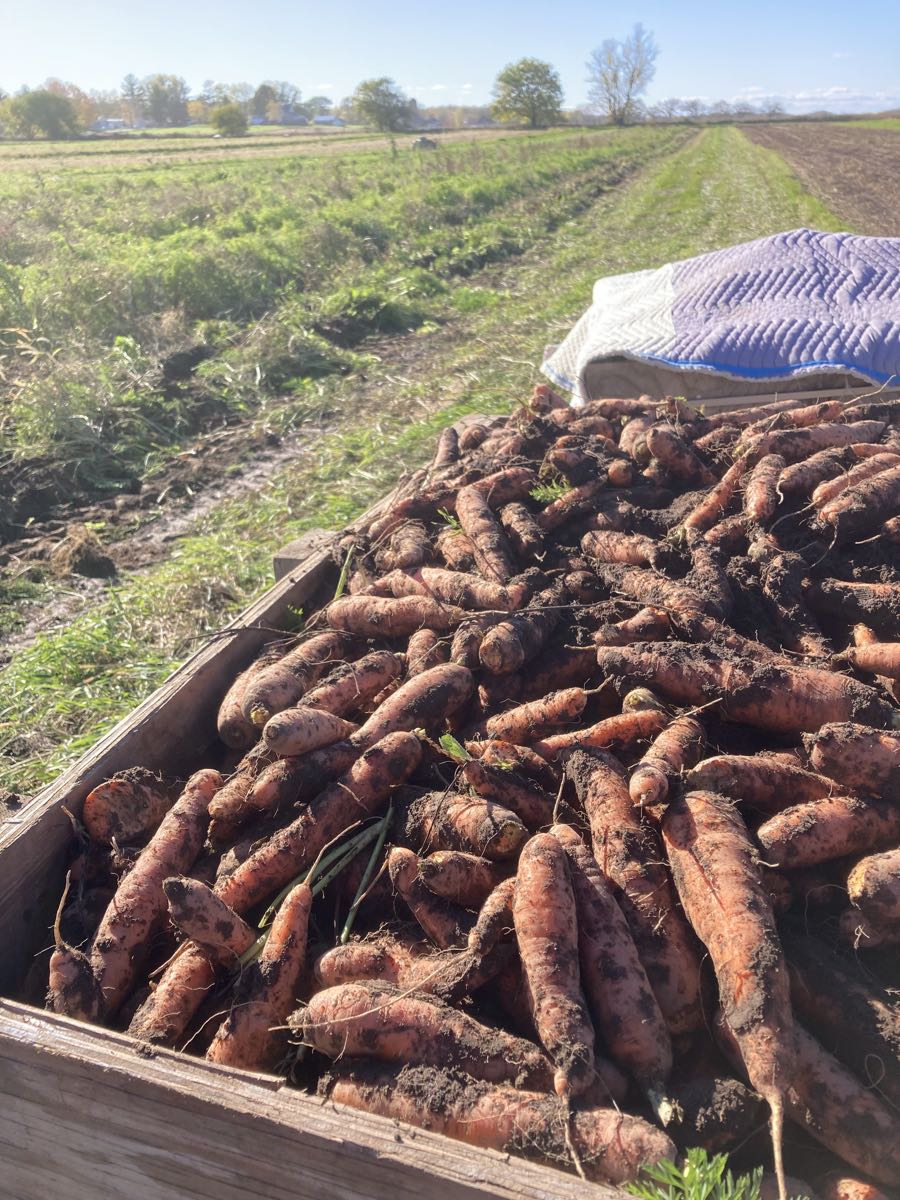
Bins of freshly harvested carrots
With our crew, we surge toward our finish line, harvesting and packing crops into storage. We’re like squirrels, stashing away cabbage and root crops. By Thanksgiving, we’ll be done. This spell of cold weather has forced us to prioritize the more frost-vulnerable crops first. All the celeriac, beets, daikon, rutabaga, napa cabbage are in. We’re still working on carrots, parsnips, cabbage and leeks. They can handle some very cold nights without damage.

Steve and I harvest carrots together most weekends. He steers the harvester from the tractor. I ride the back and keep the carrots flowing into bins. We can harvest a lot, with just the two of us.
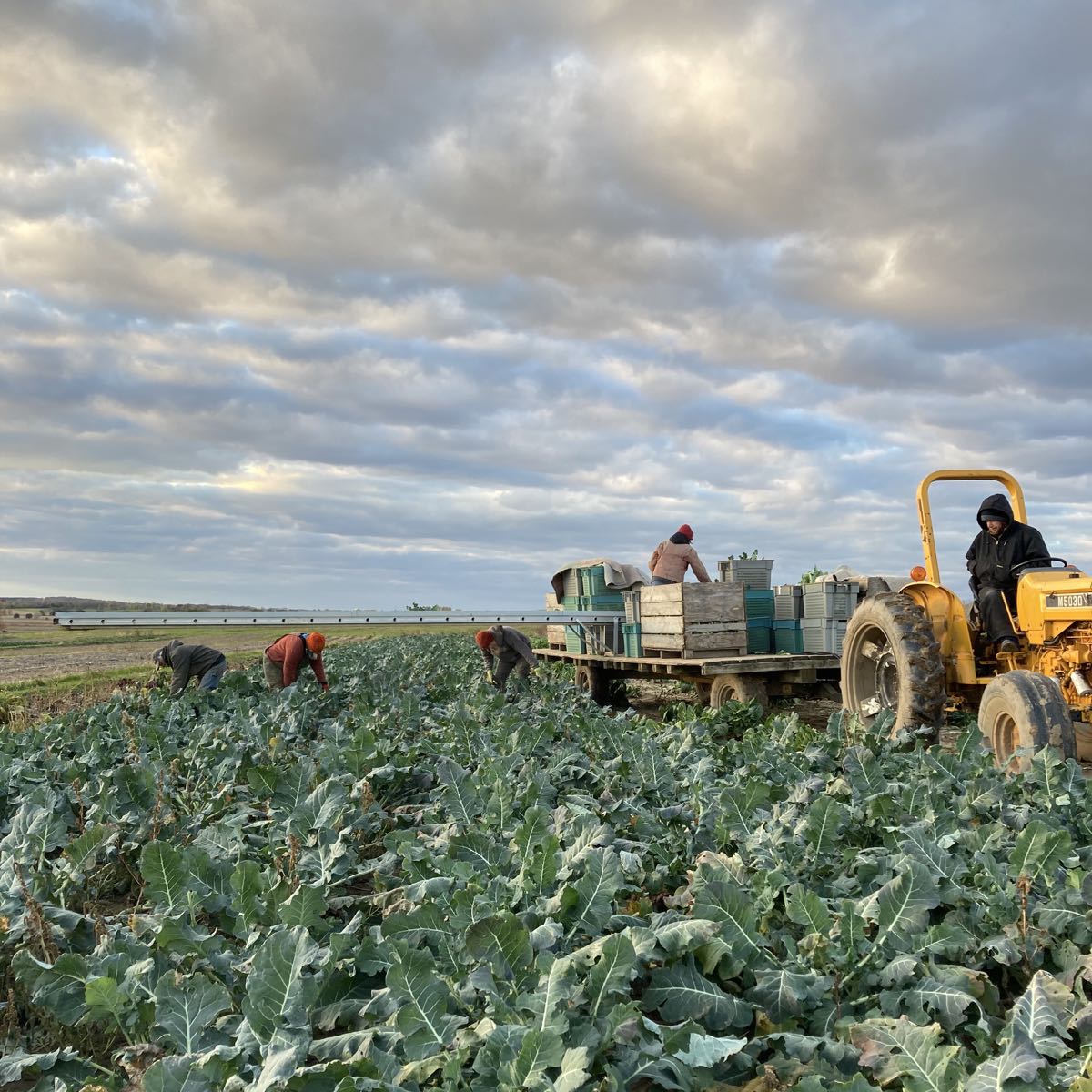
We picked lots of broccoli, cauliflower and some Romanesco for you this week, just before the nights got too cold. Steve, Maggie, Ben and I cut in the field. The conveyor carries the heads to the wagon.
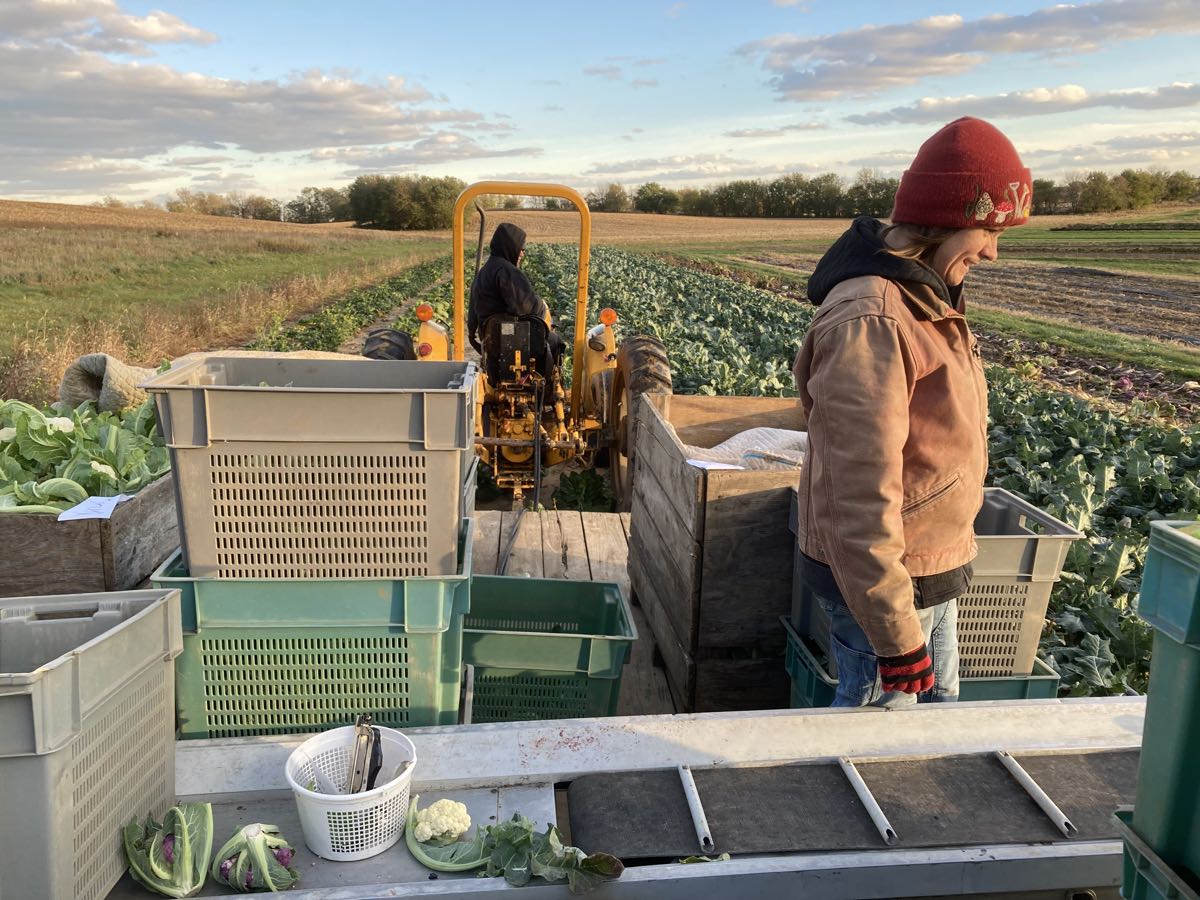
Karen grades and counts the cauliflower from the conveyor belt. So much counting! Mike drives the tractor.
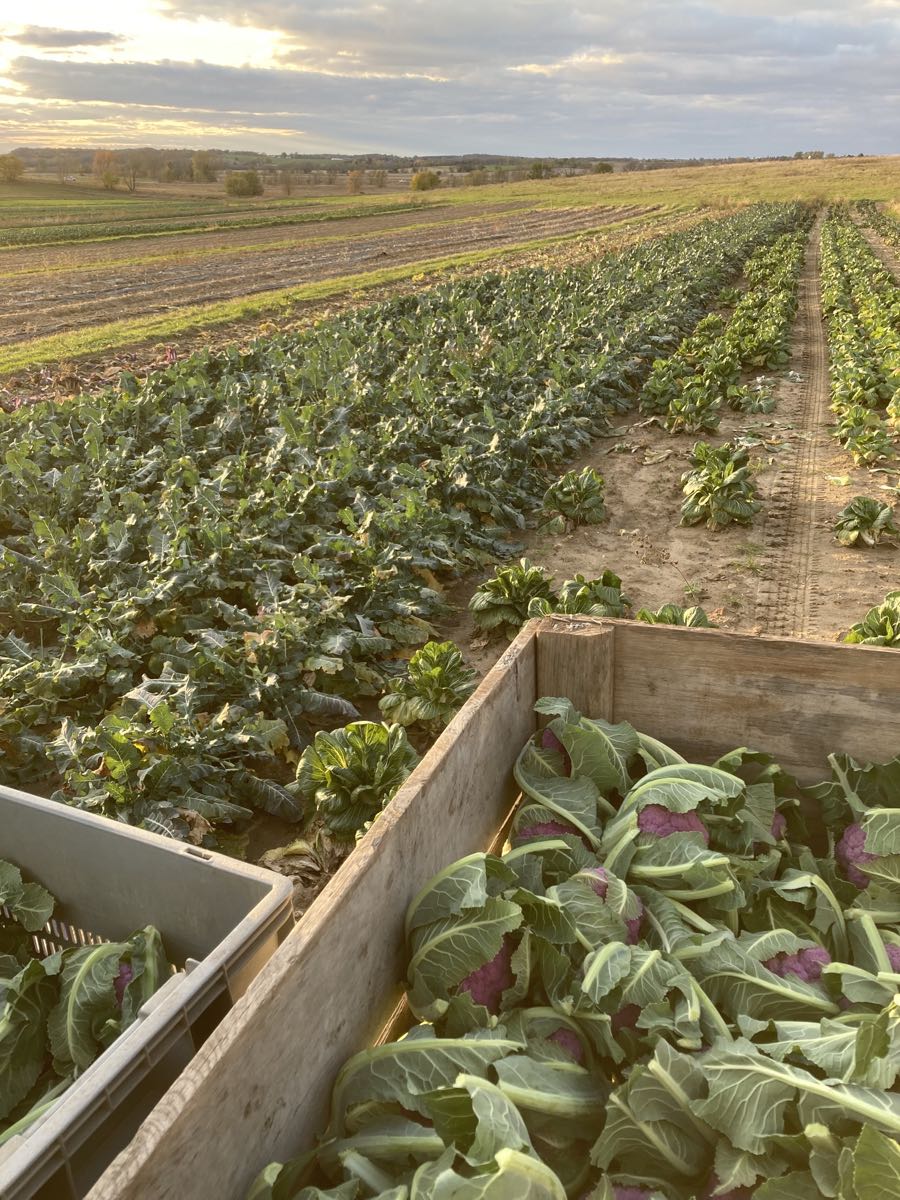
The farm is beautiful in the afternoon light.
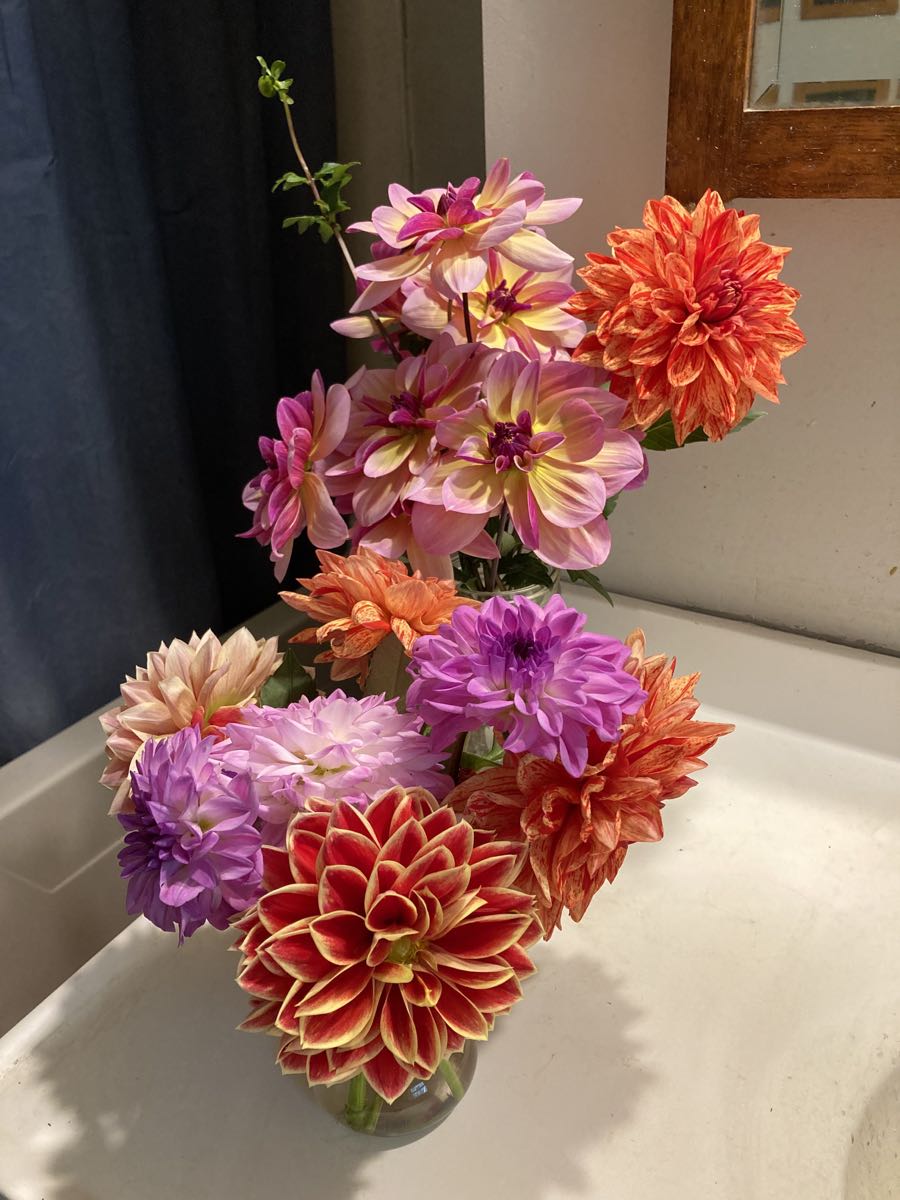
Our house is filled with flowers that I cut before the freeze. I bet you all did the same! These are my favorite dahlias.
Veggie List & Veggie Notes
Extension Share
November 4/5, 2021
Winter squash (‘Autumn Frost’ or ‘Heart of Gold’)
‘Orleans’ sweet potatoes, 2 lb
White cauliflower, 1
Purple cauliflower, 1 small
Broccoli, 1 small
Carrots, 2 lb
‘Suntan’ bell peppers, 2
Poblano chiles, 2 (in bag with carrots)
Red onion
Yellow onion
Garlic
By site, you’ll get an additional portion of Romanesco cauliflower OR cauliflower (white or green or purple) OR broccoli.
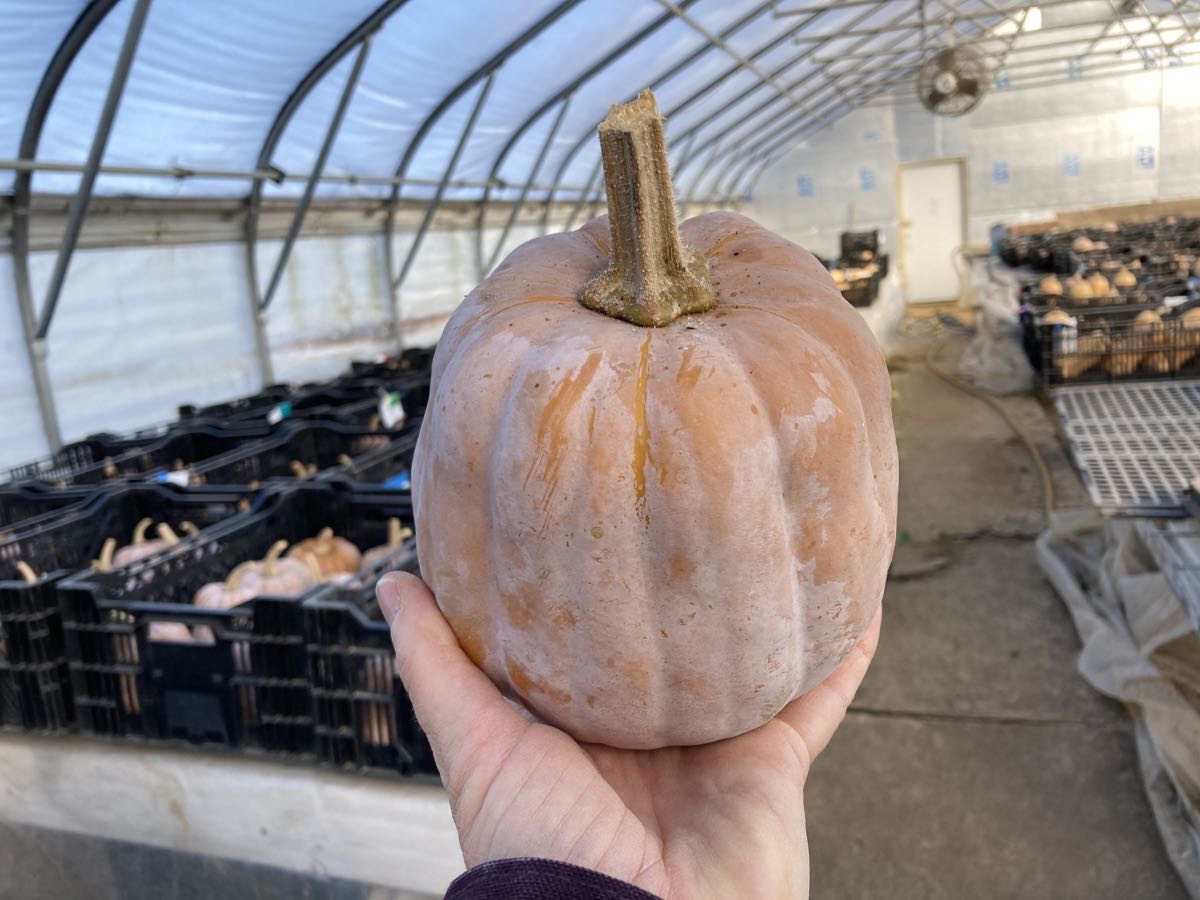
‘Autumn Frost’ squash – Store cool and dry. 60 F is ideal.
This beautiful frosted squash has both pumpkin and butternut squash breeding. They cook and taste like an unusually good butternut, with rich, smooth texture. They are quite nice. The skin is edible. They store very well but you have to keep an eye on them. If you see flaws developing, eat promptly.
‘Heart of Gold’ acorn squash – A few sites get these speckled acorn squash. We’ve trialled this variety a few years and are very happy with its flavor and sturdiness. Eat these soon – acorn squash do not store for long.
Orleans sweet potatoes – Store at room temperature, no colder than 60 F.
We couldn’t wash the sweet potatoes because of the cold weather. We had to drain all the pipes in our pack shed. Therefore, we packed the unwashed sweet potatoes into paper bags, to keep everything else from getting dirty.
Garlic – This is the German Extra Hardy strain.
Medley of cauliflowers, broccoli, Romanesco – Refrigerate.
We have a medley of these crops to share this week. Most people will get a white cauliflower + a small purple cauliflower + something else (unless your cauliflower is unusually large). The warm fall weather delayed these crops. Cauliflower and Romanesco don’t set their heads without cold weather. We’re glad they made it but then we had to pick them small before the freeze.
RECIPES from PHOEBE
Visit our 2020 Recipe Log or our 2019 Recipe Log.
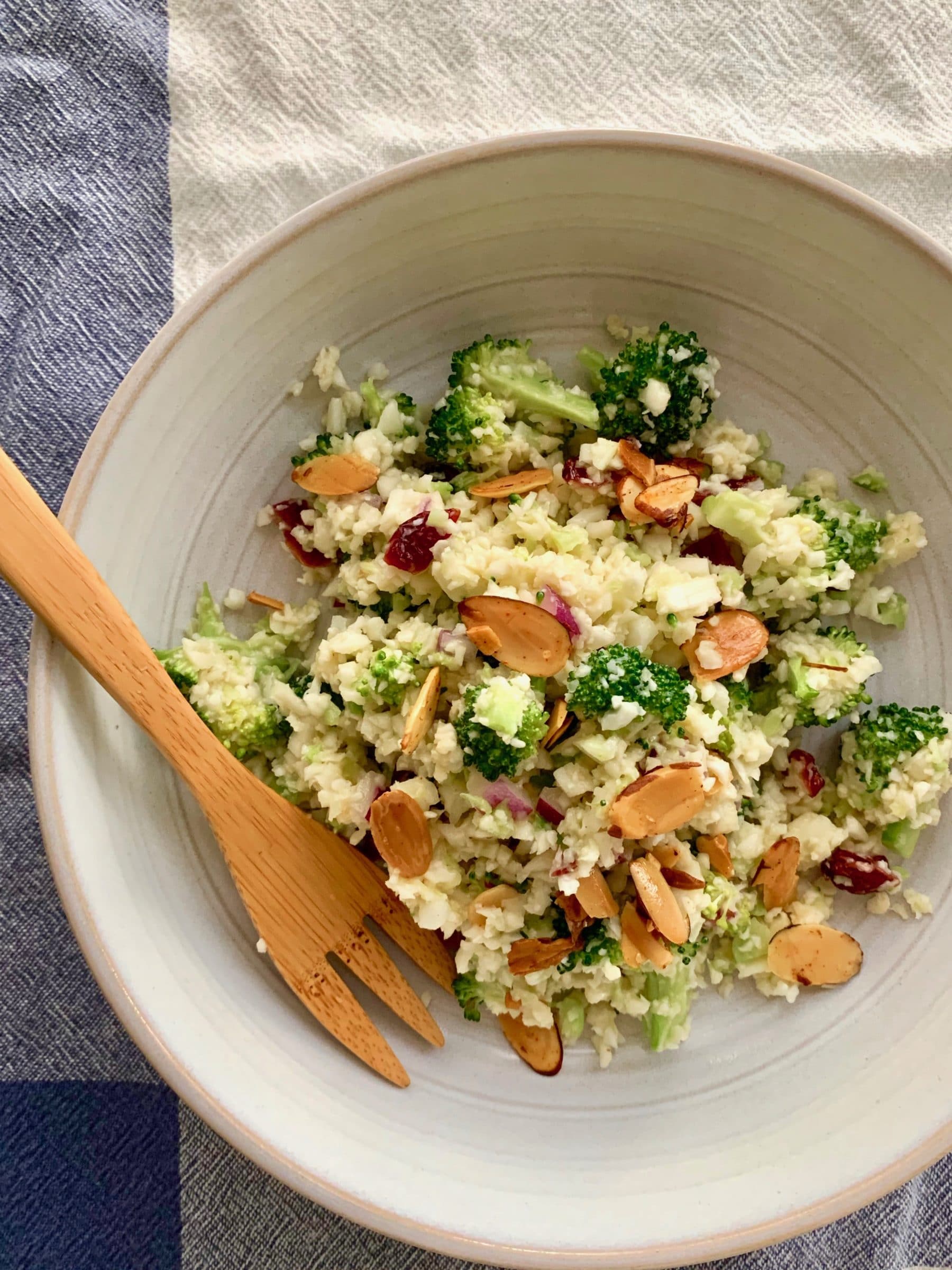
Broccoli and Cauliflower Rice Salad with Honey Mustard Dressing
Tossed in a sweet and tangy honey mustard dressing, this salad is a fresh, fun side dish. You can make it a day or two ahead of time, but wait to add the toasted almonds until right before you eat.
Serves: 4-6
Prep time: 20 minutes, plus 30 minutes marinating
Cook time: 5 minutes
Ingredients
1 small head broccoli (about 1/2 pound)
1 small cauliflower (about 1 pound), chopped
3 1/2 tablespoons extra-virgin olive oil, divided
2 tablespoons Dijon mustard
2 tablespoons apple cider vinegar
1 tablespoon honey
1 garlic clove, grated
1/2 teaspoon sea salt, more for sprinkling
1/4 cup diced red onion
1/2 cup sliced almonds
Big pinch smoked paprika
Heaping 1/4 cup dried cranberries
- Break the broccoli into small florets. Set them aside and roughly chop the stalk. Place the chopped broccoli stalk in a food processor with half the cauliflower and lightly pulse until the vegetable pieces are well-chopped, but not pureed, about the size of grains of rice. Transfer to a large bowl and repeat with the remaining cauliflower.
- Make the dressing: In a small bowl, whisk together 3 tablespoons of the olive oil, the mustard, vinegar, honey, garlic, and 1/2 teaspoon salt.
- Add the second batch of cauliflower, the broccoli florets, and the red onion to the large bowl, and toss to combine. Pour in the dressing, and mix well to coat. Set aside for at least 30 minutes so that the vegetables have a chance to marinate in the dressing.
- Meanwhile, toast the almonds. Line a large plate with paper towels. Heat the remaining 1/2 tablespoon olive oil in a medium skillet over medium-low heat. Add the almonds and cook, stirring constantly, until golden brown and fragrant, 4-5 minutes, turning down the heat as necessary. Remove from the heat and scrape onto the lined plate. Spread in an even layer, sprinkle with salt and smoked paprika, and set aside to crisp and cool for 10 minutes.
- Before serving, fold the dried cranberries into the salad and sprinkle with the almonds. Season to taste and serve.
.
.

Roasted Cauliflower Flatbreads
Thanks to toppings like dried apricots, olives, roasted onions, and cauliflower, these flatbreads boast a delicious, unexpected mix of sweet, tangy, and briny flavors. Slice them up and serve them as an appetizer, or enjoy them as a meal on their own. I like to make them with store-bought naan, though if there’s another type of flatbread you like, go ahead and use it instead!
Serves: 4-8
Prep time: 15 minutes
Cook time: 30 minutes
Ingredients
5 cups small cauliflower and/or Romanesco florets (1 pound)
1/2 cup cooked chickpeas, drained and rinsed
1/2 onion, peeled and sliced into thin wedges
1 cup crumbled feta cheese (4 ounces)
3 tablespoons extra-virgin olive oil, more for drizzling
1 tablespoon fresh lemon juice
1 tablespoon water
4 large or 8 small naan or other flatbreads
3 dried apricots, diced
1/4 cup pitted green olives, torn
Zest of 1/2 lemon
Sea salt and freshly ground black pepper
- Preheat the oven to 425°F and line two large baking sheets with parchment paper. Place the cauliflower and/or Romanesco florets on one sheet and the chickpeas and onion wedges on the other. Drizzle with olive oil, sprinkle with salt and pepper, and toss to coat. Spread in a single layer and roast for 25-30 minutes, or until the chickpeas are crisp, the onion is soft and browned, and the cauliflower is tender and browned around the edges.
- Remove the baking sheets from the oven and measure 1/2 cup of the cauliflower florets. Place them in a food processor with the feta, 3 tablespoons olive oil, lemon juice, and water. Process until smooth.
- Meanwhile, warm the flatbreads in the oven. I like to place them directly on the oven racks for 5 minutes, or until slightly browned and beginning to crisp up on the bottom.
- Assemble the flatbreads with a slather of the feta mixture, the remaining cauliflower florets, the chickpeas, onions, dried apricots, and olives. Sprinkle with the lemon zest, season with a few grinds of black pepper, and serve.
.
.
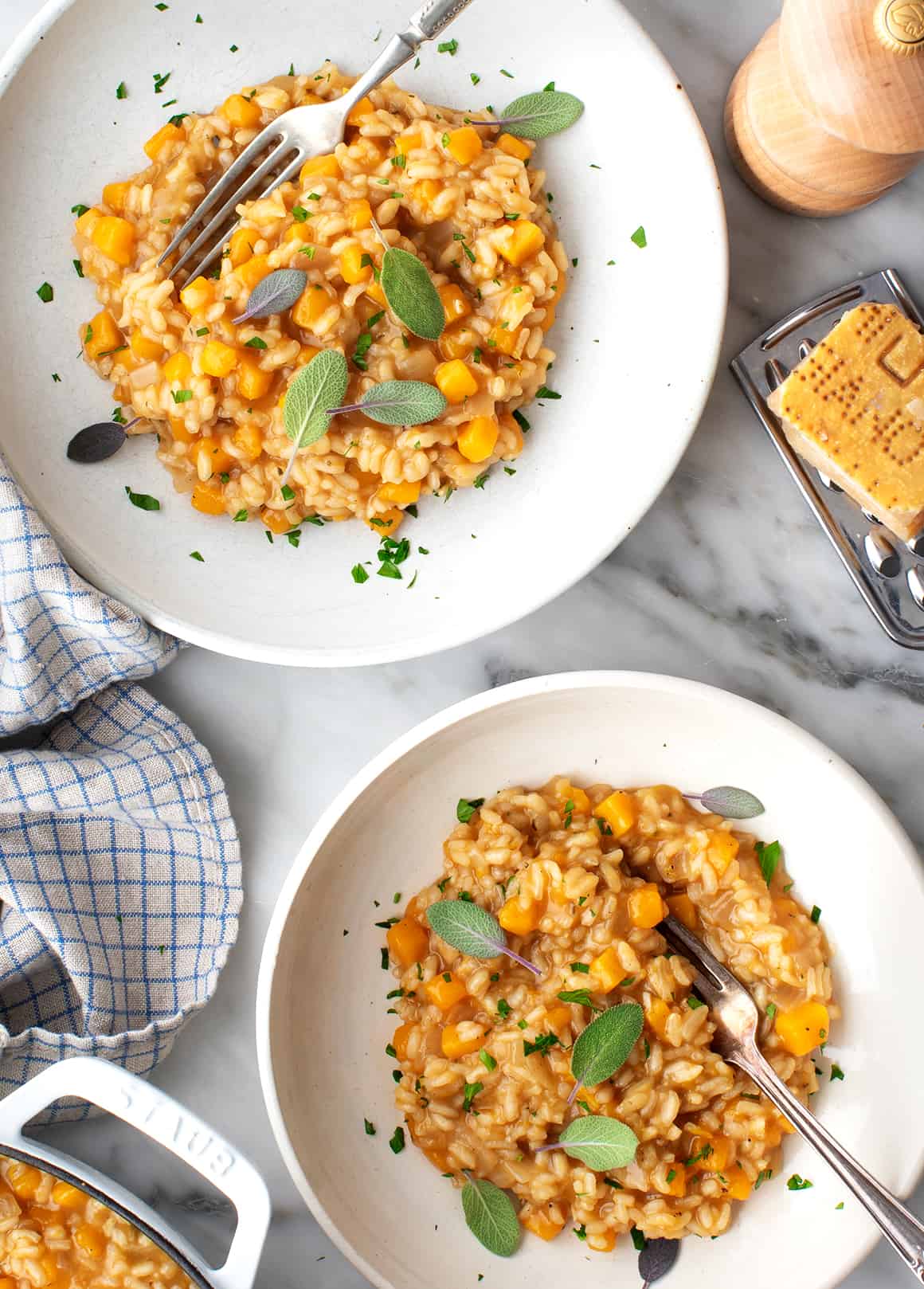
Butternut Squash Risotto
From Love & Lemons
Dice up your Autumn Frost squash, and use it in this creamy, comforting fall risotto. If you don’t have rosemary or sage on hand, feel free to skip it. Even without the herbs, this recipe is fantastic.
.
.

Poblano Chicken Fajitas
From What’s Gaby Cooking
Served with tortillas and whatever fixings you like, this fajita recipe is an easy, 1-skillet meal. Toss in the poblanos and bell peppers from your box – any color will be fine!
.
,
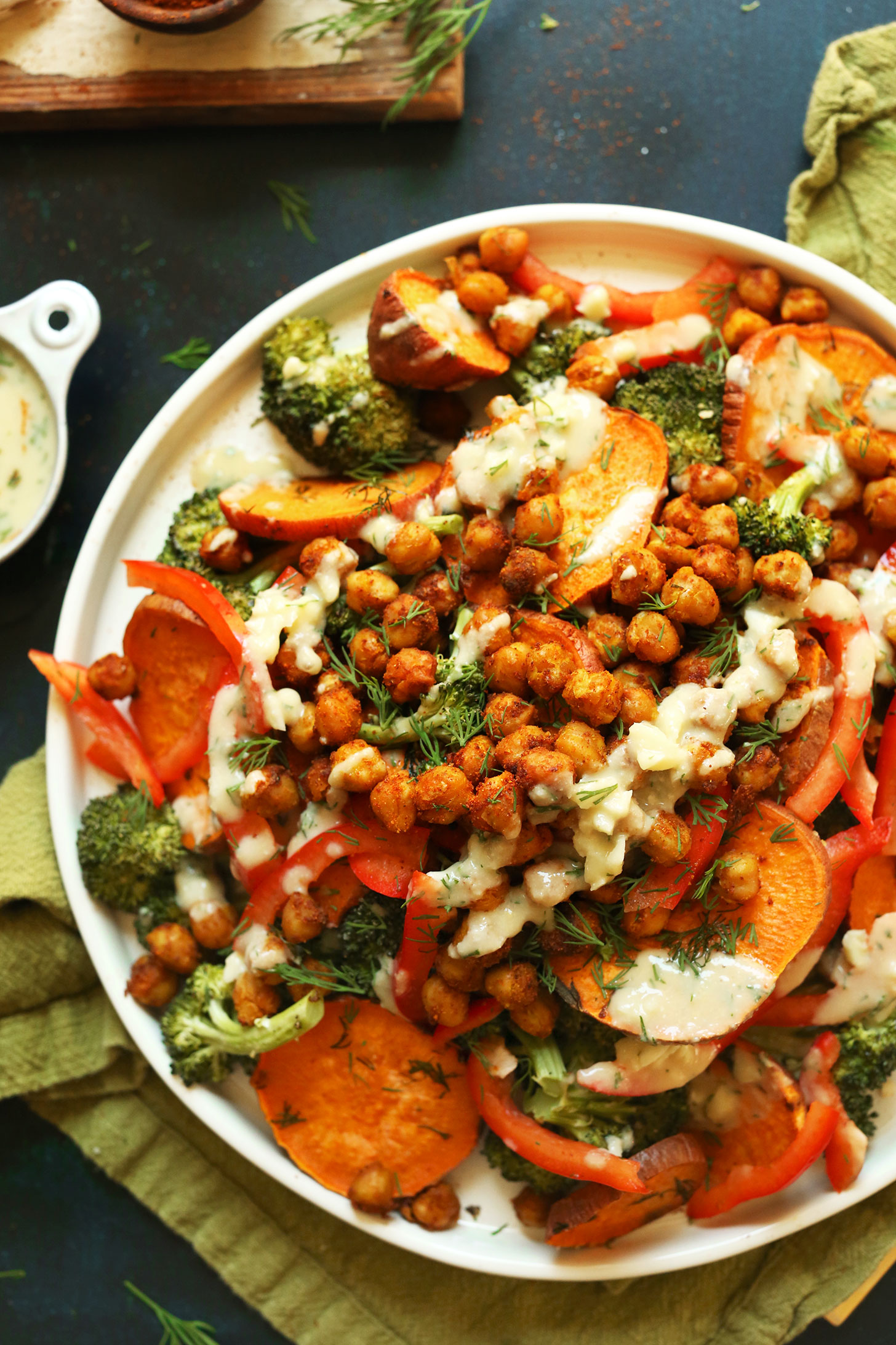
Roasted Broccoli Sweet Potato Chickpea Salad
From Minimalist Baker
This hearty salad would be a great lunch or light dinner. Cauliflower or Romanesco cauliflower would be a fine sub for the broccoli here, or you could use a mix of cauliflower and broccoli.
.
.
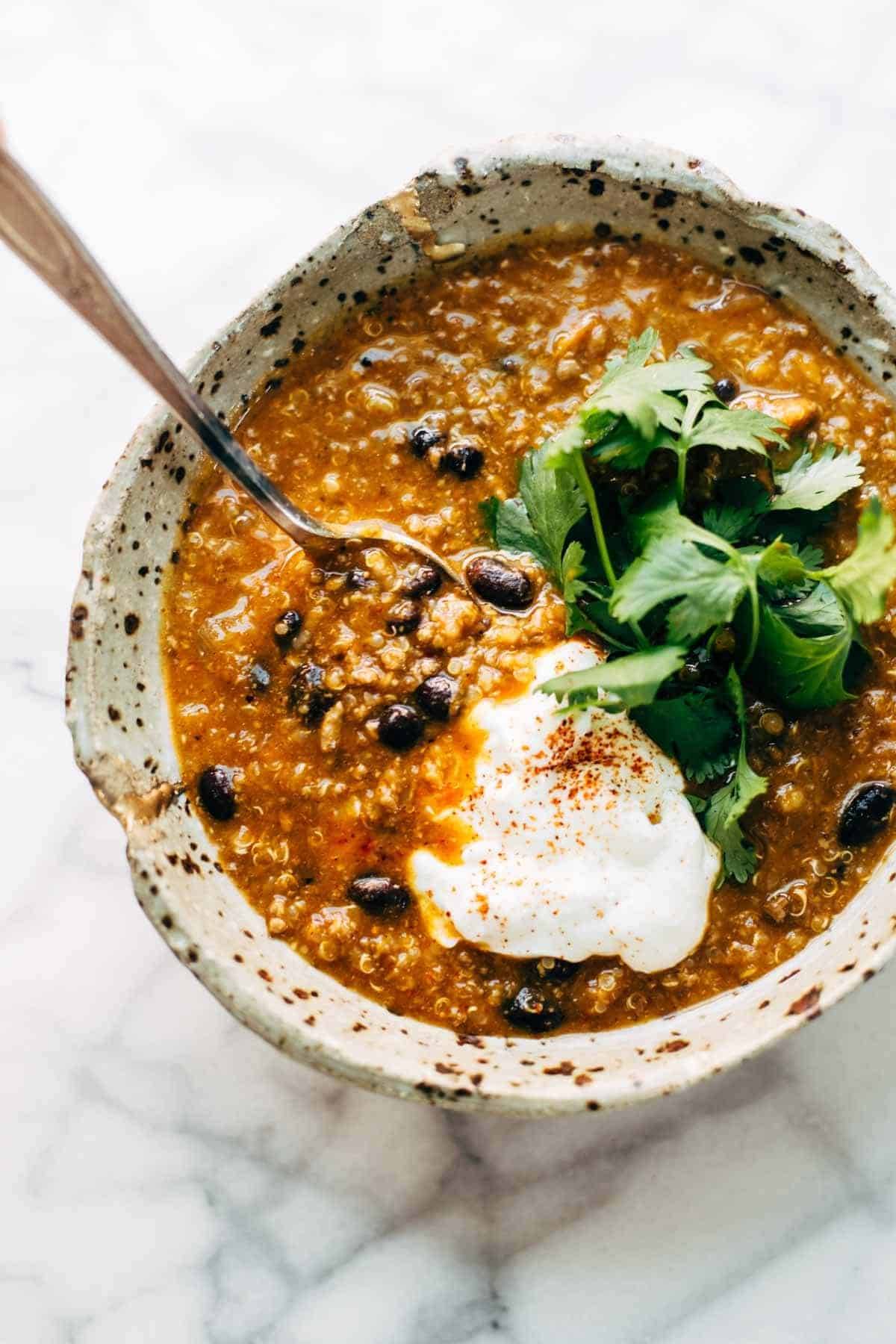
5-Ingredient Sweet Potato Turkey Chili
From Pinch of Yum
Ok, in reality, this recipe is more like 10 ingredients, but it’s super simple nonetheless. Perfect for using this week’s sweet potatoes!
.
.
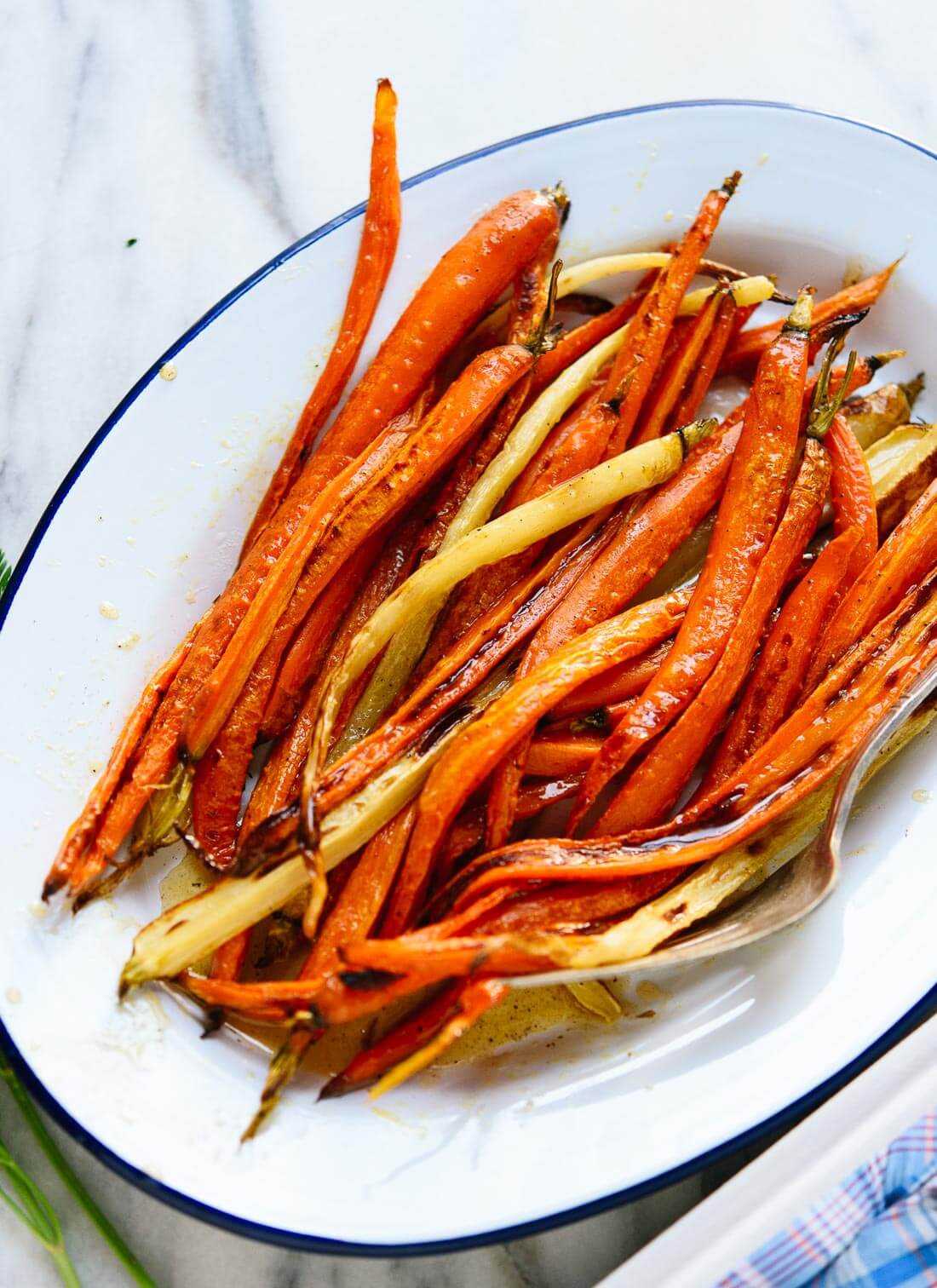
Roasted Carrots with Honey Butter
From Cookie + Kate
A drizzle of honey butter highlights the natural sweetness of these simple roasted carrots.
.
.
Spicy Sesame Carrot Soup with Red Lentils
From The First Mess
Tahini and red lentils give this pureed soup a rich, creamy texture. Serve with crusty bread for a delicious fall meal!
Week #24; Final week of the regular season
- On: October 27, 2021
- 0

My ‘garlic office’ upstairs in the barn is a warm and peaceful place to sort garlic.
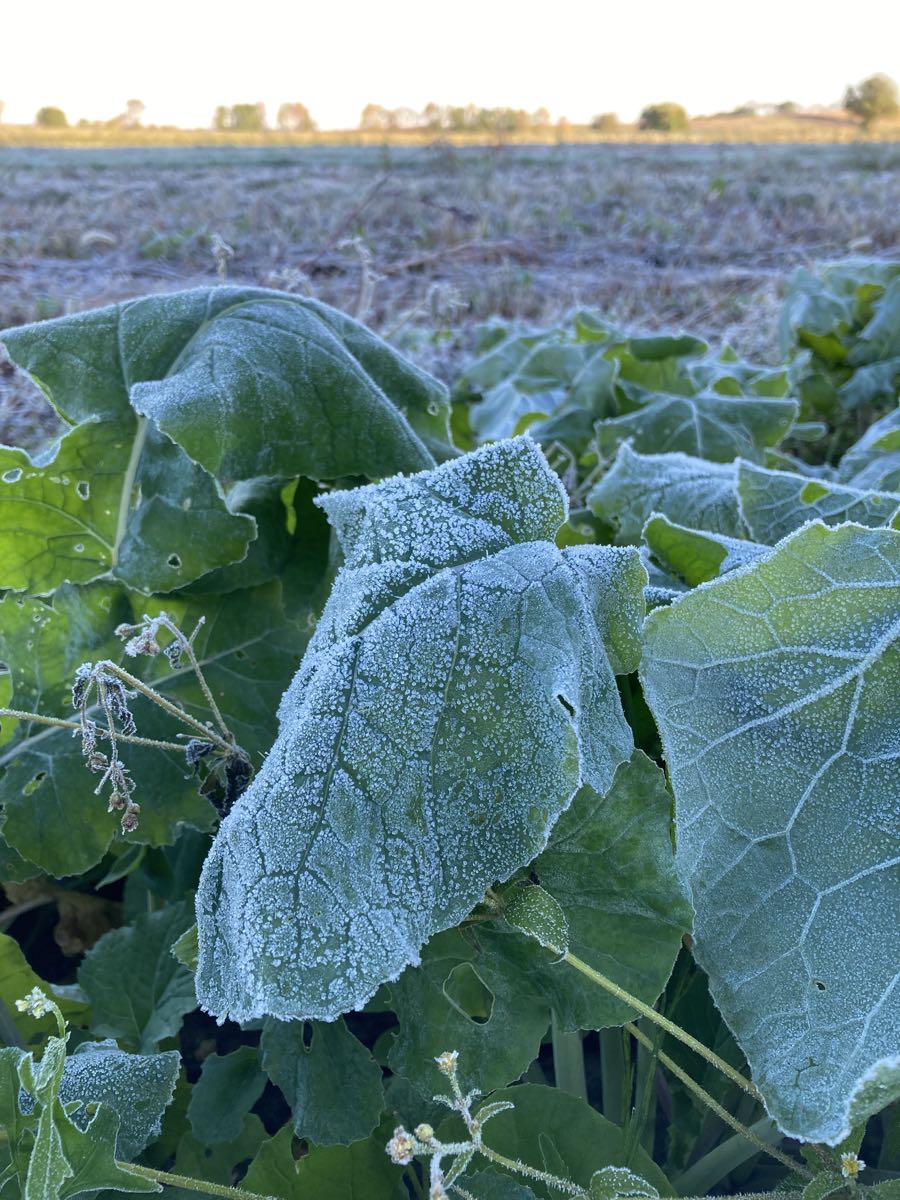
Frost on rutabaga leaves
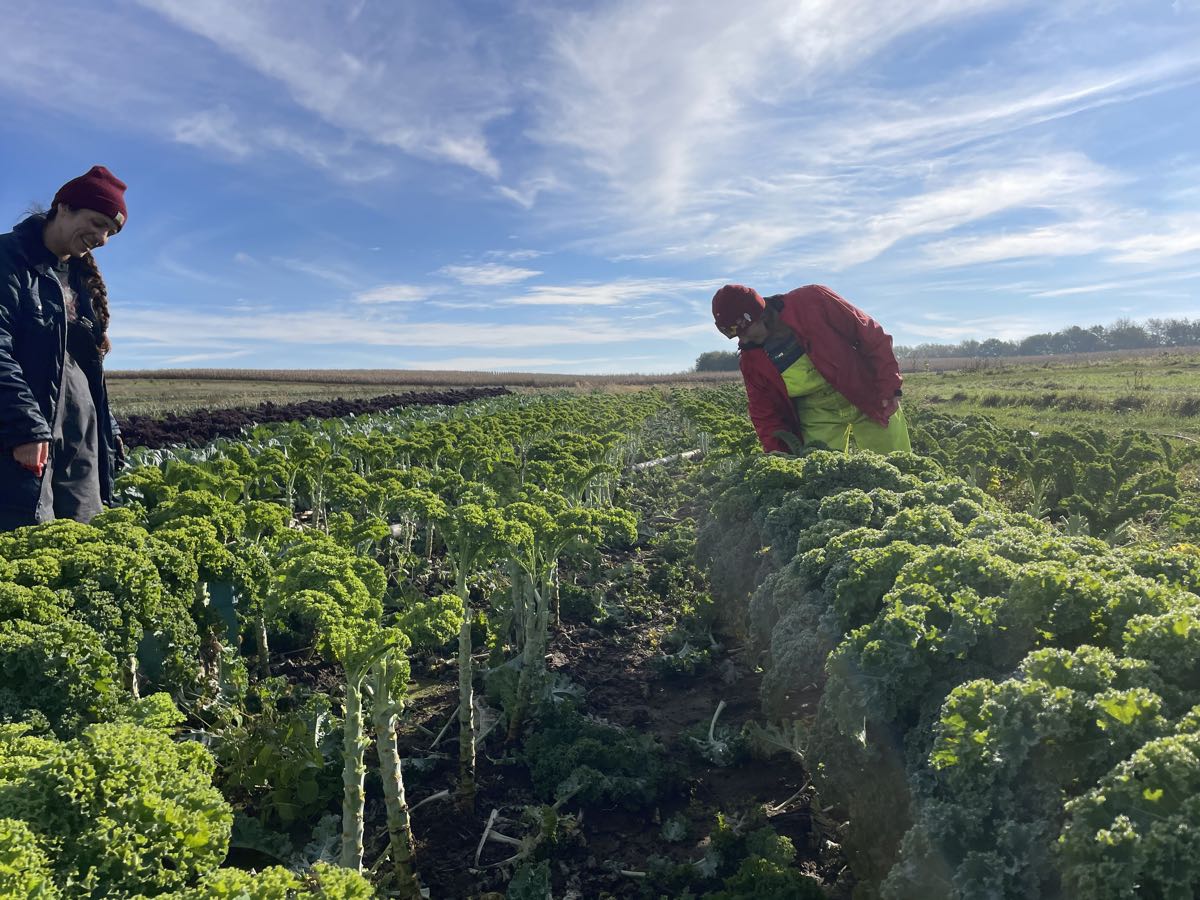
Kale harvest on a blue-sky day. Photo credit Matt Salbego
Season’s end
This is the final delivery of our May – October season. Thank you so much for joining our farm this year. We deeply appreciate the trust you have placed in us. Thank you for letting us feed you. We hope you discovered new favorite dishes, and that we helped you and your friends and family stay healthy and well-fed.
You can expect to hear from us again this fall. We are busy hauling in storage crops and will finish that work by Thanksgiving. Soon, we’ll analyze the season and will get in touch to share our thoughts on the year and will send a survey to gather your thoughts as well.
Have a happy and healthy Thanksgiving.
Love,
Beth & Steve
Veggie List & Veggie Notes
Week #24, October 28/29, 2021
– Weekly shares
– EOW/ green
Brussels sprouts, ~1 lb
‘Orleans’ sweet potatoes, ~3 lb
Butternut squash
Beets, ~2 lb
Celeriac, 1 root
Kale or collards, 1 bunch
A few peppers, mostly ‘suntan’ bells
Poblano chiles (medium heat; in bag with Brussels sprouts), 2
Yellow onion, 1
Red onion, 1
Garlic, 1/2 bulb
– Some sites get broccoli.
– Some sites get cauliflower.
– One site gets Romanesco cauliflower.
Brussels sprouts – Now the sprouts have experienced a few frosty nights, which helps them sweeten a bit. These sprouts have flaws and need a close look. Peel off any bad outer leaves.
Celeriac (knobby, round, bizarre-looking vegetable which smells like celery) – Refrigerate. Celeriac will store in your refrigerator for months. Cut off chunks as you need them. Peel before using. Flavorful celeriac is good raw or cooked. It is excellent in mixed roasted veggies or in soup. It’s especially good in cream soups, alone or mixed with potatoes. Grated raw celeriac is a great starting point for winter salads.
Peppers – Everyone gets a few peppers this week. Most will be ‘suntan’ bell peppers. These are partly ripe; half red and half green. The season is ending so we cannot wait for them to ripen fully!
Garlic – Everyone gets a half bulb of garlic this week. These bulbs dried slowly or had bug issues, so we wanted to open and examine each one. Some of them are a little odd but all are useable.
RECIPES from PHOEBE
Visit our 2020 Recipe Log or our 2019 Recipe Log.
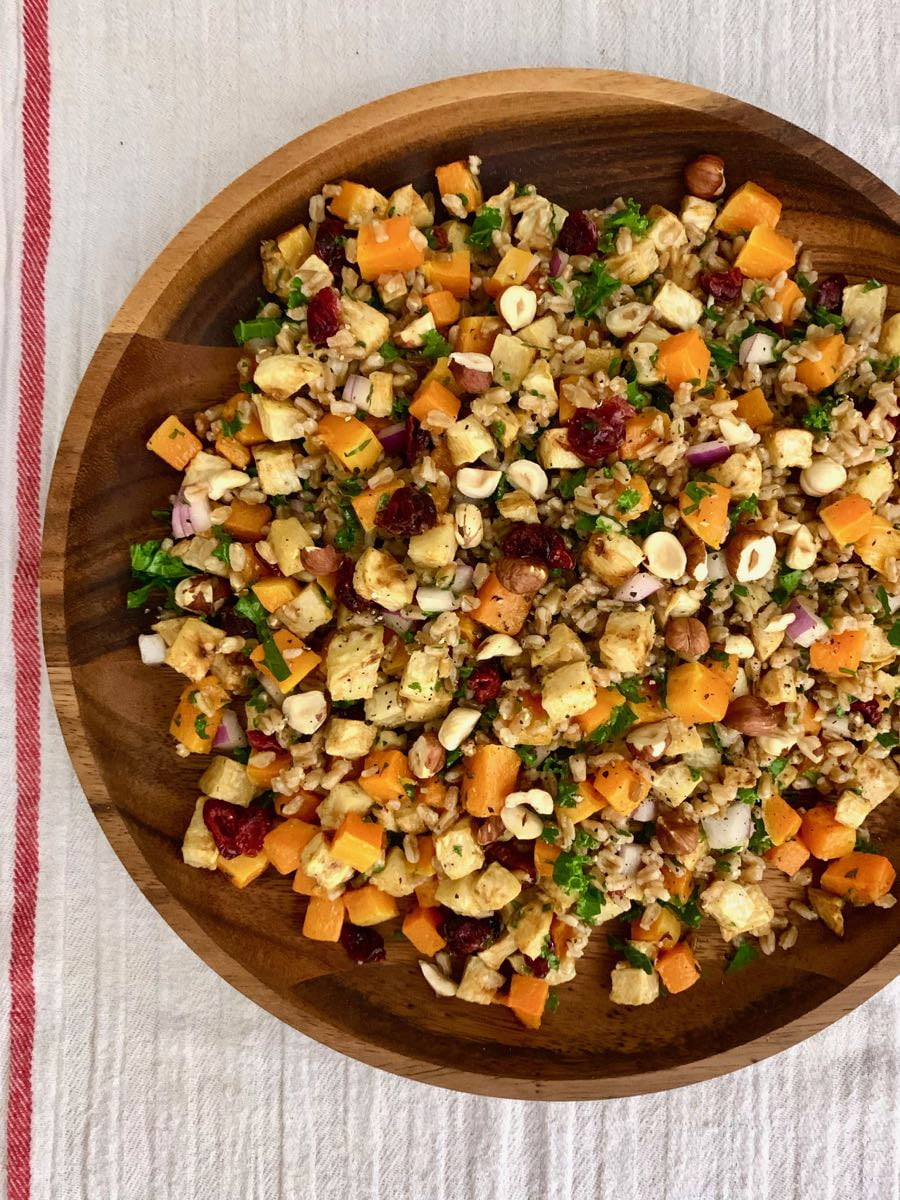
Fall Farro Salad with Cinnamon-Sage Dressing
Filled with sweet, nutty, and savory fall flavors, this hearty salad is a delicious lunch or side dish. It keeps well if you make it ahead of time, but wait to add the hazelnuts until right before you eat.
Serves: 4-6
Prep time: 15 minutes
Cook time: 50 minutes
Ingredients
1/3 cup raw hazelnuts
4 cups peeled and cubed butternut squash (1/2-inch cubes)
4 cups peeled and cubed celeriac (1/2-inch cubes)
1/4 cup extra-virgin olive oil, more for drizzling
3 tablespoons apple cider vinegar
1 garlic clove, grated
1 teaspoon maple syrup
1/2 teaspoon Dijon mustard
1/2 teaspoon ground sage
1/4 teaspoon cinnamon
1/4 teaspoon sea salt, more for sprinkling
Freshly ground black pepper
3 cups cooked farro
1/3 cup dried cranberries
1/3 cup diced red onion
1 kale leaf, finely chopped
- Preheat the oven to 350°F and line 2 large baking sheets with parchment paper. Spread the hazelnuts on one of the baking sheets and toast in the oven for 7-10 minutes, or until fragrant. Remove from the oven and transfer to a small bowl. Set aside to cool.
- Raise the oven temperature to 425°F. Place the butternut squash on one baking sheet and the celeriac on the other. Drizzle generously with olive oil and sprinkle with salt and pepper. Toss to coat, then spread in an even layer on the baking sheets. Transfer to the oven and roast for 30-40 minutes, or until fork-tender and lightly browned around the edges, tossing halfway.
- Meanwhile, make the dressing. In a small bowl, place the olive oil, vinegar, garlic, maple syrup, mustard, sage, cinnamon, and 1/4 teaspoon sea salt. Add a few grinds of fresh black pepper and whisk to thoroughly combine. Set aside.
- When the hazelnuts are cool to the touch, use your hands to rub off any loose skins. Roughly chop the nuts, then place in a large bowl with the farro, dried cranberries, onion, kale, and roasted vegetables. Toss to combine, then pour in the dressing and toss again. Season to taste and serve.
.
.

Roasted Beets with Cumin, Coriander, and Whipped Feta Yogurt
In this recipe, I serve sweet, earthy roasted beets over a creamy, tangy whipped feta yogurt. Toasted pepitas add crunch, and aromatic cumin and coriander seeds take it all over the top! If you want to get ahead here, you can roast the beets and prepare the yogurt up to 2 days in advance. Store them separately until you’re ready to serve.
Serves: 3-4
Prep time: 30 minutes
Cook time: 1 hour
Ingredients
3 medium beets
1 tablespoon pepitas
1 teaspoon coriander seeds
Heaping 1/4 teaspoon cumin seeds
1 garlic clove
1 cup whole milk Greek yogurt
1/2 cup crumbled feta cheese
1 1/2 tablespoons extra-virgin olive oil, divided, more for drizzling
1 1/2 tablespoons fresh lemon juice, divided
1/4 teaspoon sea salt, more for sprinkling
- Preheat the oven to 425°F. Wash the beets well and wrap each one in a sheet of aluminum foil with a drizzle of olive oil and a sprinkle of salt. Place on a baking sheet and roast for 45-60 minutes, or until easily pierced with a fork. Unwrap the foil and set the beets aside to cool.
- Meanwhile, place a small, dry skillet over medium-low heat and add the pepitas. Toast, stirring often, until fragrant and golden brown, 2-3 minutes. Transfer the pepitas to a small bowl and add the coriander and cumin seeds to the skillet. Toast, stirring often, until fragrant, 30 seconds-1 minute. Remove from the heat and transfer to a mortar and pestle. Lightly crush the seeds and set aside.
- Make the whipped feta yogurt: Place the garlic in a food processor and process until minced. Add the Greek yogurt, feta, 1 tablespoon of the olive oil, and 1 tablespoon of the lemon juice and process until smooth. Season to taste and set aside.
- When the beets are cool enough to handle, slip off their skins. Chop the beets into large chunks and transfer them to a medium bowl. Add the remaining 1/2 tablespoon olive oil, the remaining 1/2 tablespoon lemon juice, and 1/4 teaspoon sea salt and toss to combine.
- Spread the whipped feta yogurt on the bottom of a large plate or serving platter. Arrange the beets on top, leaving any juices behind in the bowl. Sprinkle with the pepitas and the crushed spices and serve.
.
.
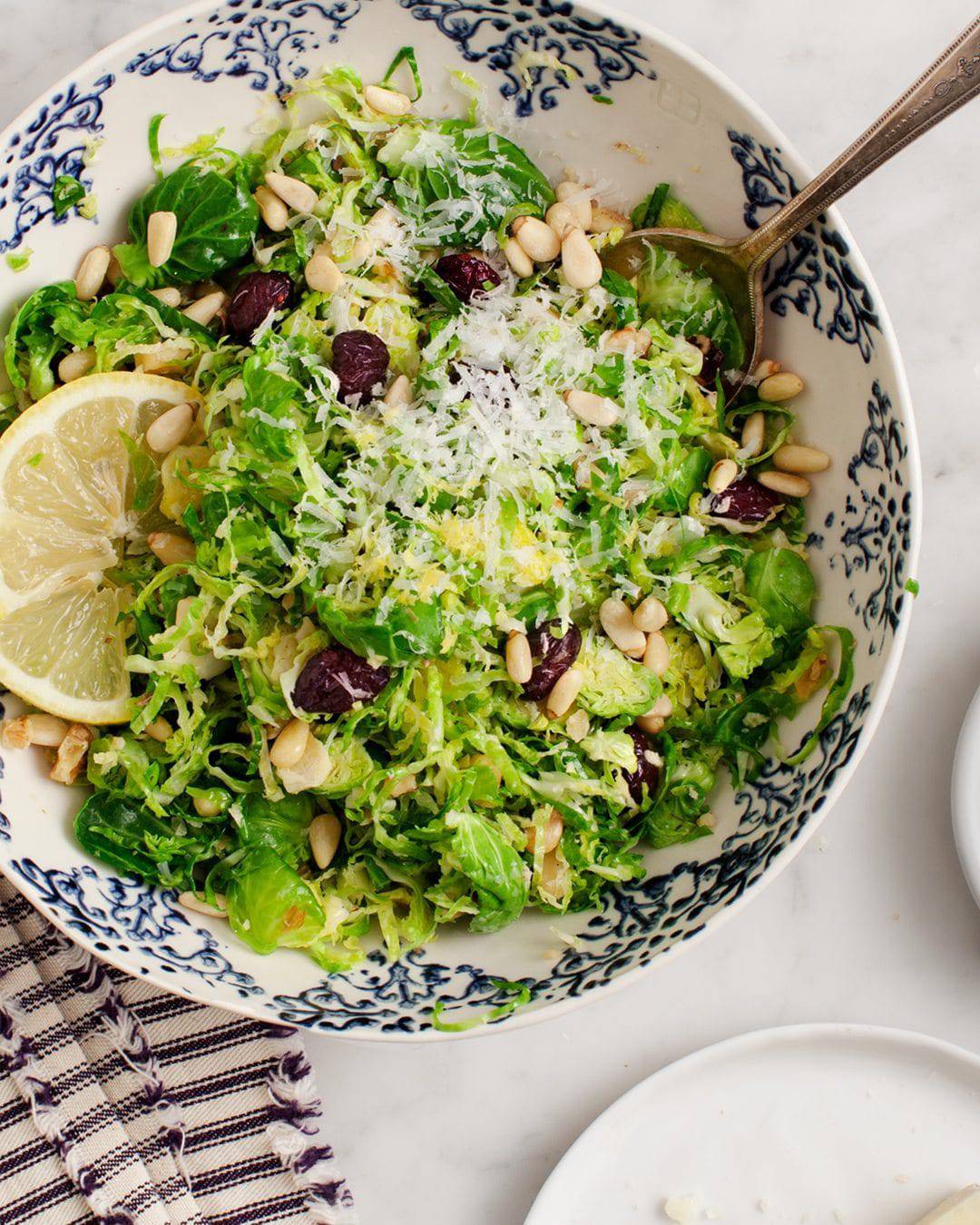
Shaved Brussels Sprouts Salad
From Love & Lemons
This simple fall salad is a bright, refreshing side dish! If you don’t have chives on hand, feel free to skip them. The salad is still great without.
.
.
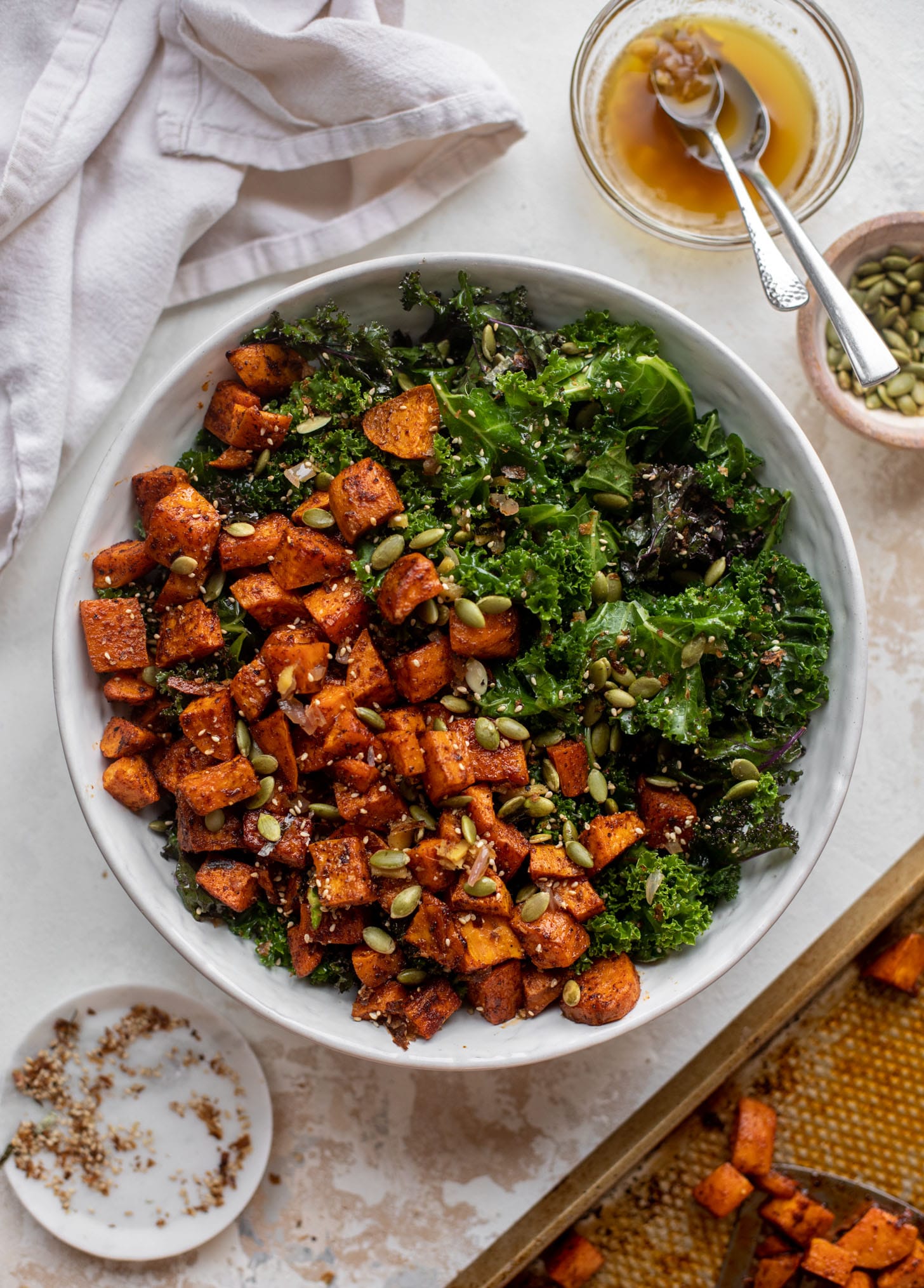
Smoky Sweet Potato Kale Salad with Hot Ginger Dressing
From How Sweet Eats
A perfect lunch salad! It’s made with massaged kale, smoky roasted sweet potatoes, and pepitas for crunch. A tangy, nutty ginger dressing ties it all together.
.
.
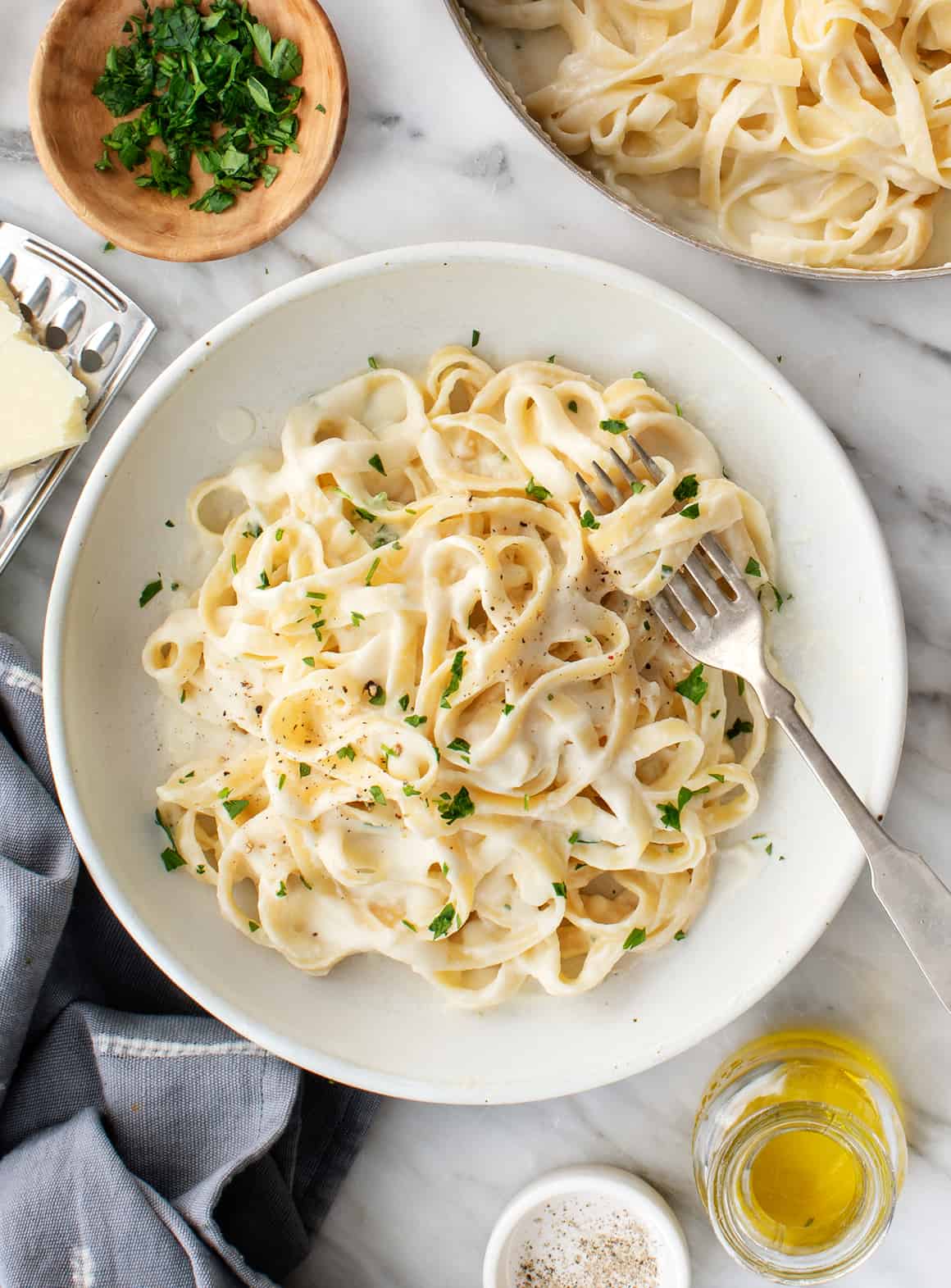
Fettuccine Alfredo
From Love & Lemons
This creamy, comforting pasta has a secret ingredient: cauliflower! For a vegan version, check out this post.
.
.
Garden Keeper’s Pie with Beets, Lentils, and Creamy Celery Root Mash
From The First Mess
This recipe is a perfect match for this week’s box. The filling is a saucy mix of beets, squash, and lentils, and it’s topped with a creamy, savory celery root mash. If you don’t have fresh thyme and rosemary on hand, dried will work just fine.
.
.
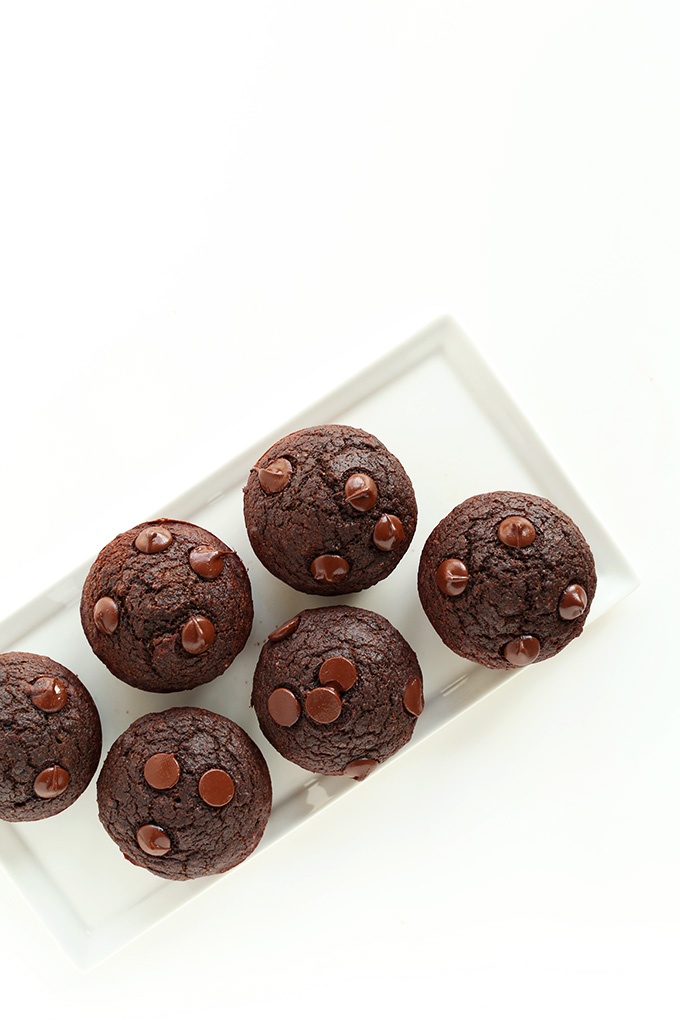
Fudgy Vegan Double Chocolate Beet Muffins
From Minimalist Baker
Blended roasted beets make these muffins wonderfully fudgy and moist. Don’t worry, you won’t taste them!
.
.
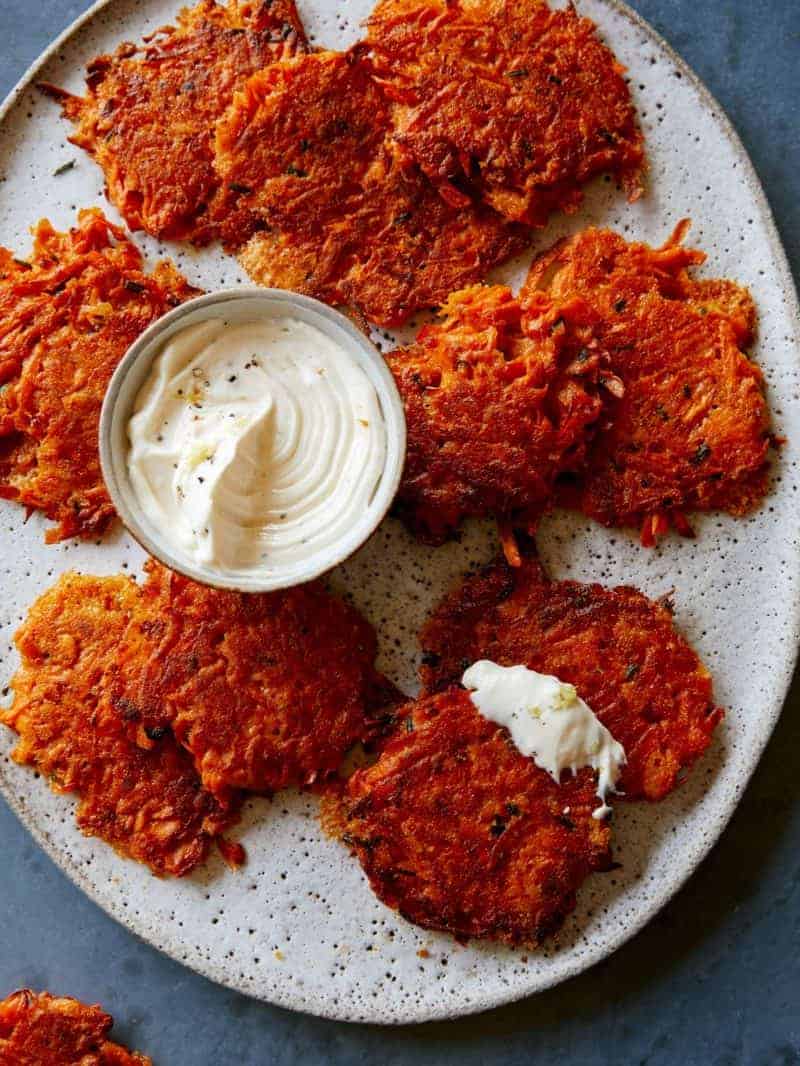
Cheesy Sweet Potato Fritters
From Spoon Fork Bacon
What a fun way to cook sweet potatoes! If you have extras, the recipe’s author, Jenny Park, recommends freezing them and reheating them later in the oven. Feel free to omit the chives if you don’t have any on hand.
Week #23; Season is almost over. Nature surges on.
- On: October 20, 2021
- 0

It is hard to believe that our regular CSA season is almost over!
Wow, it’s been an excellent growing season. Let’s review our final deliveries:
– This week (Oct 21) is the final delivery for our EOW/purple and Sampler/sun members.
– Deliveries ended two weeks ago for our Sampler/moon group.
– Next week (Oct 28) is the final delivery for Weekly and EOW/green.
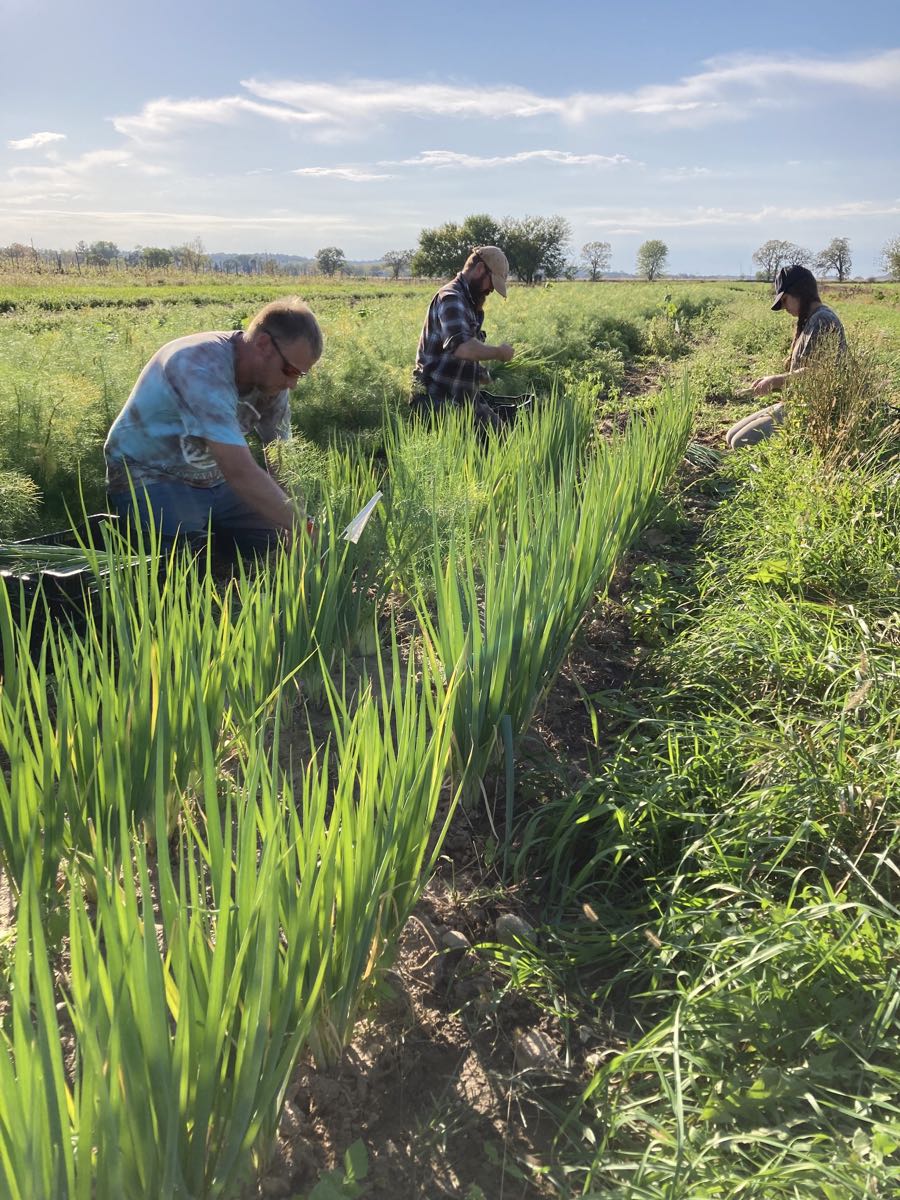
Scallion harvest on a beautiful afternoon.
Nature surges on.
By October 21 in most years, many of our crops are shut down by cold weather and frost. We hurry about to harvest the last peppers or protect them from frost. Not this year! Our fall crops continue to absorb the late warmth, and continue to grow. The upsides of a warm fall are extra growth and pleasant working conditions. Our fall work is much easier and less stressful in mild weather.
The downside is that some crops need cold nights to trigger maturation. Some cauliflower and Romanesco broccoli varieties behave that way, and have not formed their heads yet. Other crops like Brussels sprouts and parsnips improve in quality after repeated frosts. We couldn’t wait any longer, so we’re sending both of those vegetables this week. They’re still good, just less sweet.
Obviously, the biggest downside is concern that we’re experiencing the effects of global warming.
Beth
Veggie List & Veggie Notes
Week #23
– Weekly shares
– EOW/ purple
– Sampler/ sun
Brussels sprouts, 1 lb
Parsnips, ~1.5 lb
Satina potatoes, 3.5 lb
Leeks, ~2 count
Koji greens
Poblano chiles (in Brussels sprouts bag), 2
Frying or bell peppers, 3 – 4
Scallions, 1 bunch
Shallots, 1 or 2
– Most sites get broccoli.
– A few sites get cauliflower.
– A few sites get Jester winter squash OR sweet potatoes.
Next week’s box will probably contain Brussels sprouts, butternut squash, sweet potatoes, celeriac, beets and more.
Brussels sprouts – If you are a new CSA member, please approach Brussels sprouts with an open mind. Many of us grew up eating awful, overcooked Brussels sprouts. These Brussels sprouts are completely different.
This week’s sprouts – These have flaws and need a close look. Peel off any bad outer leaves.
Here is our method to cook Brussels sprouts: Wash the sprouts and trim the cut ends. Cut an X in the stem end of large sprouts. Cut a single slit in small or medium sprouts. This does two things. It helps the Brussels sprouts cook evenly, plus it allows them to soak up any marinade or dressing. Place sprouts in a pot with one inch of water in the bottom and steam until tender, 7 to 10 minutes. If the sprouts are uneven in size, then set aside the smallest ones and add to the pot after the larger ones have cooked for a few minutes. Don’t overcook them! You can also oven-roast Brussels sprouts.
Here are a few dressing ideas for cooked sprouts:
– Sherry vinegar/olive oil/Dijon mustard/garlic/white wine/salt and pepper. This is our favorite, especially when you combine the Brussels sprouts with slivered peppers and thinly sliced onions. Delicious warm, cold, or at room temperature.
– Balsamic vinegar/olive oil/garlic/salt and pepper
– Lemon juice and zest/melted brown butter/poppy seeds/white wine/garlic/salt
Parsnips (These look like large white carrots) – Those long, white roots are not carrots, they are parsnips. The two vegetables are related. When cooked, parsnips are sweet and starchy. For the best flavor, brown them to caramelize the sugars. Here are a few ideas for parsnip preparation:
– Caramelize the parsnips by roasting them in a vegetable medley.
– Parsnip fries are delicious: cut like French fries, oil lightly, place on a cookie sheet and roast in a hot oven until brown and cooked through.
– Try substituting grated parsnips in a potato pancake recipe. They brown beautifully and are very tasty.
– Steve loves pan-fried parsnips with onions and garlic.
Satina yellow potatoes – These are from our friends Brad and Brian Igl’s farm near Antigo. Store dry at room temperature, in the paper bag to protect from light. These are good all-purpose potatoes. They roast very nicely.
Leeks (look like big scallions) – These alliums have a milder flavor than onions. Nonetheless, they can be used in recipes that call for onions. To wash, split the leek lengthwise, from the green tops about halfway to the base, leaving the base intact. Rinse well under running water, separating the layers to flush. If necessary, split the leek further if soil has penetrated more than halfway down the leek. Shake dry. Leeks are generally eaten cooked. They can be sauteed, steamed or roasted. Intact leeks will store 2 to 3 weeks if covered loosely and refrigerated. The outer leaves will yellow. Just peel them off and discard. The inner leek layers will be fine.
Koji greens (head of dark green leaves) – Refrigerate.
Koji greens are a lot like Yukina if you know that one; dark green with a nice balance of bitter flavor but not too strong. Like tat soi but with larger, lusher leaves and not so many leaf stalks. Recipes that use mustard greens or bok choy will work with Koji. In a contest for my favorite fall green, Koji runs neck and neck with bok choy.
Poblano chiles (in bag with Brussels sprouts) – Dark green or red, triangular. These have medium heat and terrific flavor. We’ve included them with the potatoes and leeks because they are such a great combination. Roast your poblanos, then use to top any soup or casserole you prepare with your potatoes.
Shallots (look like small red onions) – Store at room temperature. Shallots store for a long time. Excellent minced for salad dressing. They will sweeten considerably when fried and can be used in Thai or Vietnamese dishes, to top burgers, etc.
Fried shallots – Thinly slice shallots. Heat 2 Tbsp peanut oil in a small skillet over medium-low heat. Add shallots and fry gently, mixing occasionally, until golden brown.
RECIPES from DEB
Visit our 2020 Recipe Log or our 2019 Recipe Log.
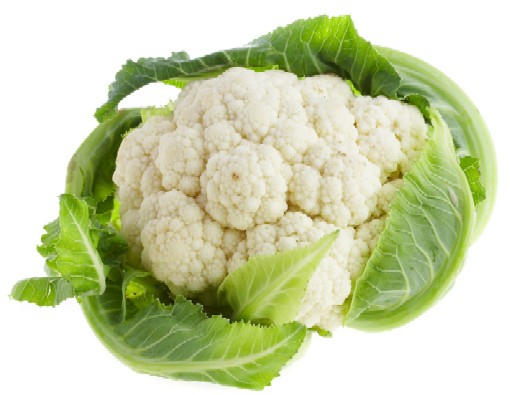
Cauliflower and garbanzo bean curry
Based on a recipe by Hugh Fearnley-Whittingstall of River Cottage, I, like everyone else in the comments, do not make it exactly as written. This recipe is vegan, as long as you don’t serve it with yogurt!
Serves 4-6
Takes 30 minutes, plus about 15 minutes extra cooking time if you use brown rice
1 1/2 cups raw white or brown rice
pinch of salt
2 tablespoons vegetable oil
2 cups chopped onions
1-2 poblano chiles, chopped
2-3 garlic cloves, minced or put through a press
1 1-inch piece of fresh ginger, grated
2 teaspoons ground coriander
2 teaspoons ground cumin
2-3 teaspoons garam masala or yoru favorite curry powder (I like Penzey’s sweet curry)
Salt and freshly ground black pepper to taste
1 head of cauliflower (1 1/2-1 3/4 lbs.), cut into bite-size florets
1 cup chopped tomatoes, canned or fresh
About a cup (half a can)of coconut milk, or veggie broth
1 (14-ounce) can garbanzo beans, drained and rinsed
3-4 scallions, thinly sliced
Start cooking the rice – in a saucepan with a lid, combine the rice with 2 3/4 to 3 cups cold water (the smaller amount is for white rice). Bring to a boil uncovered, then add salt, cover, and turn the heat to the lowest setting. Cook about 15 minutes for white rice, and 45 minutes for brown.
Heat the oil in a deep wide skillet with a lid, over medium heat. Add the onions, garlic, and ginger and sauté for about 10 minutes, stirring often. Add the coriander, cumin, chile flakes, garam masala or curry powder, and some salt and pepper and cook for a few more minutes. Add the cauliflower, the tomatoes with their juice, and the chickpeas, and stir well. Pour in enough coconut milk or veggie broth to cover everything, and bring to a simmer. Cover and cook for 10-15 minutes, stirring once or twice, until the cauliflower is tender. Check the seasoning, and add the scallions. Serve with plain or Greek yogurt, chutney, and naan.
.
.
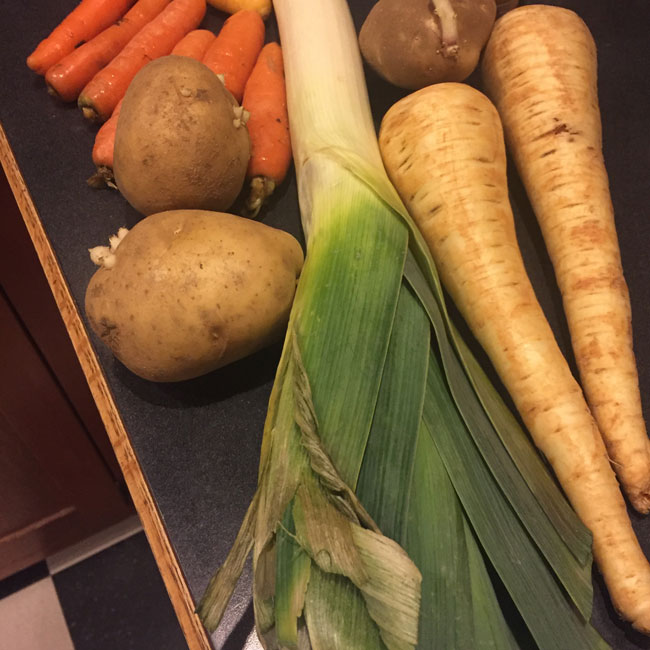
Nearing the end of the CSA potato soup
I developed this soup a few years ago, deep in the winter, to use up almost the last veggies from my Tipi storage share, what my family calls our “Thanksgiving Box”, but it adapts nicely for this week’s box. You can adjust the vegetables depending on what you’ve got – you need 4-5 cups of vegetables, so use more potatoes if you don’t have any carrots; a few of this week’s red peppers would add really nice color; use more leeks!
Serves 4-6
Takes about an hour, about 30 minutes active work, and the rest simmering
Ingredients:
1-2 tablespoons olive or vegetable oil
white and pale green parts of 1-2 leeks, split length-wise, well rinsed and sliced – one generous cup
2 parsnips, peeled, woody parts removed, and chopped – 3/4 cup
3 medium potatoes, peeled and chopped into 1 to 1 1/2 inch cubes – a generous cup, maybe a cup & a third
2/3 cup peeled and chopped carrots
3-4 cups veggie or chicken broth, home made if you’ve got it, but you can use soup base and water, or even plain water
2 tablespoons butter, or vegan butter
1/4 cup flour
2 cups milk, half & half, or a mixture (I half half & half and half 2% milk – that’s a lot of halfs) – or more veggie broth to make a non-dairy soup
kosher salt and freshly ground black pepper.
Pour the olive oil into a large pot that holds at least 4 quarts, and heat till fragrant. Add the leeks and some salt and pepper, give them a stir, and let them cook gently over medium heat while you chop up the rest of the vegetables. Add the parsnips, potatoes, and carrots, and continue to cook over medium heat until softened and starting to brown. They might start sticking a little bit, don’t worry about that – they’ll come loose when you add the broth.
Add the broth, making sure you have enough to cover all the vegetables – add water if necessary. Raise the heat until the mixture comes to a boil, then reduce the heat and cover and simmer until all the vegetables are soft, probably 15 minutes. In my experience the carrots take the longest, oddly.
Make the roux while the vegetables cook: melt the butter in a small skillet. Add the flour, and cook and stir for a few minutes until there’s no raw flour smell.
When the vegetables are all cooked, stir in the (cooled) roux, and keep stirring while the mixture thickens, to ensure there won’t be any lumps. Mix the half & half and milk in a spouted glass measuring cup, heat it to just slightly warm in the microwave, and add it to the soup. Heat gently, try not to boil it after you’ve added the dairy, add more salt and pepper, and serve.
.
.
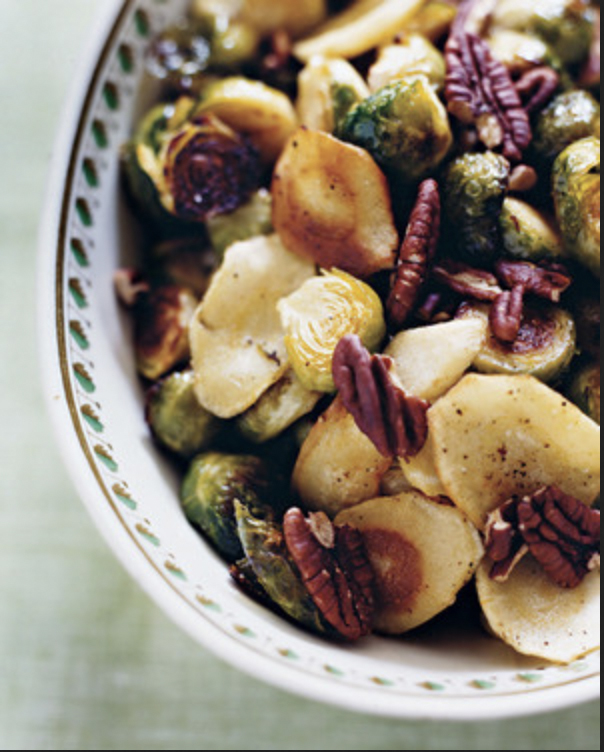
Brussels Sprouts with Parsnips
From Martha Stewart
I made this for Thanksgiving one year, and in all the excitement and people in the house, forgot about the dish, and got a really nice char on all the veggies – it was nevertheless completely eaten. Feel free to omit the pecans.
Takes about 40 minutes
Martha says serves 10, I’d say more like 6, unless it is part of a large meal with lots of other dishes.
.
.
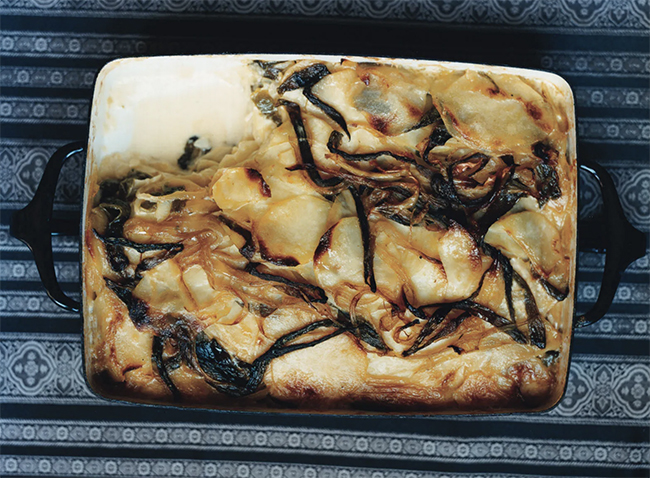
Photo by Ditte Isager
Poblano Potato Gratin
From Epicurious.
This spin on potatoes au gratin was created by Lillian Chou for Epicurious, and every time I make it, people gobble it up. We do not have quite enough poblanos to make the rajas (roasted pepper and onion strips) but you can sub in the red frying peppers from this weeks box.
.
.
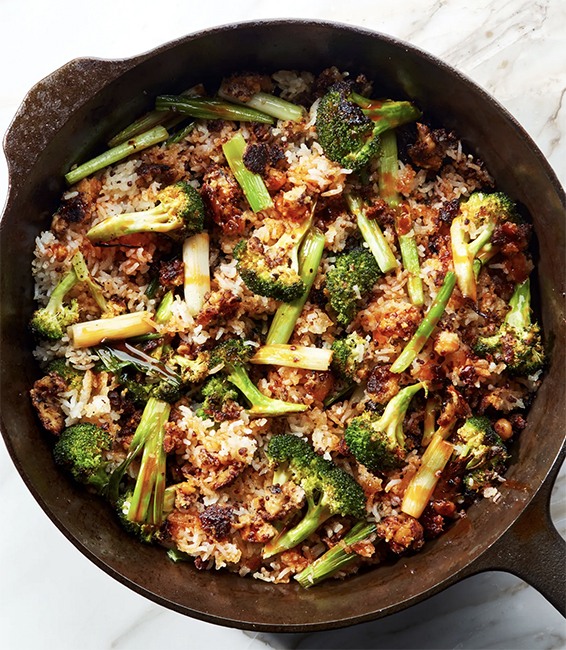
Photo by Joseph De Leo
Julia Turshen’s Favorite Affordable Dinner: Vegetable Fried Rice
From Epicurious.
Use Julia Turshen’s (author of the cookbooks Small Victories, Now & Again, and Feed the Resistance) formula for fried rice to use up lots of the veggies and scallions in this week’s box – cook some extra rice when you make the cauliflower curry and your set! Another delicious variant is kimchi fried rice, if you made some kimchi earlier in the summer – for 2 cups cups rice, use 1 cup of drained kimchi, 4-6 strips of bacon, and all the scallions.
.
.
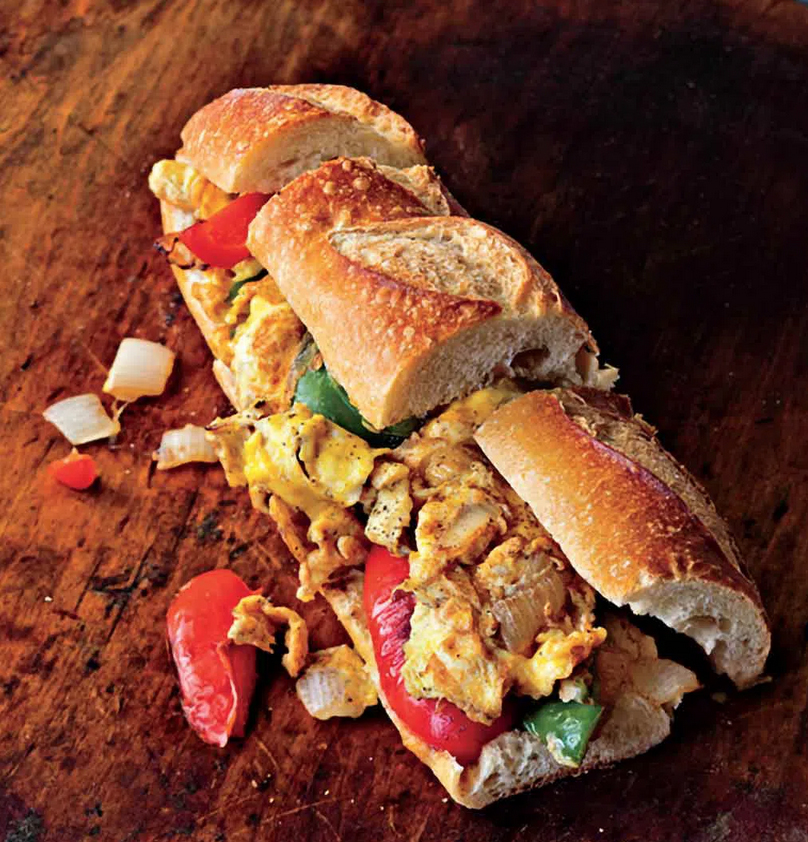
Pepper and Egg Sandwich
From Leite’s Culinaria.
Here’s recipe for a popular Italian-American sandwich, good for breakfast, lunch, or dinner, that you can make with the red and Poblano peppers from this week’s box. You might want to cut back on the hot sauce since the Poblanos will provide some heat, and sturdy brat buns are a good stand-in for Italian bread.
.
.
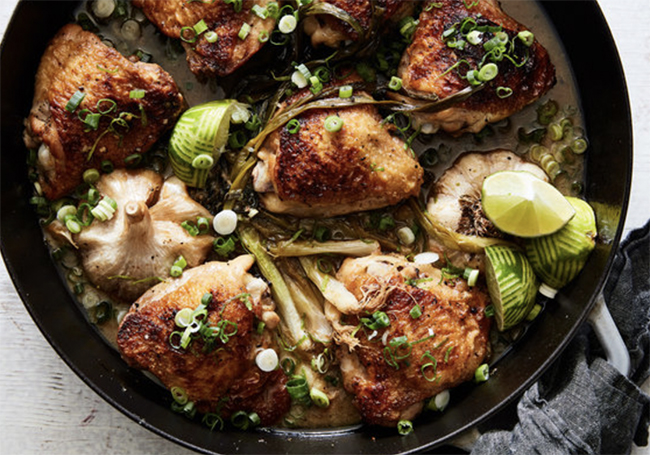
Photo by Mark Weinberg
Garlicky Chicken Thighs With Scallion and Lime
From NYT Cooking.
If you’re looking for scallion ideas, here’s a parting thought. To round out the meal, accompany this recipe by Alison Roman with sauteed koji greens and rice.