Farm Newsletter
Week #1; A low threshold for joy
- On: May 20, 2021
 1
1
Welcome to our CSA! Deliveries begin this week for:
– Weekly members, and
– Every-other-week/ purple group
– Sampler/ moon group
Log into your dashboard to view your schedule, at tipiproduce.csaware.com/accounts/login.jsp .
Download this season’s calendar here.
Farm Beauty
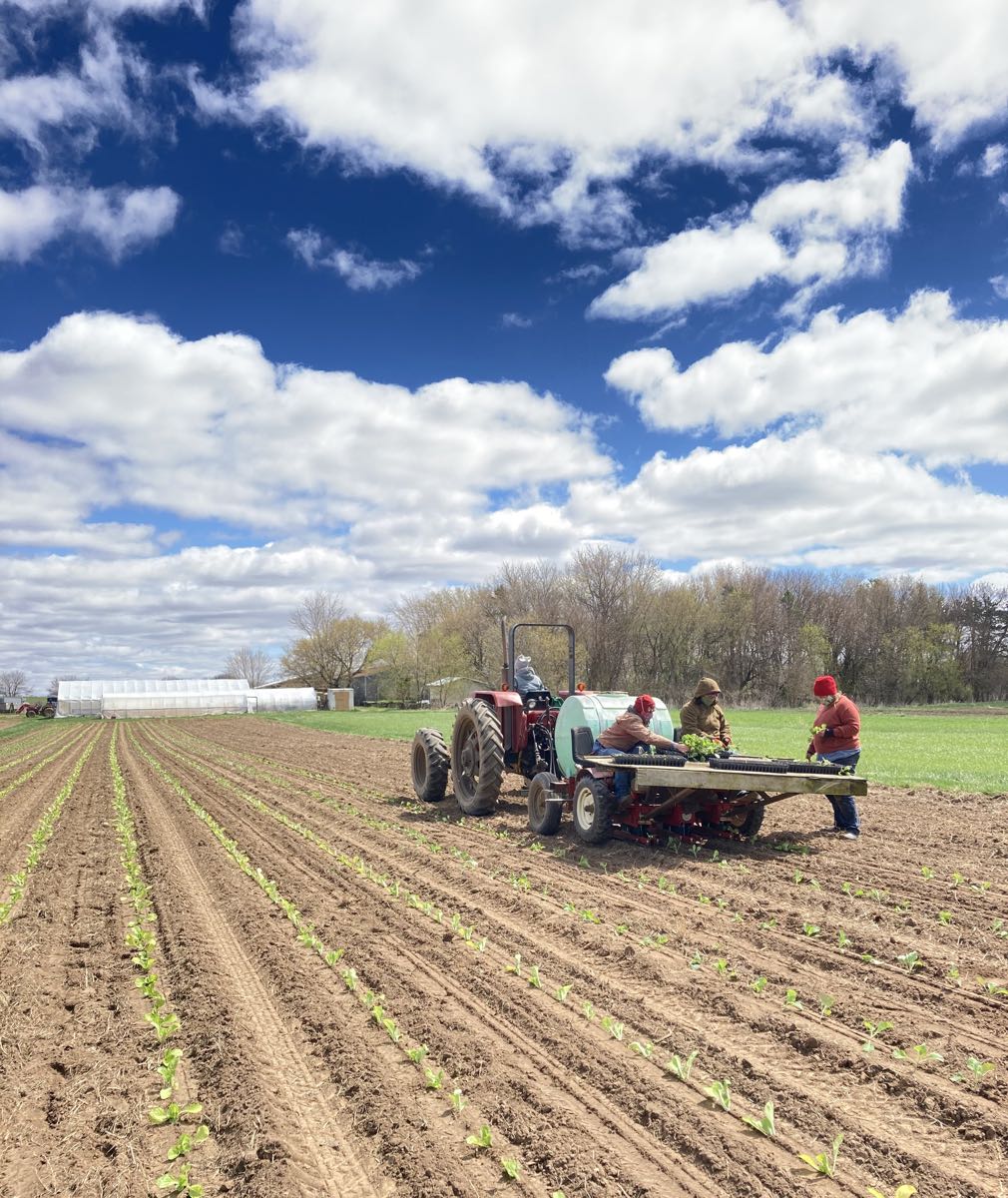
During the pandemic, friend told me that she developed a low threshold for joy. Life was so constrained that, give her a tasty snack or a kind word and she was thrilled. “It’s all out of proportion,” she said. I feel that way too, and find myself appreciating our farm’s beauty more intensely than I ever have. All my photos seem to focus on the sky or brilliant spring colors.
In the photo above, we transplanted cabbage in April. Look at that sky!

The pea field.
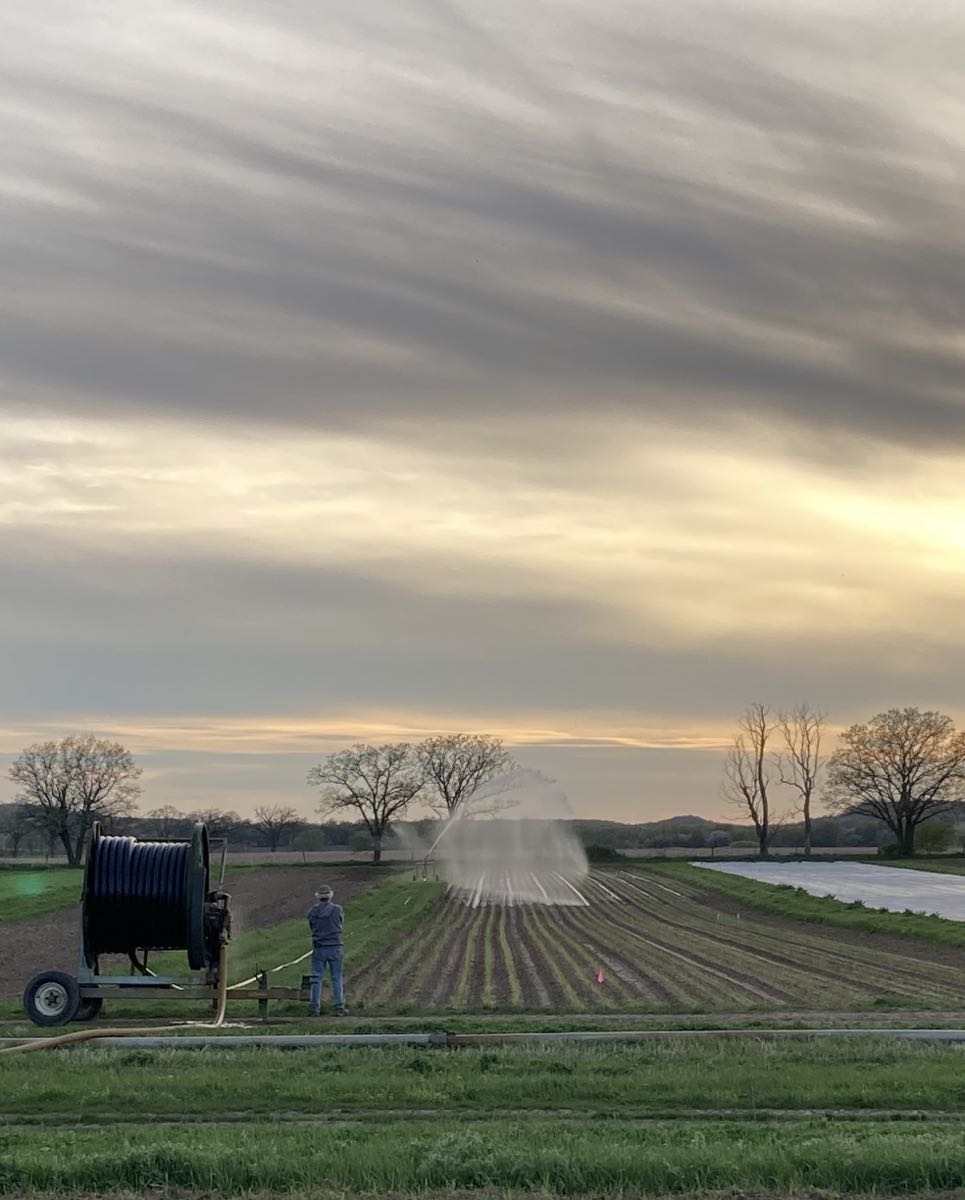
Rain has been sparse, so we’ve had to irrigate more than usual. This photo at dusk shows Steve watching our irrigation gun spew water over a field of young onions. The hose reel will slowly coil up the heavy hose, pulling the irrigator down the field. The field at right is under a white layer of row cover, a lightweight fabric that we use to cover our spring crops, to trap extra heat. Your lettuce and spinach came from that field.
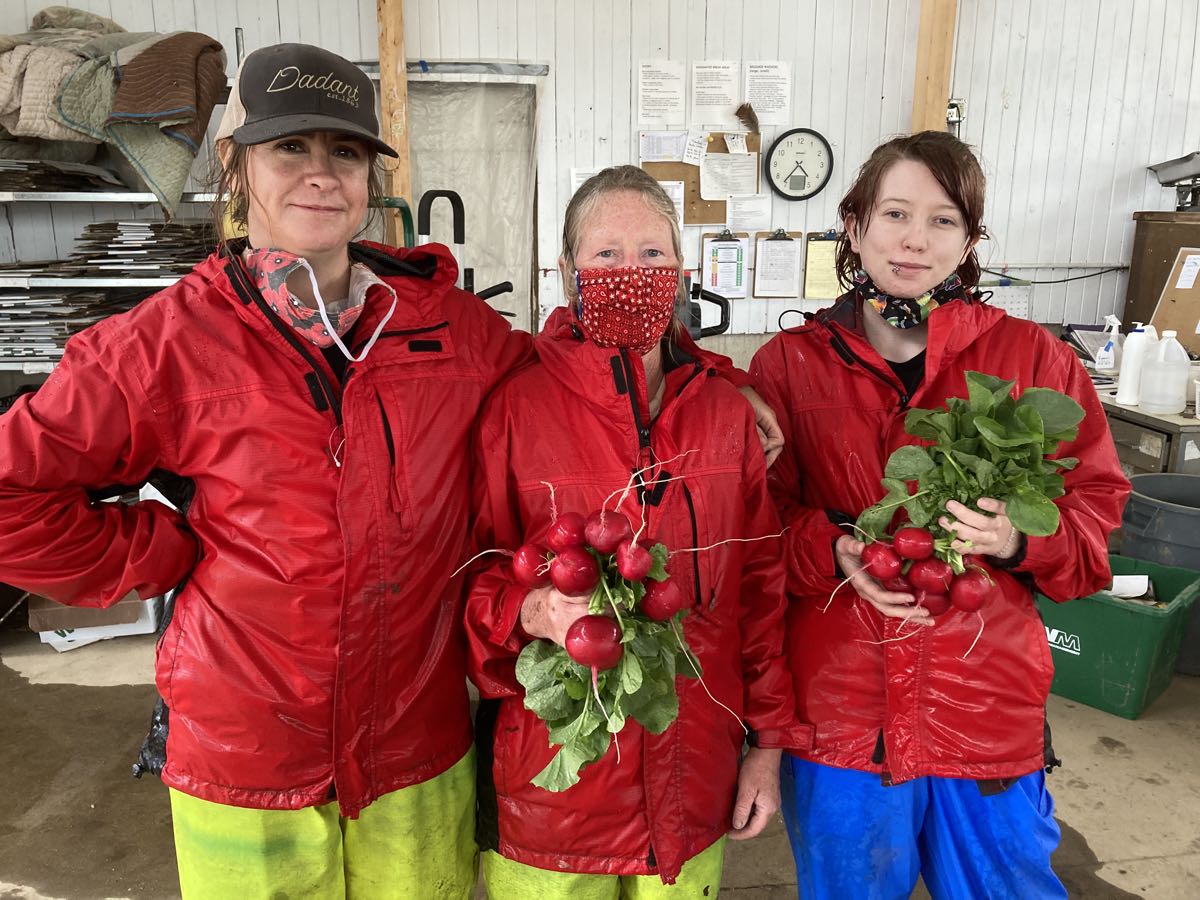
Team radish. I bought new rain gear last season. We have no trouble finding each other these days. From left, Karen, Simone, Danni.
Things you need to know.
♦ On Thursday, we deliver CSA boxes to Evansville, Fitchburg, Madison, McFarland, Middleton, Oregon and Verona.
♦ On Friday, we deliver CSA boxes to Janesville.
♦ We post this newsletter/blog each Wednesday night, with a list of veggies for the week, quantities, information about storage and preparation, news of the farm, recipes, and a forecast for the next week’s box. I’ll send you an email on Wednesday night once the newsletter is posted and ready to read.
♦ EOW, Sampler and Weekly members, we assume you read all the newsletters, even on your “off” weeks. This newsletter (and our emails to you) are our means to communicate with you.
♦ Want earlier notice of what will be in the box? Check the sidebar on our website homepage around 7 – 8 p.m. on Wednesday night. I’ll post the list under “Box Contents.” Check the Veggie List section of this newsletter each week for a forecast for the next week. The list is rarely complete but the items listed are ones we feel confident about.
♦ The first few boxes of the season are often the lightest. EOW members, do not worry that you have signed up for the wrong share! Our deliveries get heavier and more abundant as the season progresses.
♦ Wash your produce well this week to remove grit. It rained yesterday and today, driving grit into the asparagus and anything that forms a head (lettuce, arugula, spinach). Our crew took extra care with washing but expect to wash everything.
How to wash greens efficiently and to maximize storage life
Washing and drying your lettuce and other greens prolongs their storage life. Here’s our approach. It works.
1. Fill your sink or a basin halfway with cold tap water. If you have two sinks, fill one sink partway with cold water.
2. Chop your lettuce, spinach, escarole or other green to the size you wish.
3. Dump it into the water and swish around gently but thoroughly.
4. Working in two batches (for average lettuce head) or more batches (big spinach bunches, Romaine), pull handfuls out of the water and drain in the basket of a salad spinner.
5. After all the greens have been rinsed one time, dump the water. Rinse the sink/basin and refill with cold tap water.
6. Repeat the process.
7. Spin your greens dry and store in a dry container. They store much longer when spun dry.
This works because …
– pre-chopping the greens frees soil trapped in the head.
– the large amount of water washes and dilutes away the grit.
– By pulling the greens out of the water, you take advantage of the draining action to pull the grit with it.
– Storing greens dry lessens spoilage.
Veggie List and Veggie Notes
May 20/21, 2021 (Th/Fri sites)
Potatoes, 3.5 lb
Asparagus, ~1/2 lb
Spinach, 2 bunches, ~1.5 lb total
Green leaf lettuce
Arugula, 1 medium bunch
Amara kale, 1 bunch
Salad radishes, 1 bunch
Green garlic, 1 bunch
Next week’s box will probably contain spinach, lettuce, button mushrooms, asparagus, radishes, rhubarb and more.
Potatoes – Please refrigerate these potatoes. They are in great shape now but will sprout within days if stored at room temperature! They’ve been stored all winter and want to grow. Store in a paper bag to protect from light, even in the fridge. We grow everything we send in our CSA boxes except potatoes, mushrooms and some asparagus, all of which we buy from organic growers that we trust. We purchased these potatoes from Jesse & Jonnah Perkins at Vermont Valley Farm. Jesse says the potatoes have a higher sugar content because of starch to sugar conversion during cold storage. That means the potatoes taste a bit sweet, and will blacken slightly when fried. It’s a harmless color change due to the sugar conversion. You will receive either ‘Goldrush’ russets or ‘Red Prairie’ red potatoes.
Spinach – The spinach is abundant, so we’re sending two bunches, totaling about 1.5 lb. Quality is good for either salads or cooking. It looks like a lot but shrinks when cooked.
Amara kale – We’ve grown this variety a few times and grew it this spring to provide variety among our cooking greens. Here’s the seed catalog description: “While technically a mustard, Amara is known by several different names including Ethiopian kale, highland kale, Abyssinian mustard, and Texsel greens. The attractive, dark green leaves are tender, slightly savoyed with a wavy margin, and have an excellent rich flavor. Good in salads or as a cooked green.” This stuff is pretty interesting. It has the texture of kale but the spiciness of mustard. I’d say it’s about half as spicy as mustard greens. The flavor is strong once cooked but quite good.
Use: Use like any kale or mustard green. Eat the leaves and mid veins. Discard the stems and petioles, which are too tough.
Storage: Cover and refrigerate.
Arugula – (bunch of green leaves with pungent scent) – This is a spring treat! Arugula is good mixed with lettuce or spinach in salads, or added to cooked dishes such as lasagne or quiche. I love it on sandwiches. This arugula will not store for long. Eat soon. Cover and refrigerate.
Salad radishes – These are so good right now; tender, crisp and not too spicy. They are great in salads or thinly sliced on sandwiches. A few years ago, I was served open-faced radish and butter sandwiches on toast and was impressed with how tasty they were. Use good quality butter.
Storage: Cover and refrigerate.
Asparagus – Our asparagus grew slowly following frosty nights, then burst into growth in the last few days. Some of the asparagus is from our farm and some is from our friends Tim and April’s Lotfotl Farm. They have a larger asparagus field than they need, so we go and pick it for them once a week.
Prep: Wash your asparagus thoroughly to remove hidden grit. Submerge in water with the tips pointing down, soak briefly, then swish vigorously and pull out of the water. The draining action helps pull the grit out of the asparagus tips. Repeat several times.
Storage: Asparagus is perishable, so eat it as soon as possible. Store in a paper towel, cloth or paper bag, then wrap loosely in a plastic bag. The paper bag protects the asparagus tips from direct contact with the plastic bag. The plastic bag keeps the asparagus from wilting.
Preparation: We snap our asparagus at harvest, rather than cutting. Therefore, there is no need to snap the stalks to remove fibrous ends. For the same reason, it is not necessary to peel the asparagus stalks. It’s OK to trim the cut end a bit.
Cooking: If your asparagus stalks vary greatly in size, you will want to cook the thicker ones longer. Put an empty steamer pot over water, and bring the water to a boil. Add the asparagus. Cover and steam over medium heat until just tender. Use two forks or a spatula to turn the asparagus during cooking, rotating the bottom spears to the top. Drain and serve. Alternatively, you can lay spears flat in the bottom of a broad pan, with ½ inch of water. Also excellent broiled or grilled. Good dressed with vinaigrette, or with lime juice, salt and pepper.
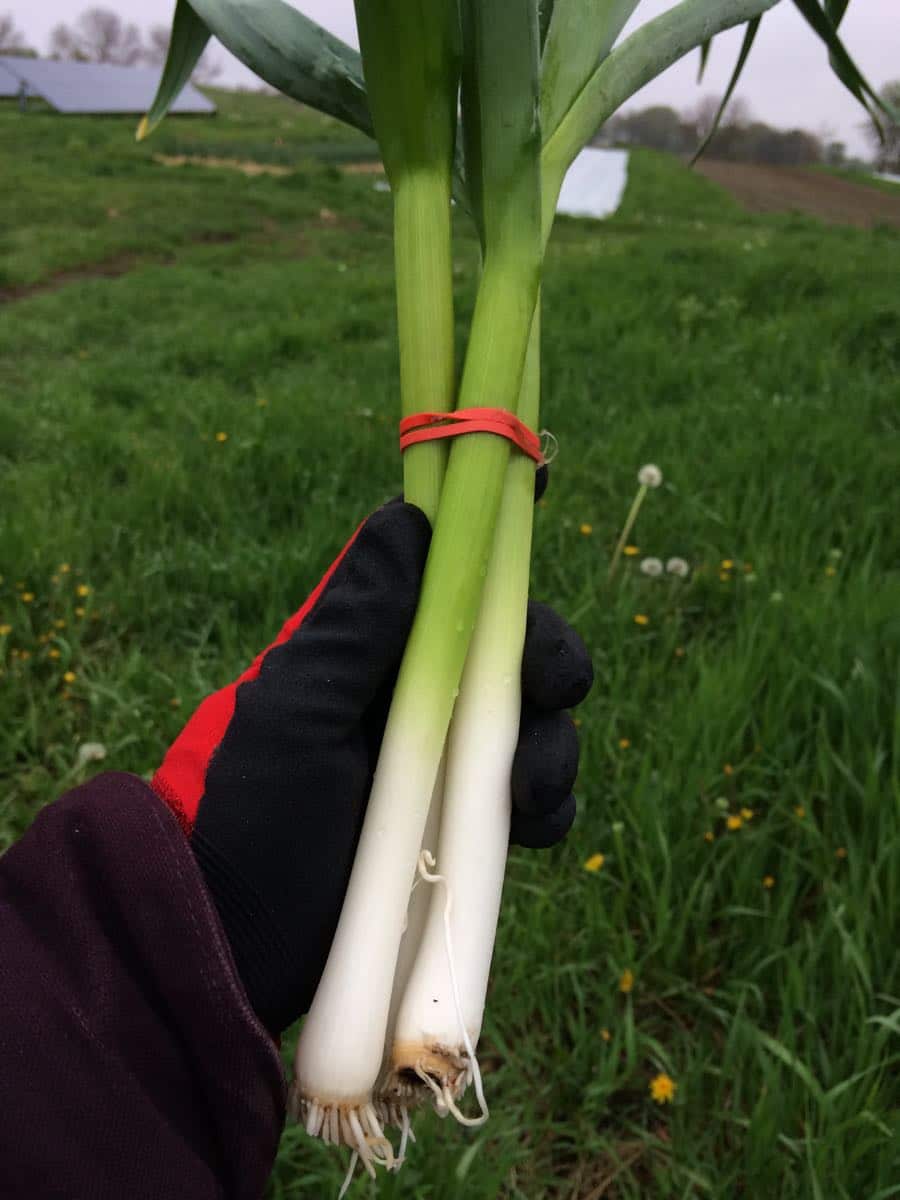
Green garlic (looks like scallions, tastes like garlic) – Last fall, we planted garlic cloves that grew into the stalks we harvested this week. If left to grow until mid-summer, the slim white bulb on this week’s garlic will divide and form the usual cluster of cloves in a garlic bulb. This year’s green garlic is robust.
Preparation: Green garlic is more pungent than scallions, so slice thinly and use sparingly when raw. It mellows when cooked. Chop and add to any cooked dish that would benefit from garlic. Use the white bulbs and pale green stems. Avoid the dark green stems and leaves, as these are fibrous.
RECIPES
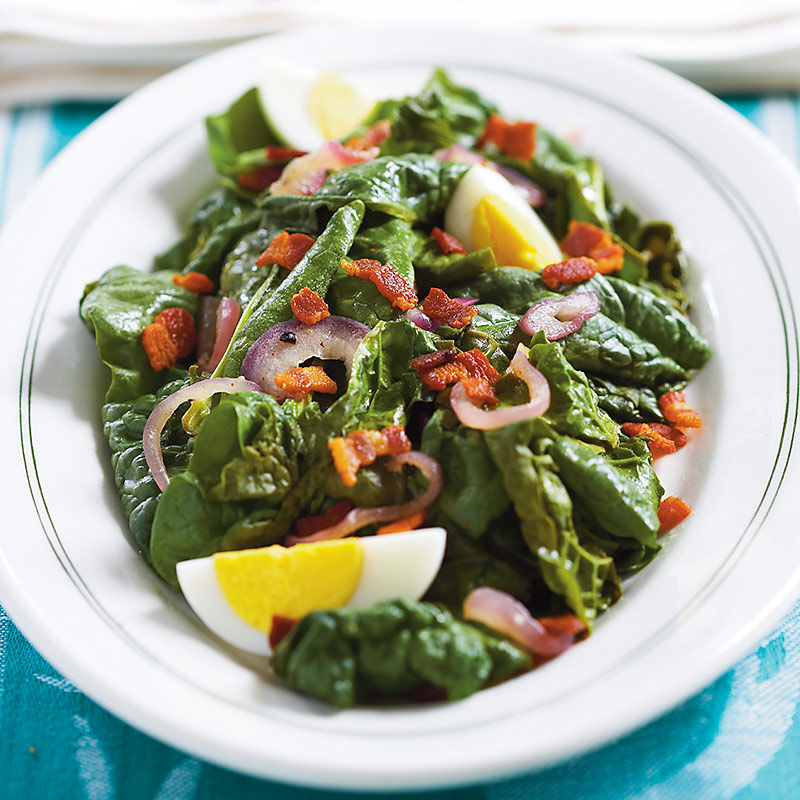
Wilted spinach salad with bacon and asparagus
From DebsLunch
Feeds 4 or more depending on what else is being served.
Takes about 30 minutes.
Approximately 2 pounds spinach, kale, argula, or other greens: lettuce, or cabbage; stemmed if necessary, washed, dried, and cut or torn into bite size pieces (cabbage can be shredded)
8 strips (half a pound) of bacon, sliced into 1-inch pieces
1/4 – 1/3 cup cider vinegar
2 – 4 TBLS brown sugar
1/2 of a red onion, sliced thinly
2 hard boiled eggs
1/2 pound of asparagus, roasted or steamed
lots of freshly ground black pepper
Croutons
Put the greens in a large heat proof (metal or glass) bowl. Cook the bacon until crisp and, using a slotted spoon, remove to paper towel to drain. Pour off all but 4 TBLS of the bacon fat from the pan. Add the vinegar and sugar, and cook until the sugar is dissolved. Boil until a bit syrup-y. Add the onion at the last minute if using. Take the dressing off the heat and pour over the greens. Add the bacon bits and toss. If the greens do not wilt as much as you would like, put the bowl over the warm burner and toss until the salad is more wilted (this works best with a metal bowl). Grind in the pepper and toss again. Top with the asparagus, boiled eggs, and croutons.
.
.
.

Cheater’s many greens Caesar salad
Make enough for about 6 – 8 people
Takes 30 minutes
About 2 pounds of greens – roughly 1/2 the spinach, some of the Amara kale, and Argula from this week’s box
a hunk of old bread, about 2 – 3 slices
1 – 2 TBLS olive oil
2 – 3 whole cloves of garlic
2/3 cups mayonaise
juice of 1/2 a lemon, or a little more to taste
another clove of garlic, minced or put through a press
a few shakes of Worcestershire sauce
1/2 – 1 cup grated Parmesan
coarse salt and freshly ground pepper
Wash and dry the greens, and tear them into bite size pieces. Place in a bowl with room for tossing. Tear the bread into rough cubes. Heat the olive oil in a skillet and fry the bread in it along with the garlic cloves until nicely toasty. Let cool slightly and then dump into the salad bowl. For the dressing, [This is the cheater’s part] whisk together the mayo, lemon juice, crushed garlic, and Worcestershire sauce. Add a handful of Parmesan, and taste – add more lemon, cheese, Worcestershire – what ever you think it needs (I sometimes sneak a pinch of sugar into the dressing). Toss the salad with a liberal amount of dressing, adding more Parmesan, and salt and pepper. Taste for seasoning and when you like it, serve.
.
.
.
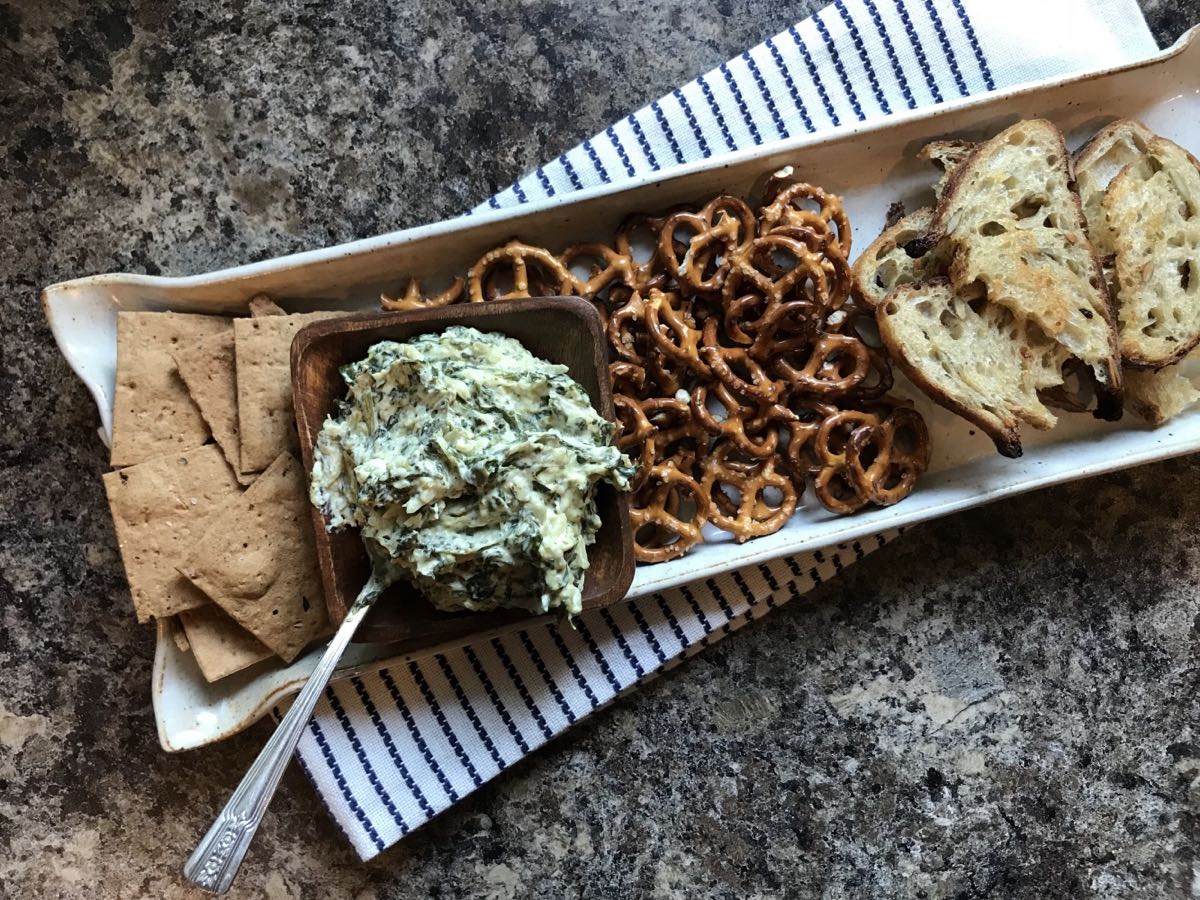
Photo by The Leek & The Carrot
Spinach, Radish & Green Garlic Dip
Adapted from Bon Appetit
Takes 30 minutes.
Serves many.
2 tablespoons butter
2 green garlic, white and pale green parts only, minced
1 bunch radishes, roots shredded and greens, roughly chopped
Spinach, roughly chopped
1 teaspoon Kosher salt
8-ounce cream cheese
2 ounces Parmesan cheese (about 1 cup)
1/2 teaspoon freshly ground black pepper
- Melt butter in a medium saucepan. Add garlic and saute for 1 minutes over medium heat until very fragrant. Add radishes and cook, tossing, until well-coated in butter, 1-2 minutes longer. Add spinach and radish greens along with salt. Cook until wilted and most of the liquid is cooked off., 5-10 minutes. Add cream cheese and cook until melted. Stir in Parmesan and pepper until melted and creamy. Taste and adjust seasonings.
- Serve warm with toast, in a bread bowl or with crackers.
.
.
.
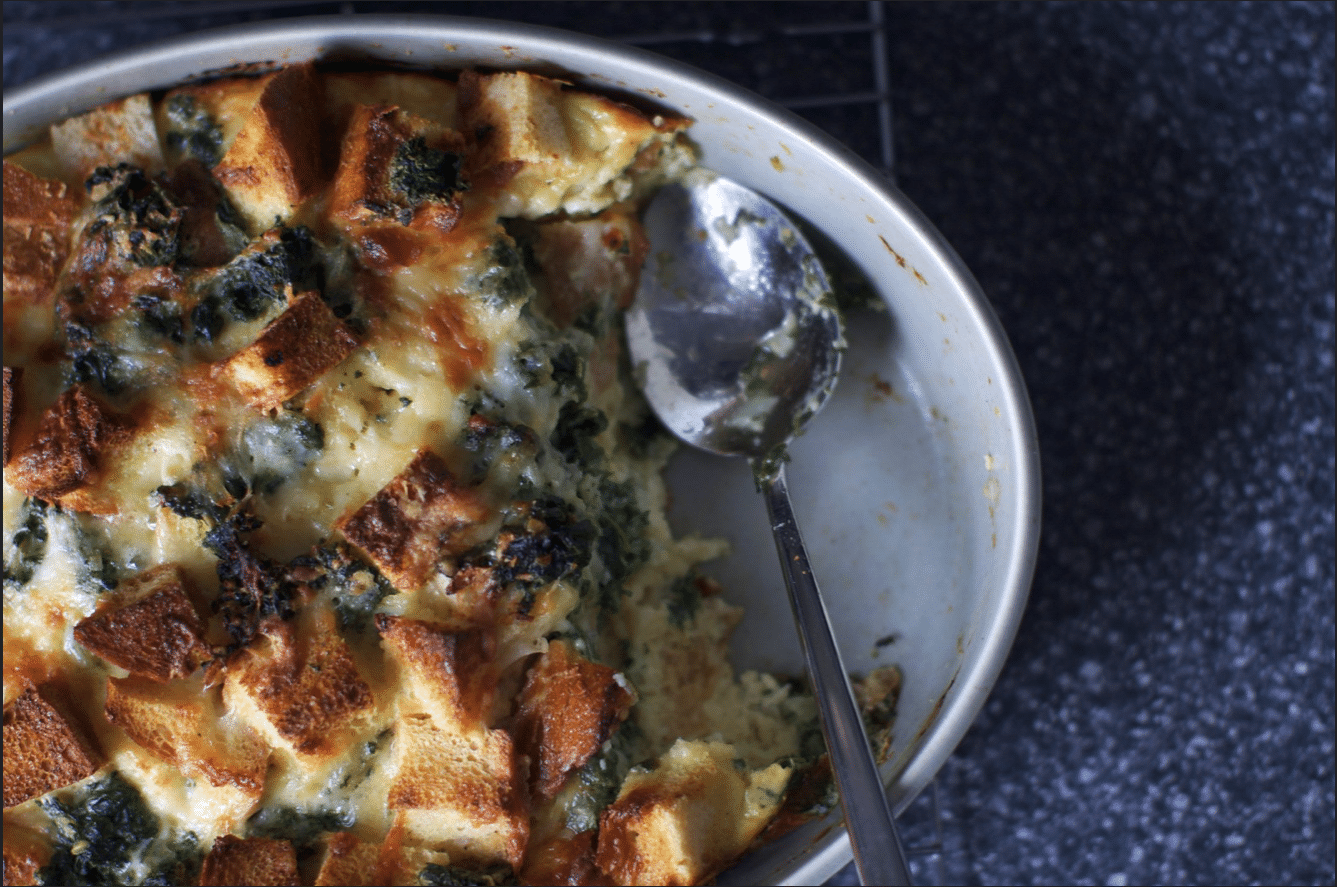
Photo by Smitten Kitchen
Spinach and Cheese Strata
From Smitten Kitchen
smittenkitchen.com/2009/12/spinach-and-cheese-strata/
This filling recipe is good for any meal from breakfast to dinner. From Deb Perelman of Smitten Kitchen “I’m all about hosting brunch, but only if I can make everything in advance. .. This strata — really, a savory bread pudding — is the missing piece because not only can you make it the night before, you are supposed to.”
.
.
.
Creamy Green Garlic Salad Dressing
From Willy Street Co-op
Makes a generous cup of dressing
Tangy and garlicky, this salad dressing is amazing over a simple green salad of crunchy Romaine and blanched vegetables.
.
.
.
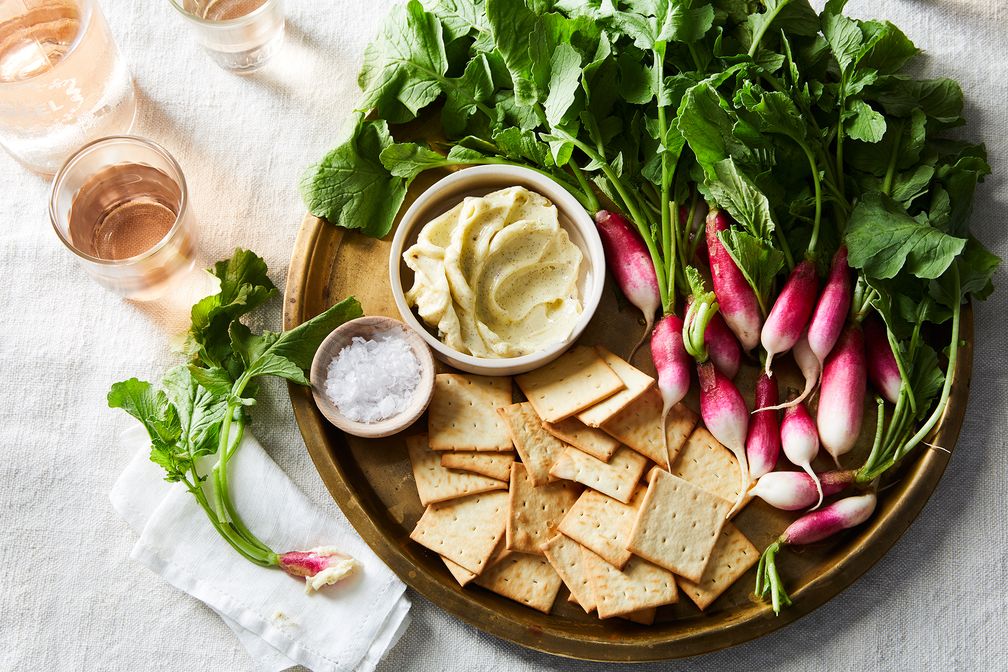
Photo by Food52
Alex Raij’s Radishes with Vanilla Butter & Salt, 2 Ways
Food52 Genius Recipe
“Alex Raij was initially inspired by a snack at Roscioli delicatessen in Rome that combined salty Spanish anchovies with curls of cold vanilla butter. “I was so enchanted with it, I came home and put it on everything now,” Raij said. Her take on Roscioli’s dish, a deliberately plain cracker with a thin tube of vanilla butter and a very good-quality Spanish anchovy, has been on the menu at her NYC restaurant El Quinto Pino ever since, and she riffs on it often for parties, big and small.”
.
.
.
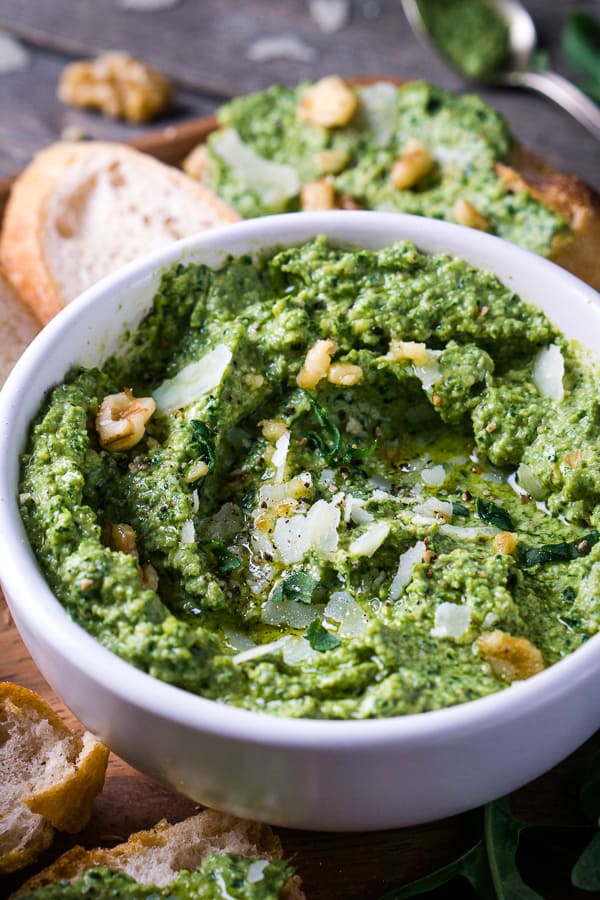
Photo by the Kitchen Girl
Arugula Pesto with Walnuts
From The Kitchen Girl
“Arugula pesto is a 5-minute pesto recipe made with fresh arugula, Parmesan cheese, walnuts, olive oil, and lemon. It’s nutty, zesty, peppery and can be served as a sauce, dip, or spread.”

Storage Share, Nov 19/20, 2020
- On: November 18, 2020
- 0
Farm News
We have enjoyed the mild weather! After frosts in early October, the warm weather has coaxed a few later crops to maturity. We have harvested endless rounds of cabbage, carrots and other roots. Machinery breakdowns have been minimal! That’s the worry at the back of our minds at this time of year.
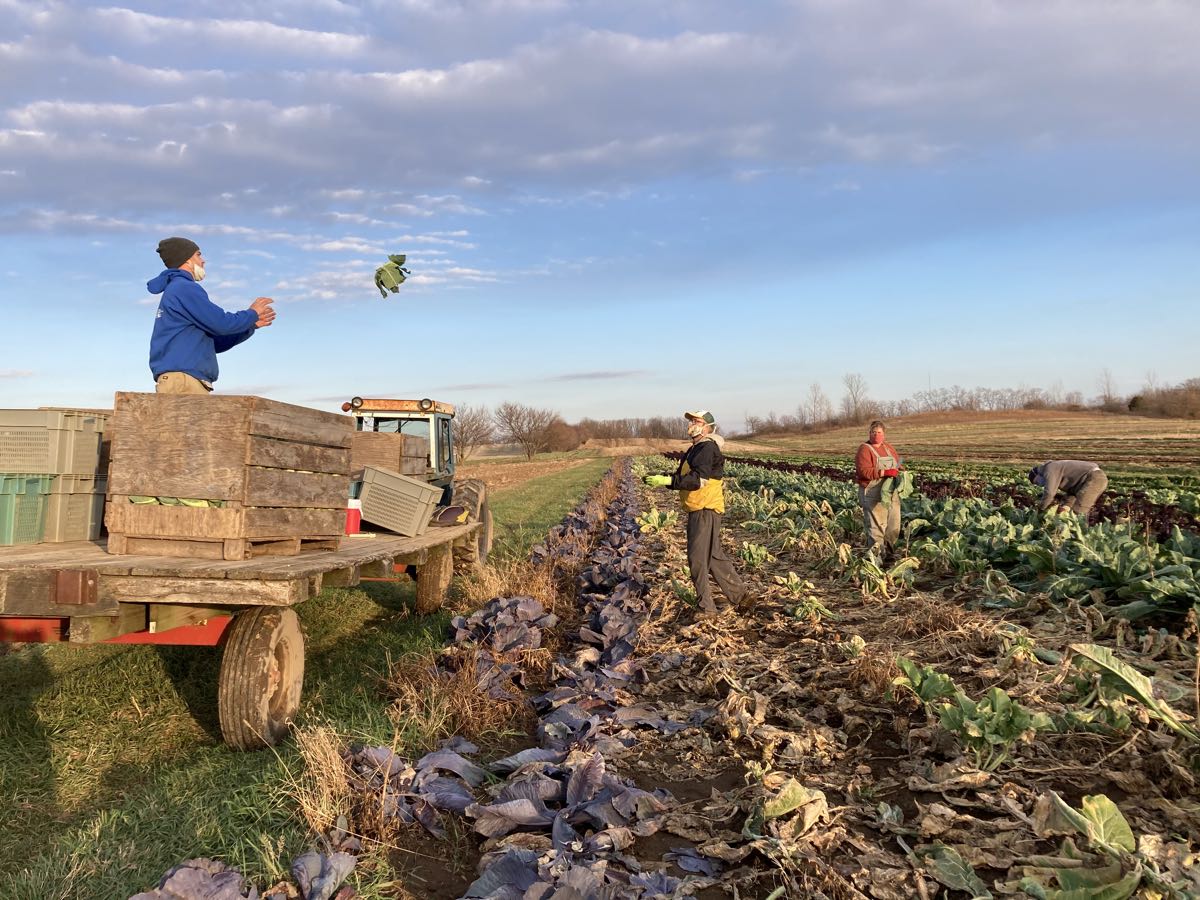
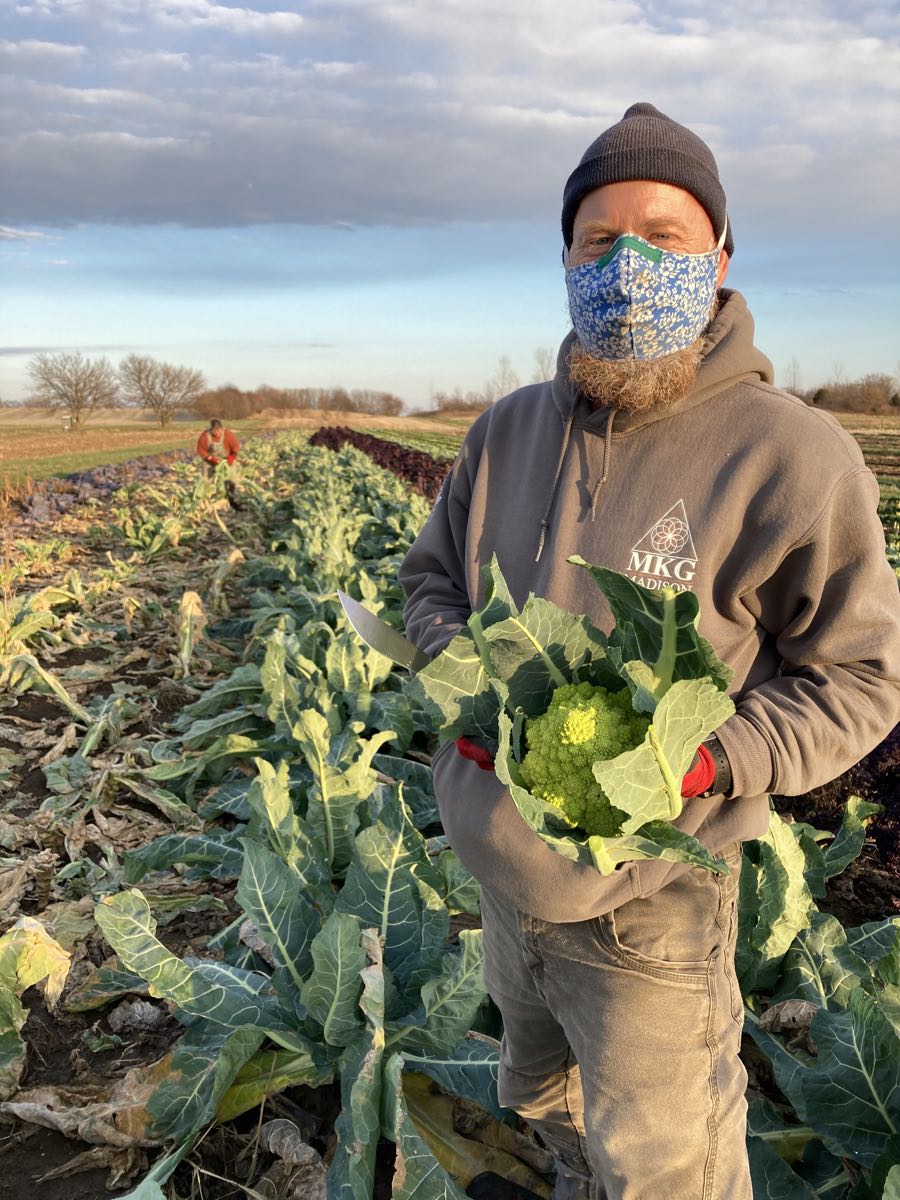
We harvested your Romanesco cauliflower on a blue-sky day. Ben shows off a beauty.
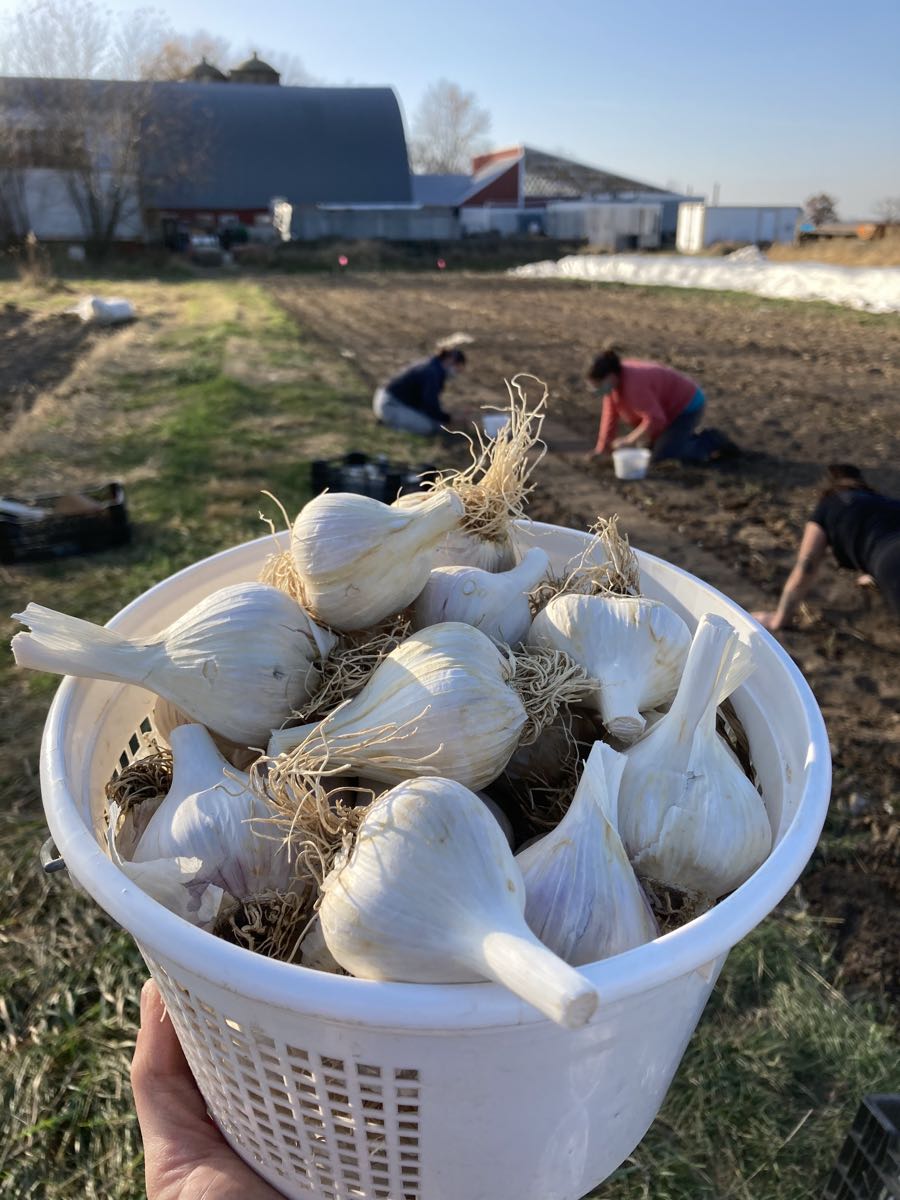
Next year’s garlic and green garlic are safely in the ground.

Our work days end after dark, but soon our field work will end. There are still modest amounts of cabbage, Brussels sprouts and a bit of reluctant cauliflower to bring in by next week, then field work will be done for the year. We’ll move inside for the winter, to wash and deliver all the carrots, cabbage, parsnips and other roots that we’ve stashed away.
Thank you so much for joining our farm this season. We hope you stay safe and warm this winter, and that this big delivery brightens your winter meals.
Beth and Steve
Storage Share this week
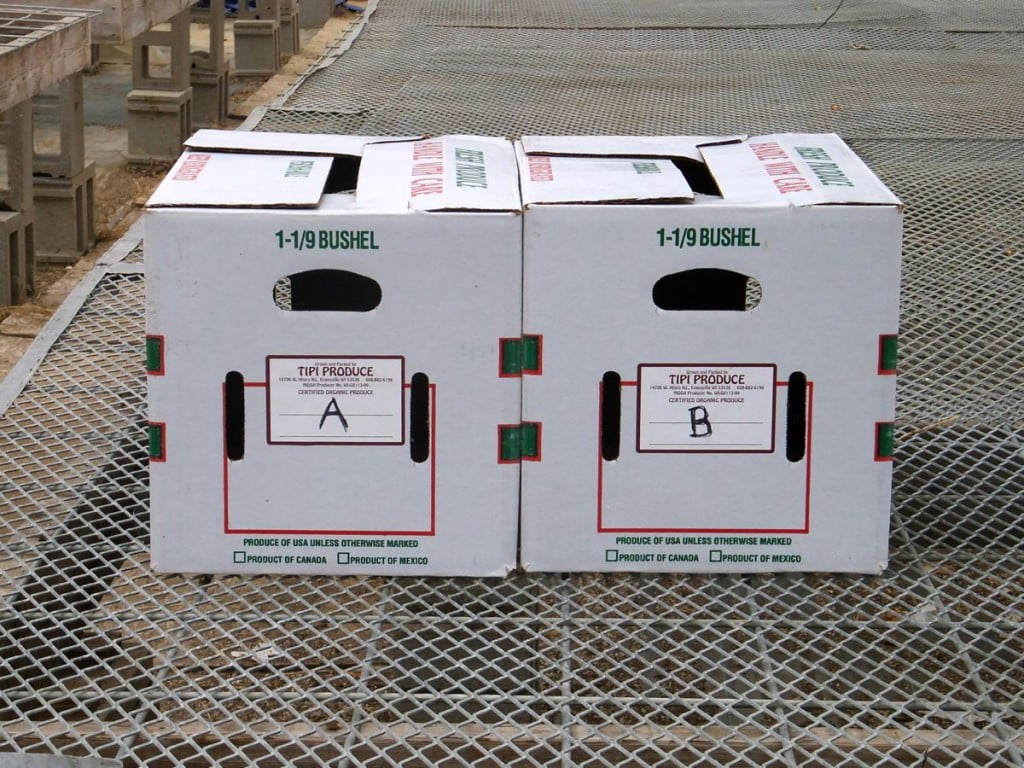
Take one box labelled “A” and one box labelled “B”.
Things you need to know about your winter share
* Your delivery will consist of two different boxes, labeled “A” and “B”. Take one “A” box and one “B” box. The boxes contain different vegetables.
* Please pick up your boxes on the day of delivery, during the normal hours for your site.
* Outpost members, pick up your boxes on Friday. This is the busiest weekend of the year for the Outpost staff, so they WILL NOT hold boxes past Friday, nor can they handle special requests.
* Bring extra bags this time. The boxes will be lined with a plastic bag as usual, but this big share is too much weight for the bag. Leave the boxes at your site, take the produce home in the liner bags plus your own bags/containers.
Veggie List and Storage Info (Storage share, Nov. 19/20, 2020)
We hope you enjoy this shipment of veggies. Strategize to use them well, as some will last longer than others.
* This is the most perishable vegetable: purple broccoli
* These are the next-most perishable: Brussels sprouts, leeks, Romanesco. Keep an eye on your butternut, potatoes and sweet potatoes. The last two are susceptible to drying out. Expect the largest butternuts to last the longest.
* These will last the longest: beets, cabbage, carrots, celeriac, garlic, red & yellow onions, parsnips and shallots.
Box “A”
Everything in this box can be stored cool or at room temperature. See notes below for more detail.
‘Autumn Frost’ pumpkin
Butternut squash
Sweet potatoes, mixed ‘Bayou Belle’ and ‘Covington’
(Combined squash & sweet potatoes weigh about 19 lb.)
Shallots, 1.25 lb
Garlic, 3 bulbs (in shallot bag)
Potatoes, russet, 5 lb
Potatoes, Satina, 5 lb
Box “B”
Refrigerate everything in this box, except the onions.
Beets, 3 lb
Brussels sprouts, 1.5 lb
Carrots, 6 lb total
….. orange ~4 lb
….. yellow & purple ~2 lb
Celeriac, 1
Green cabbage, 1 large
Leeks, ~2.5 lb
Onions, 5 lb total
….. red ‘Blush’
….. yellow
Parsnips, ~2 lb
Purple broccoli, 1 large head
Romanesco, 1 medium head (or maybe a purple cauliflower)
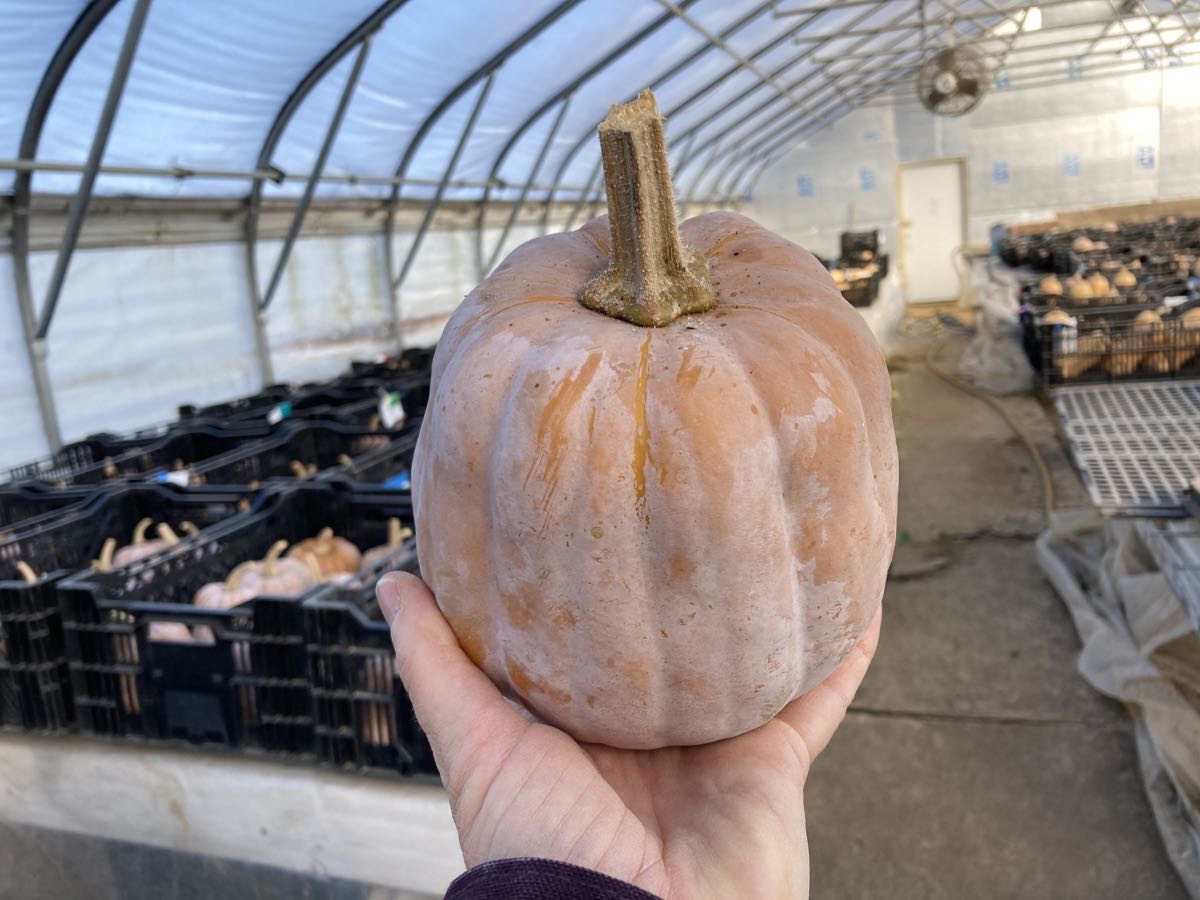
Autumn Frost winter squash
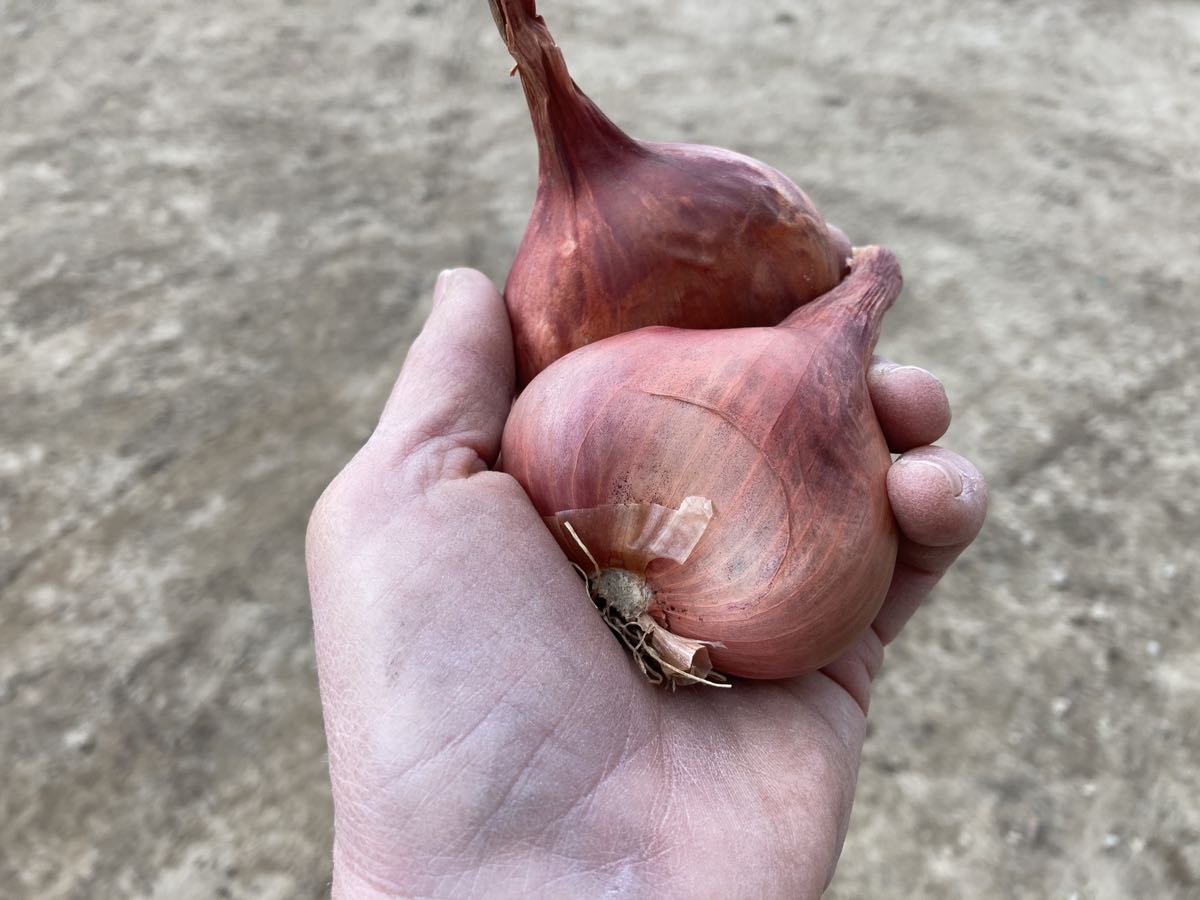
Shallots. Yours are packed in a paper bag, with the garlic.
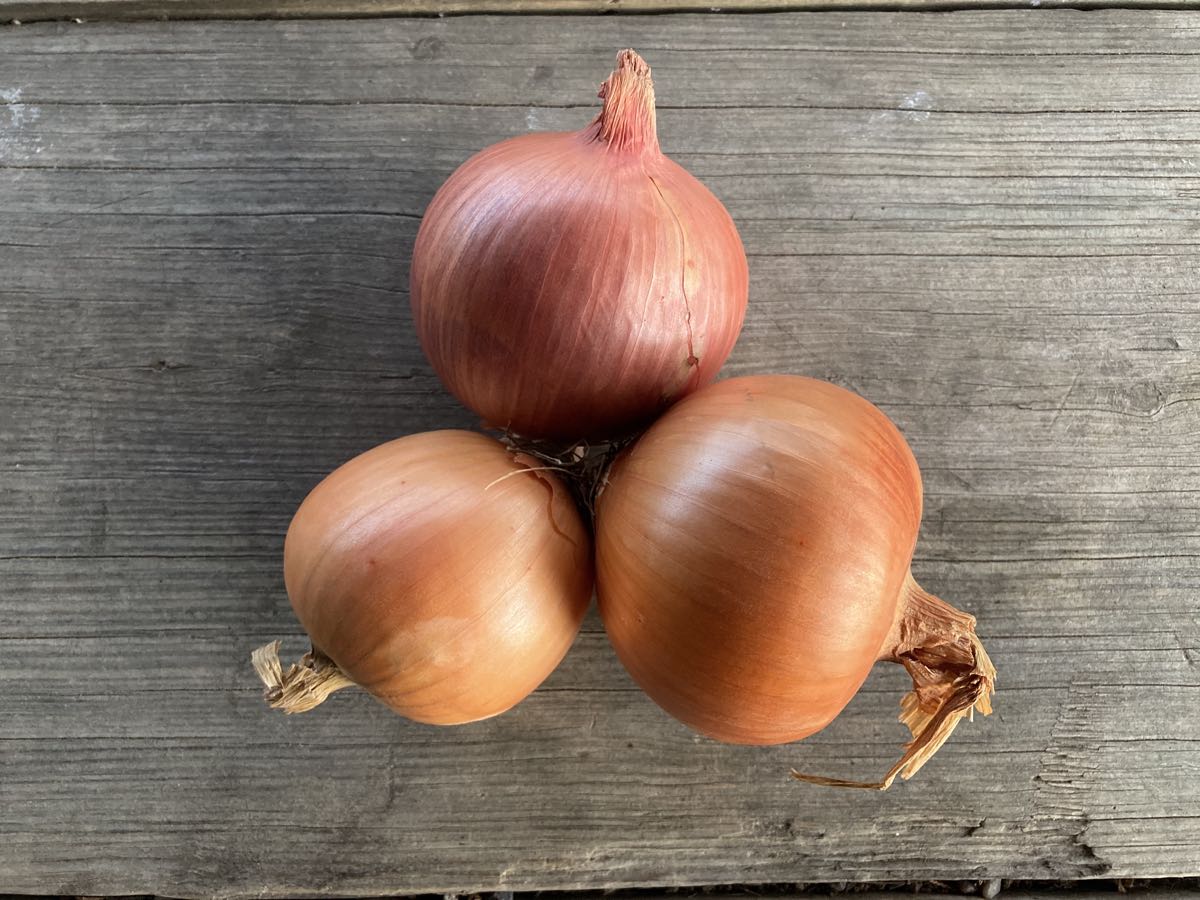
Top, ‘Blush’ red onion
Bottom, yellow onions
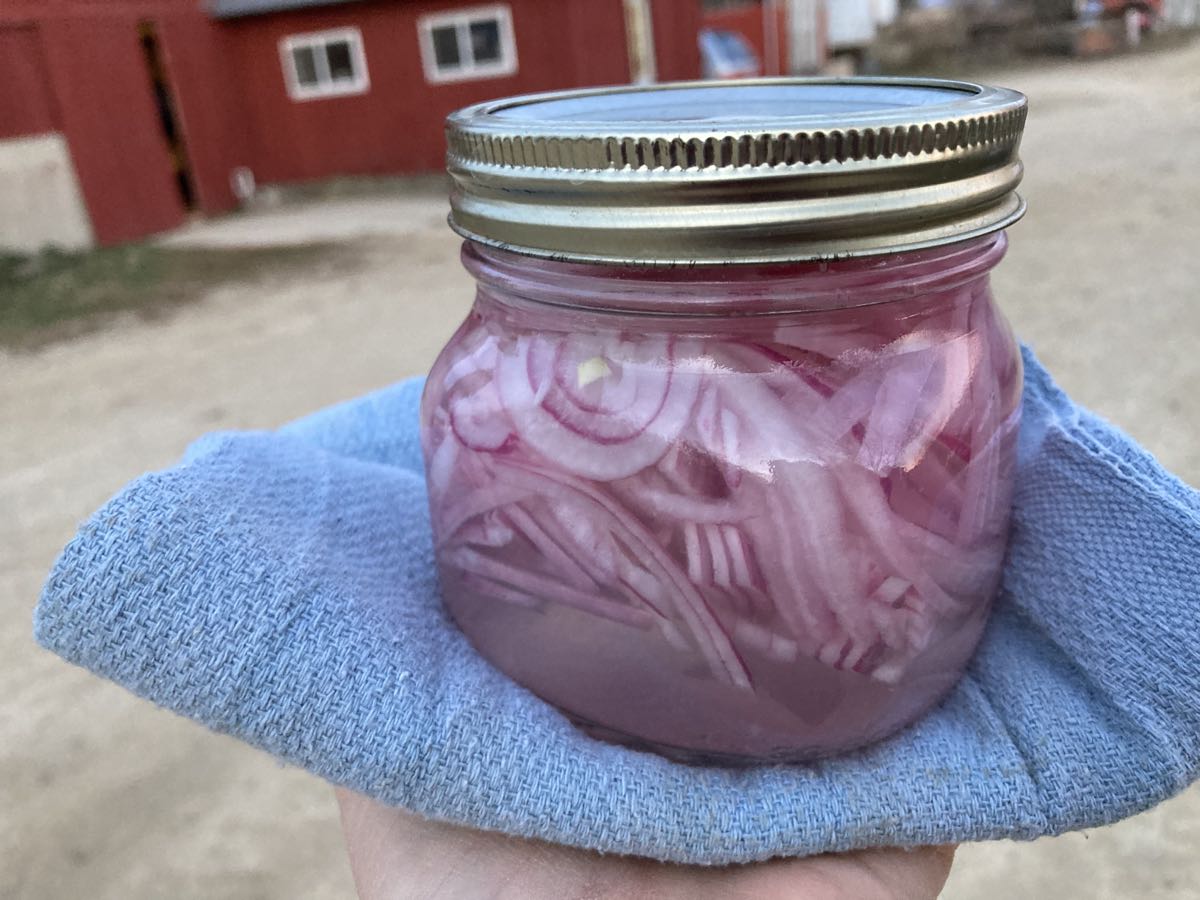
The ‘Blush’ onions are more pink than red, and excellent for long storage.
Autumn Frost winter squash – Store cool and dry. 60 F is ideal.
These beautiful frosted squash have both pumpkin and butternut squash breeding in them. They cook and taste like an unusually good butternut, with rich, smooth texture. They are quite nice. The skin is elible. The seed companies tell us that they store well, but I encourage you to eat your Autumn Frost within a month. These are new for us, so we don’t really know if they store reliably.
Beets – Refrigerate in a bag or container. Beets will store for two months or longer.
Brussels sprouts – Eat within 2 to 3 weeks.
Butternut winter squash – Store your butternut in a cool, dry place. 60 F is ideal. Do not put in a plastic bag. Expect the largest butternuts to store the longest. Inspect your squash frequently and cook promptly if you see any soft spots developing. You can cook, mash and freeze the squash for future use. I find that you can refrigerate cut raw squash for up to one week. This runs counter to the accepted way to store squash, but is useful if you want to cook just half a squash. Some of them are big! Try microwaving your squash for one to two minutes before cutting or peeling. This softens the squash and makes a large butternut easier to handle.
Cabbage – Refrigerate.
Carrots, orange. Refrigerate in a plastic bag. Will keep for several weeks.
Carrots, yellow & purple. These varieties are pretty AND they taste good. Refrigerate in the plastic bag.
Celeriac – Will store for months in your fridge. Cut off chunks as needed. Peel before using. I find it easiest to cut the celeriac into flat slices, then peel.
Garlic – Store at room temperature.
Green cabbage – Refrigerate. These are big. It’s OK to cut off chunks as needed.
Leeks. Refrigerate. In general, leeks are not a long-storage crop. You may need to strip off one or two outer leaves to freshen the leeks before you cook them.
Onions: Refrigerate or store in a cool, dark spot and protect from light. Exposure to light stimulates sprouting.
Parsnips (These look like large white carrots.) – Refrigerate in a plastic bag. Parsnips will store for several months but will darken in color. That is a harmless change.
Potatoes; russets and Satinas – Can be stored at room temperature or in a cool spot, but must be kept in the dark so they do not turn green. A cloth or loose plastic bag draped over the paper bag will slow moisture loss, but do not close the plastic bag. Both types will store longer if kept cool. Around 40 – 50 F is ideal. The potatoes were grown by the Igl family near Antigo.
Russets– We got the big ‘baking’ grade so you have nice bakers for Thanksgiving. Excellent for baked or mashed potatoes.
Satinas– These are good all-purpose potatoes, everything from roasted to potato salad. I really like this variety of yellow potato because they oven-roast so well and because they are less sweet than other yellow varieties such as Yukon Golds.
Purple broccoli – Refrigerate in a plastic bag or a container. You should plan to use this soon, eg within one week.
Romanesco cauliflower (beautiful chartreuse green, spiraled head) or purple cauliflower (dense purple head) – Refrigerate. These should store well, eg for a few weeks.
Shallots (look like small red onions) – Good for salad dressing. We’re still learning how to grow shallots and are thrilled to have a small bag for everyone!
Sweet potatoes – We’re sending a mix of two varieties, Covington (orange skins) and ‘Bayou Belle’ (purple skins). Both have excellent flavor and sweetness. Store at room temperature, no lower than 55 F, but 60+ F is better. Keep them on your kitchen counter where it’s easy to keep an eye on them. I like to keep ours in a paper bag so they don’t dehydrate. Cook promptly if they start to soften. The roots come in a wide ranges of sizes and all are good.
Recipe Ideas
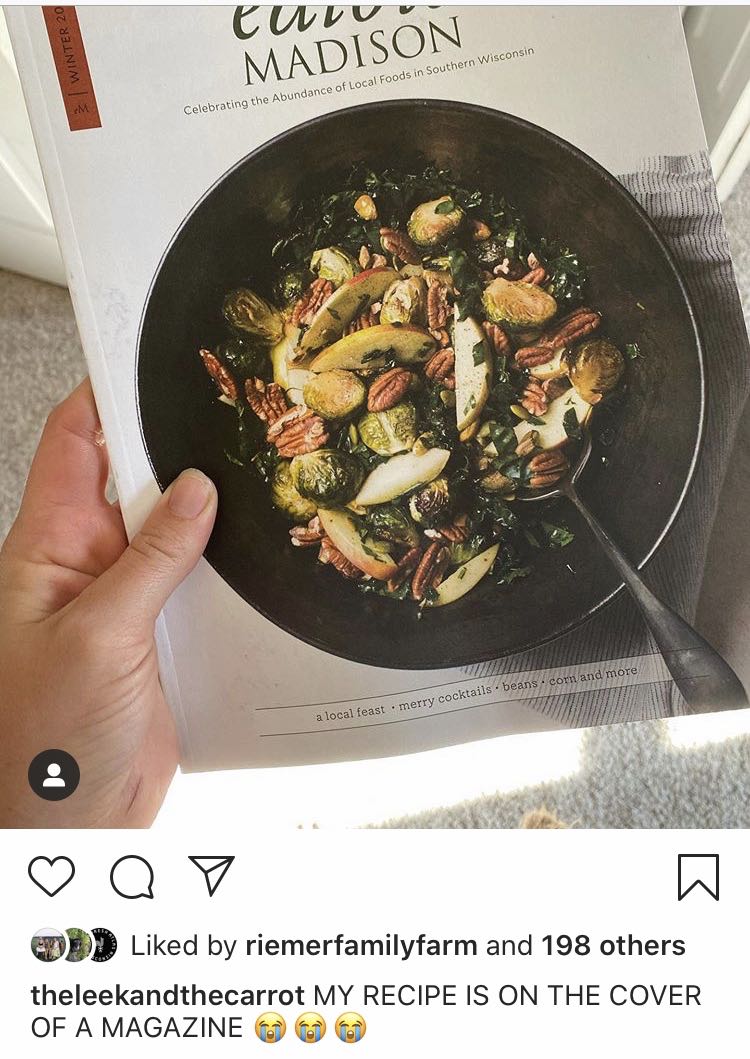
Check out the winter issue of Edible Madison. That’s our own recipe writer Lauren’s recipe on the cover! Recipe is at ediblemadison.com/recipes/winter-kale-salad-with-roasted-brussels-cinnamon-citrus-vinaigrette .
Thanksgiving Menus
For obvious reasons, the Thanksgiving recipes offered online are different this year, scaled back but worth bookmarking for winter meals. Here are some interesting ones.
The Washington Post
The Post staff used the popular “sheet pan dinner” technique to craft whole holiday meals on one sheet pan, fine-tuning when to add each ingredient to the pan. I appreciate that kind of finesse, and will be trying a few of the recipes this winter. I don’t have a good track record with Hasselback potatoes (undercooked potatoes after hours in the oven) so I’m interested in their tricks in the Sheet Pan Chicken With Hasselback Potatoes and Brussels Sprouts recipe.
Smitten Kitchen
I love this cook! She has an extensive list of Thanksgiving recipes from previous years. Her newest Potato and Leek Gratin recipe looks good.
Food52.com
Once again, the lively Food52.com site has outdone itself with an extensive Thanksgiving recipe collection. They’ve named it “AutoMagic Thanksgiving Menu Maker“. It’s organized by type of dish, e.g.
. “Bright and Crunchy” and
. “Roasted to Perfection”, etc.
I’ve extracted a few sauce ideas from the recipes.
– I like the horseradish vinaigrette in the Autumn Salad with Horseradish Vinaigrette recipe, and have been happily spooning it on roasted sweet potatoes.
– The spicy onions in Dan Kluger’s Roasted Butternut Squash with Spicy Onions recipe are very zippy. They are quite strong, and I find they overpower roasted squash but are a good complement for mashed potatoes.
Local Thyme
Finally, remember that we can use Local Thyme recipes all winter. Check them out for Thanksgiving ideas.
Extension Share, Nov. 5/6, 2020
- On: November 04, 2020
- 0
The warm weather this week has been a gift. Sure, it made our farm work easier and enjoyable. More importantly, it protected poll workers and everyone standing in line to vote. Here are a few photos from the week, if you need a distraction from the election.
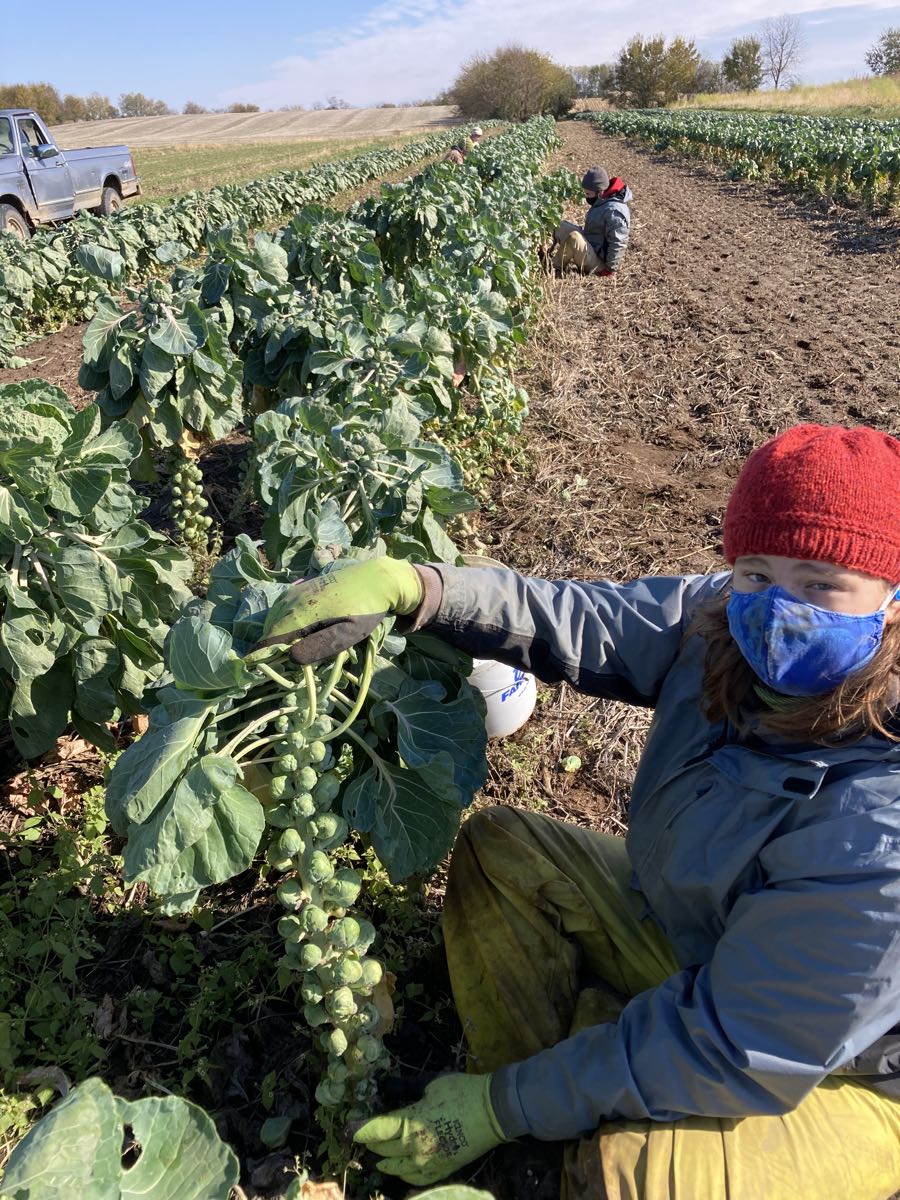
Chance harvests your Brussels sprouts.
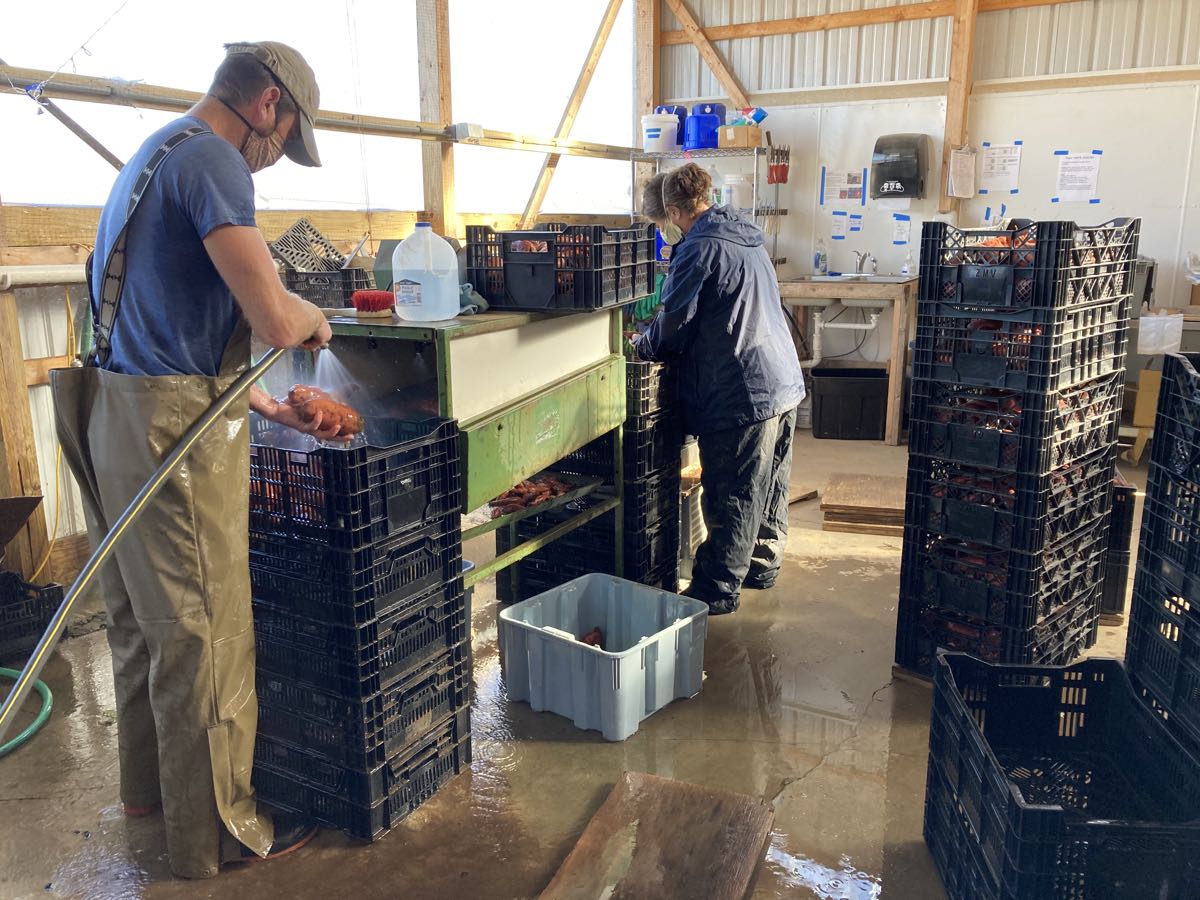
Washing sweet potatoes in short sleeves in November! Billy and Kristen washed all our remaining sweets, some for this week’s delivery, some for the Storage shares. It’s fabulous to take care of this in warm weather, and not worry about chilling the delicate sweet potatoes.
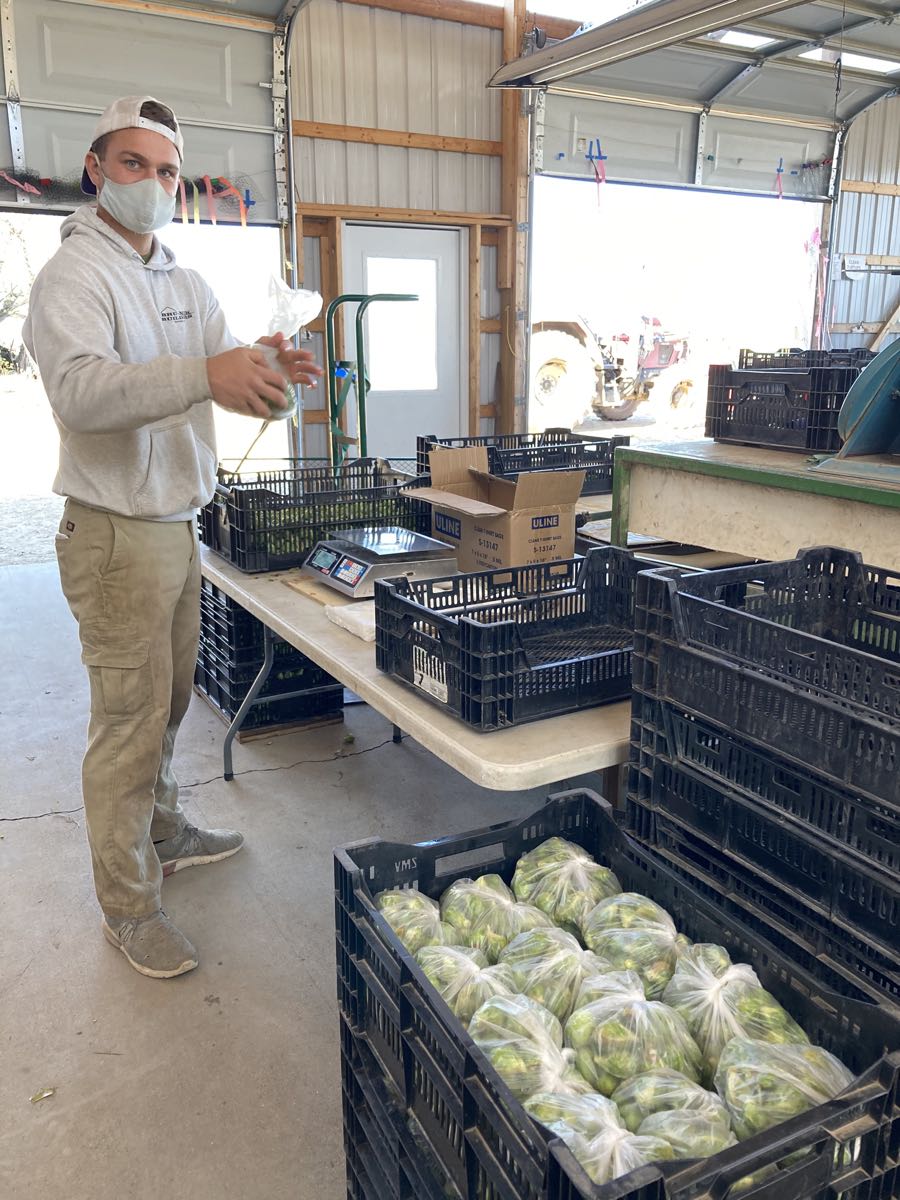
Matt weighs your Brussels sprouts.
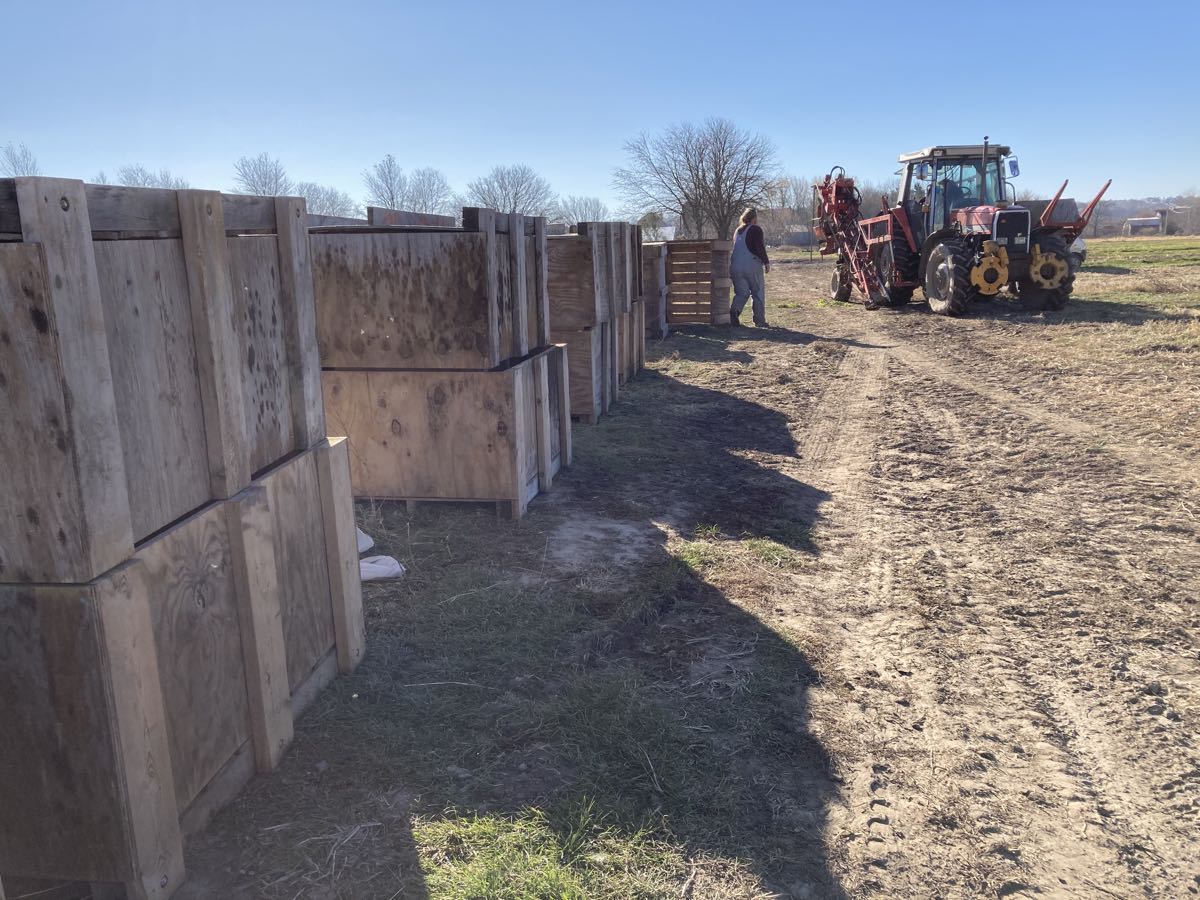
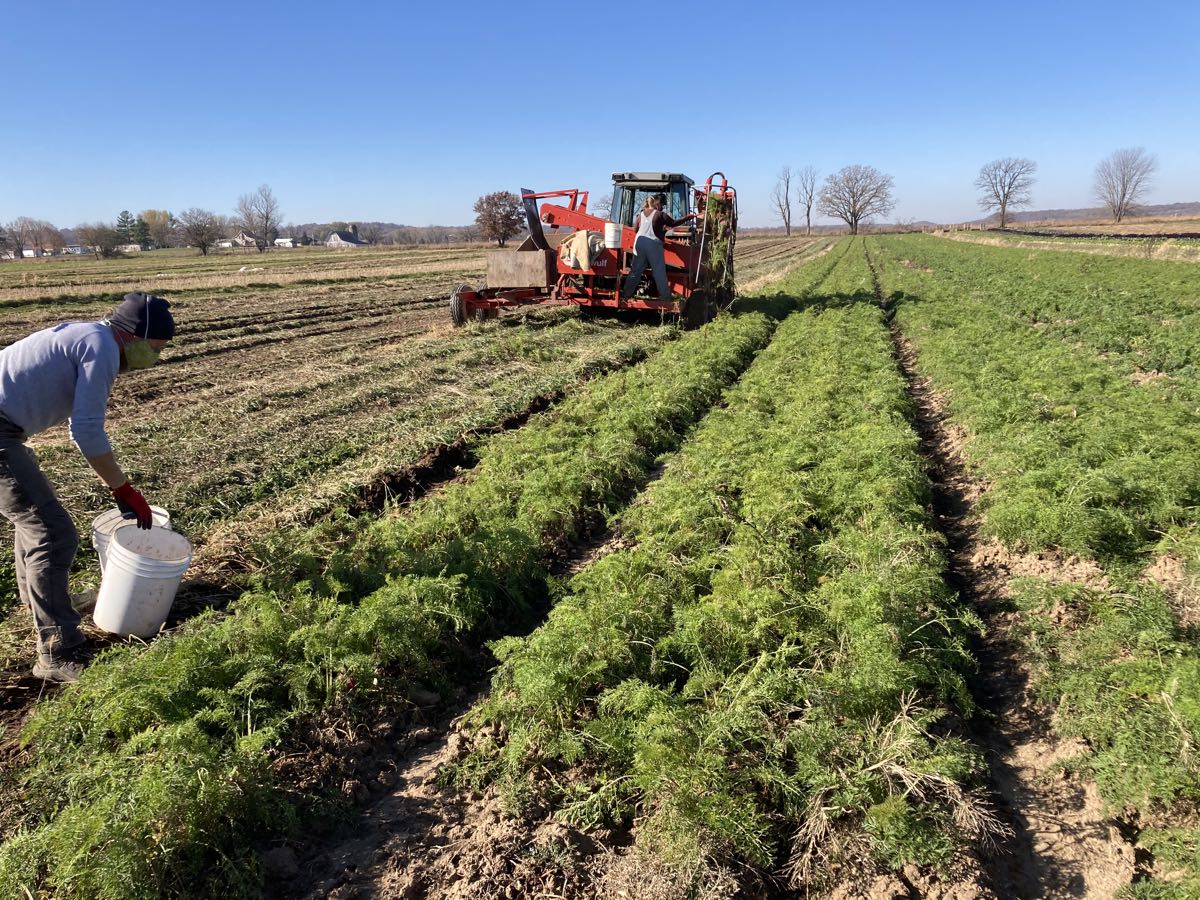
We will harvest carrots or parsnips every day this week, putting the roots into big wooden bins for winter storage. We’ll continue harvesting roots through the weekend. Next week, it’s time to bring in the rest of the leeks, cabbage, fennel, radishes and turnips. The garlic planting is almost finished. Right now, we are sprinting but should be able to wrap up the outdoor season by the end of next week.
Now you can go back to thinking about the election, if you wish.
Beth
Veggie List & Veggie Notes
Extension Share, Nov. 5/6, 2020
Sweet potatoes, ~3 lb
Savoy or green cabbage
Brussels sprouts, ~1 lb
Carrots, 2 lb
Parsnips, 1 & 2/3 lb
Yellow onion
‘Blush’ red onion
Jalapeno
Everyone gets two types of greens:
Greens #1: collards or green kale or red kale
Greens #2, bok choy or red bok choy or tatsoi or red napa cabbage
Sweet potatoes – Store at room temperature. Sweet potatoes will suffer chilling injury in the fridge. It’s OK to either store in a paper bag, or out on your kitchen counter. Do not store in plastic. Sweet potatoes will store for a long time.
This week, some folks get our ‘Covington’ variety, some get ‘Orleans’. Both are orange-skinned, nicely shaped and with good flavor and sweetness.
– For best flavor, cook your sweet potatoes so they brown and caramelize. We have a simple, favorite way to roast sweet potatoes. We used to prepare sweet potato fries in the oven. Now we just quarter the potatoes, rub with olive oil, dust with salt and place cut-side-down on a cookie sheet. Roast in a 450 F oven without turning until soft. The flavors will caramelize (like sweet potato fries) but preparation is simpler and the cooking time less exacting. Slender sweet potato fries go from undercooked to overcooked in the blink of an eye. Larger slices are less exacting, and therefore are easier. Small sweet potatoes can be cut just in half. Jumbos will need to be chopped into pieces. Otherwise, they take a long time to cook.
– These sweet potatoes will need slightly longer cooking than ones from the supermarket, perhaps because they contain higher moisture so soon after harvest.
– Sweet potatoes are good at any size. We have cooked everything from tiny to jumbo and consistently find that all sizes taste good.
Savoy or green cabbage – Refrigerate. If you plan to eat soon, you can store uncovered in your crisper drawer. If you want to store for longer, cover with a plastic bag or cloth.
The savoy is crinkled, the green cabbage is smooth. They can be used interchangeably in recipes.
Brussels sprouts – Refrigerate in the plastic bag. Eat within two or three weeks. They store well but the outer leaves will turn yellow. Don’t let them get too wet in the fridge.
Carrots – Refrigerate in the plastic bag.
Parsnips (These look like large white carrots) – Those long, white roots are not carrots, they are parsnips. The two vegetables are related. When cooked, parsnips are sweet and starchy. For the best flavor, brown them to caramelize the sugars. Here are a few ideas for parsnip preparation:
– Caramelize the parsnips by roasting them in a vegetable medley.
– Parsnip fries are delicious: cut like French fries, oil lightly, place on a cookie sheet and roast in a hot oven until brown and cooked through.
– Try substituting grated parsnips in a potato pancake recipe. They brown beautifully and are very tasty.
– Steve loves pan-fried parsnips with onions and garlic.
‘Blush’ red onion – Store at room temperature or in the fridge. This onion is more pink than red when cooked or pickled but is very pretty. I really like this variety. They are great cooked and we find they store exceptionally well. That shouldn’t be an issue when you have just one or two!
Jalapeno chile (Hot, maybe) – Eat soon. These were the final harvest from under row covers, so they were exposed to cold nights and will not store long. They’ll be good for about one week.
Greens #1 (collards or red kale or green kale) – All are in beautiful shape, surviving cold nights without trouble.
Greens #2 (bok choy or red bok choy or tatsoi or red napa cabbage) – By now, you know what to do with the various choys we grow. The red napa cabbages are small, not too dense, and keeps its color when cooked.
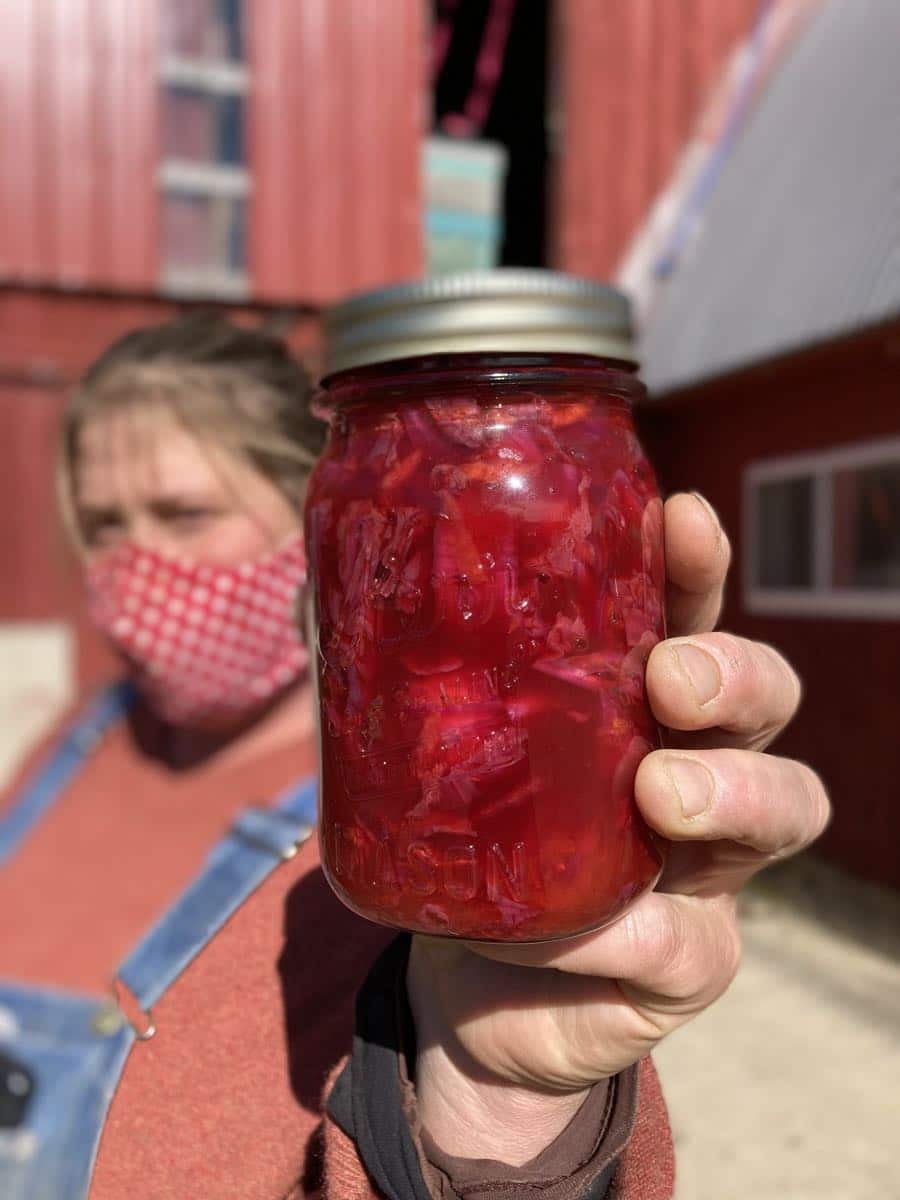
The red napa makes very pretty kimchi.
RECIPES
Visit our 2020 Recipe Log or our 2019 Recipe Log or join our Facebook discussion group.
LOCAL THYME/ Cooking 101
Roasted Carrots and Parsnips
Honey Lemon Whipped Sweet Potatoes
Polentina Toscana
LOCAL THYME/ Cooking 202
Parsnip and Sweet Potato Bisque
Soy Glazed Sweet Potatoes and Carrots
Lightly Wilted Sweet and Tangy Cole Slaw
LOCAL THYME/ Quick & Easy Meal
Vegetable Biriyani
RECIPES FROM LAUREN
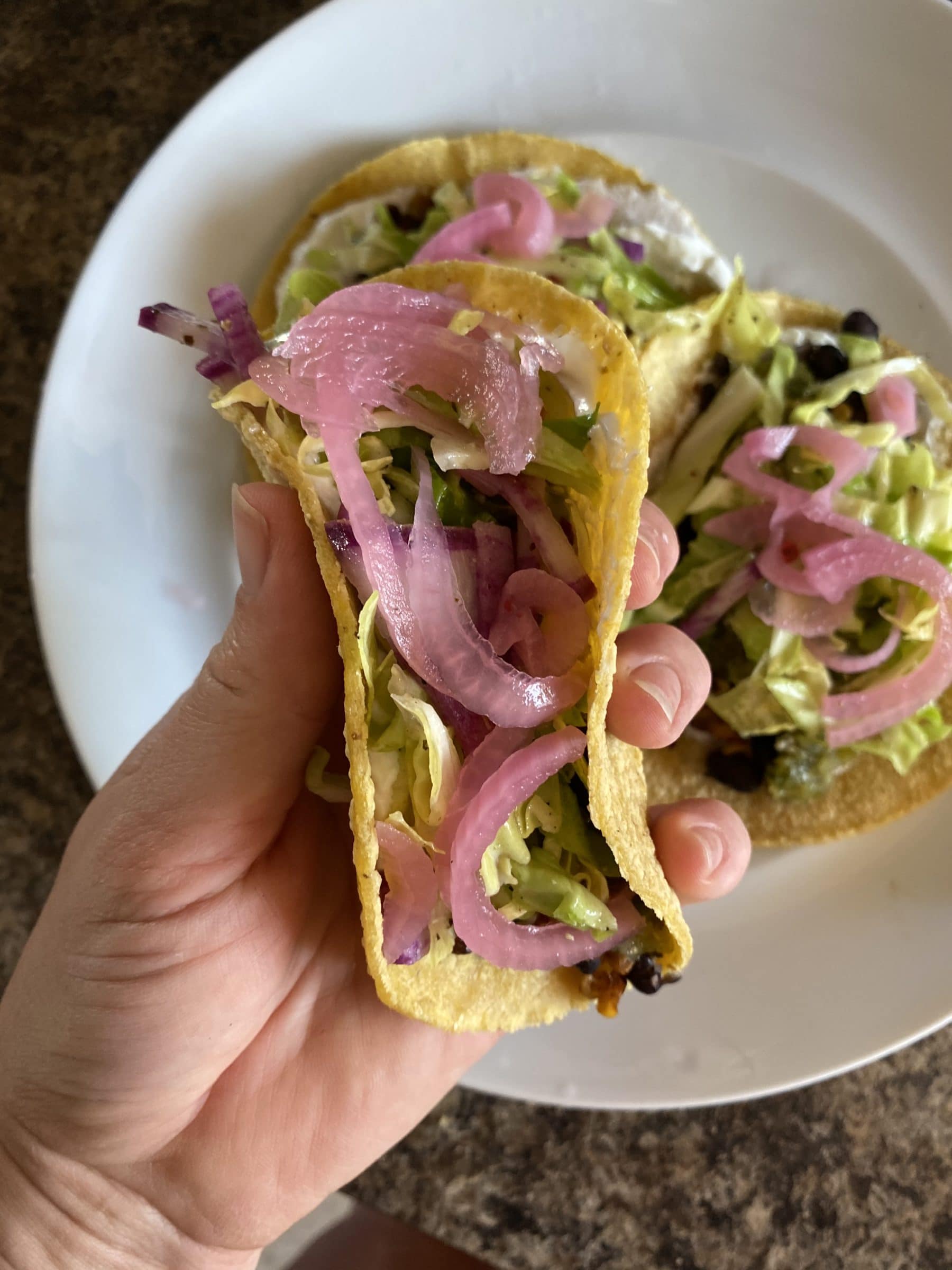
SWEET POTATO & BLACK BEAN TACOS WITH SLAW
Makes 18-24 tacos
Serves 6-8
Takes 1 hour
3 pounds sweet potatoes, peeled and diced
2 tablespoons olive oil
1 tablespoon cumin
1 tablespoon chili powder
1 teaspoon ground coriander
1 teaspoon Kosher salt
1 14-ounce can black beans, drained and rinsed
Corn tortillas, warmed
Sour cream, optional
Red or green salsa, optional
Pickled Blush Onion:
1 blush onion, halved and thinly sliced
3/4 cup white wine vinegar
3/4 cup water
3 tablespoons sugar
1/2 tablespoon salt
Slaw:
1/2 head cabbage, shredded or thinly sliced
2 carrots, shredded or cut into matchsticks
1 jalapeno, halved, seeded and thinly sliced
1 lime, juiced
2 tablespoons olive oil
1/2 teaspoon Kosher salt
1/4 teaspoon freshly ground black pepper
1. Preheat oven to 425 degrees.
2. On a large baking sheet, toss sweet potatoes with olive oil and spices. Roast for 30-40 minutes, turning once during the baking process, until the sweet potatoes are browned on the edges and cooked through.
3. While those roast, prepare your pickled onions, place onions in a small bowl or pint-sized mason jar. Combine other ingredients in a small sauce pan. Bring to a simmer over medium heat then immediately pour over onions. Let sit at least 30 minutes. The onions will turn a more translucent shade of pink when they are ready.
4. Then prepare your slaw by combining all slaw ingredients in a large bowl and tossing together.
5. Serve tacos with roasted squash, black beans, pickled onion, slaw, sour cream and a salsa of your choosing.
.
????
.
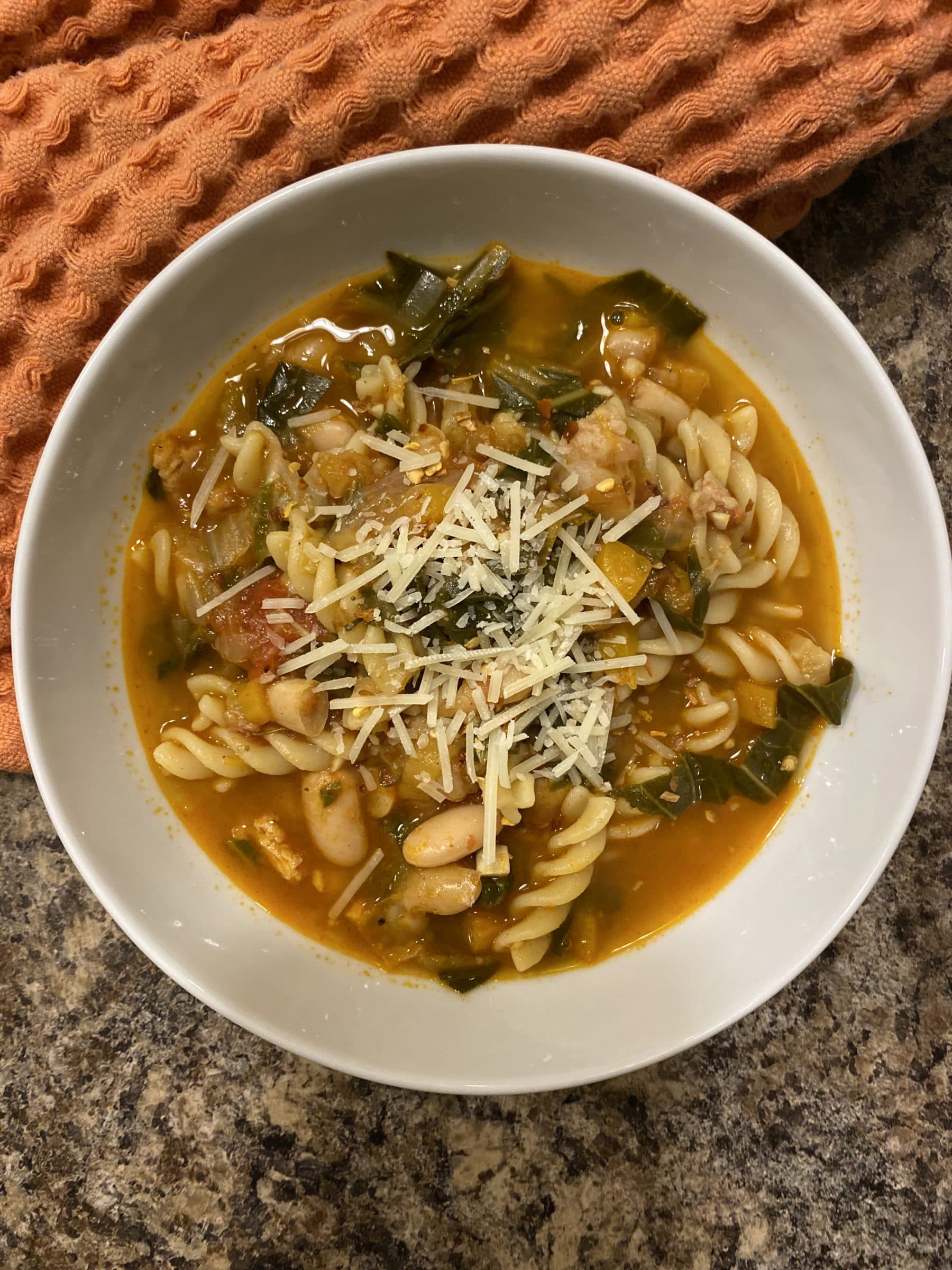
PASTA E FAGIOLI WITH BOK CHOY
Adapted from Half Baked Harvest
Serves 6
Takes 50 minutes
3 pieces raw bacon, diced, optional (sub 2 tablespoons olive oil or butter if not using)
1 head bok choy, divided
1 yellow onion, diced
3 carrots, diced
4 garlic cloves, minced
Kosher salt and freshly ground black pepper
4 cups chicken or vegetable broth
15-ounce can or 1 pint crushed tomatoes
1/4 teaspoon thyme
1/4 teaspoon rosemary
1/2 pound pasta of your choice (I love rotini or shells for this)
1 14-ounce can cannellini beans, drained and rinsed
1 teaspoon smoked paprika
Shredded parmesan, optional
Red pepper flakes, optional
1. In a large stock pot, cook bacon (if using) over medium heat until crisp. If not using bacon, warm oil.
2. Prepare bok choy by thoroughly washing and then removing leaves from stems. Roughly chop leaves and set them aside. Thinly sliced stems and add to pot along with onion, carrot, garlic, a pinch of salt and few grinds of fresh pepper. Saute for 10 minutes until veggies are softened.
3. Add in broth, tomatoes, bok choy leaves, thyme and rosemary. Season again with a couple pinches of salt and pepper. Bring to a boil, reduce to a simmer, add in pasta, and cook for 15 minutes until greens are well wilted and pasta is cooked.
4. Stir in beans and paprika.
5. Serve warm with parmesan and a pinch or red pepper flakes.
.
????
.
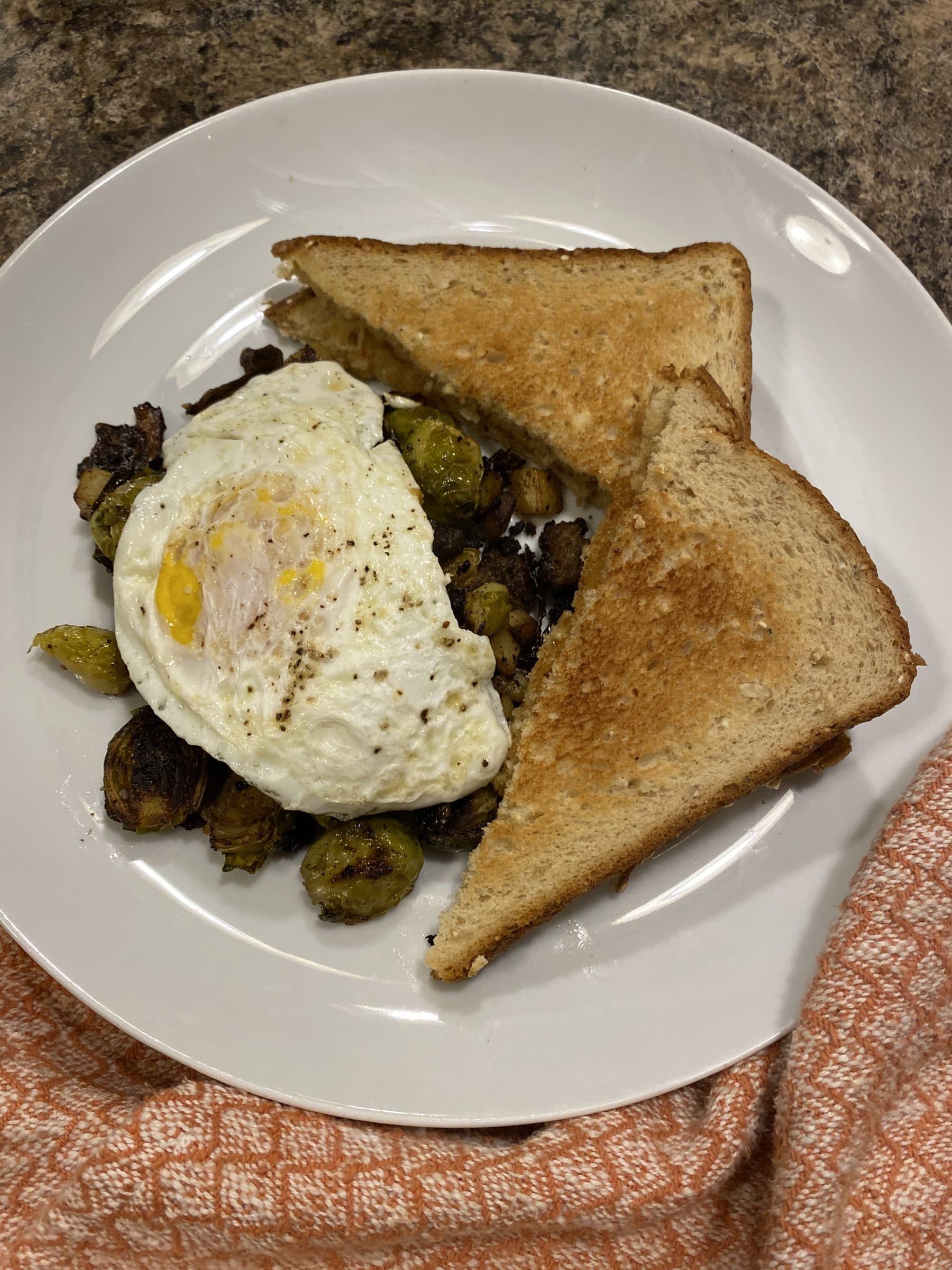
PARSNIP & BRUSSELS SPROUT HASH
Adapted from a New York Times recipe
Takes 45 minutes
Makes 4 servings
2 tablespoons oil
1 pound Brussels sprouts
1 teaspoon Kosher salt, divided
1/2 teaspoon red pepper flakes, optional
Generous freshly ground black pepper
2 parsnips, peeled and chopped
4 tablespoons butter
1 medium onion, diced
1/2 pound pork sausage, cooked
1 tablespoon dried sage
1. Preheat the oven to 400 degrees.
2. Prep your Brussels sprouts by cutting them in half (quarter especially large ones; leave especially small ones whole). Toss with olive oil, 1/2 teaspoon salt, generous amount of black pepper and red pepper flakes. Place on a baking sheet and bake for 25-30 minutes or until nicely brown and crispy around the edges, turning occasionally for even browning.
3. Put parsnips in large oven-proof skillet. Cover with water. Heat over medium heat until simmering and then cook for 3 minutes. Drain and set aside.
4. Melt butter in same large skillet. Add onion along with remaining 1/2 teaspoons salt and more freshly ground black pepper. Cook for 5 minutes over medium-low heat until soft. Add cooked parsnips, pork sausage and sage. (Feel free to leave out the pork sausage if vegetarian or sub in seitan or tempeh instead).
5. Turn heat to medium-high and cook for 20 minutes, stirring every couple of minutes. The idea here is to brown the parsnips but not burn them. Your pan should be so hot that you can leave it for 2 minutes without stirring and when you come back, things will just be nicely browned on the bottom. If the parsnips or onions burn in 2 minutes, your pan is too hot. Turn it down and keep going– a little char is a-okay.
6. Toss hash with roasted Brussels sprouts before plating and serve with eggs.
.
Week #24, Final weekly & purple & moon; Thank you!
- On: October 28, 2020
- 1
Good-bye … for now.
Tipi CSA members, thank you so much for joining our CSA adventure this season. We greatly appreciate your patience and your support. Your trust in us and messages of support carried us through some very difficult times. It meant so much to us.
In the midst of a complicated year, it was a pretty good growing season. Some things did well, some did poorly (that’s to be expected) but we did not struggle to fill your boxes. I asked our farmhands how they felt about work this year. Here are some of their responses:
“We all learned something about perseverance. The world was scary and sad but we just plodded on and dealt with it every day.”
“Making our COVID systems work was easier than I expected. I am proud of that,” from Karen, our Assistant Food Safety Manager.
“Really good crop year.”
“This was our best crew ever!”
“We are lucky to have a community to work with, in a safe way. I feel bad for people who have to work in isolation at home.”
What we saw was a team of workers who knit themselves together in a way that we have not seen in the past. There have always been strong friendships among our crew but this year people were more patient, more gentle with each other. Our time together became a respite. In the midst of a complicated and tense world, our work remained meaningful and ‘normal.’ As one crew member told me, “the farm rhythms gave me a sense of normalcy in the midst of everything else. Planting, seeding, transplanting – these jobs were the same as any year. It was comforting.”
We are grateful that our farmwork could proceed, that no workers got sick, and that we were able to feed all of you without interruption. We feel great relief as each storage crop is harvested and tucked away for winter. Wow, we are relieved that this season is almost over. Thank you again for your faith in us.
Beth & Steve
2021 CSA registration
We need to complete and analyze the season, then we will be ready to open registration for next season. I expect to do this earlier than other years, probably in November or December. Folks, I will be honest. We expect demand to be very high for CSA shares in 2021. If you want to join us again next year in the Madison to Janesville areas (please do!) then I advise you to register promptly. Our CSA shares sold out early this year, and we are getting unprecedented interest for next season.
1. I will open registration first for all returning members, so you have first dibs. Please watch for emails from us.
2. After one week, we’ll open to our waiting list.
3. After that, I’ll open registration to the public.
Winter sales
As usual, you can find our storage crops for sale through the winter at the Willy Street Coops, Basics Coop, and Outpost Natural Foods. We’ve got nice supplies of carrots, cabbage, parsnips, beets, celeriac, radishes, and rutabaga. We expect deliveries to last through March.
Final harvests
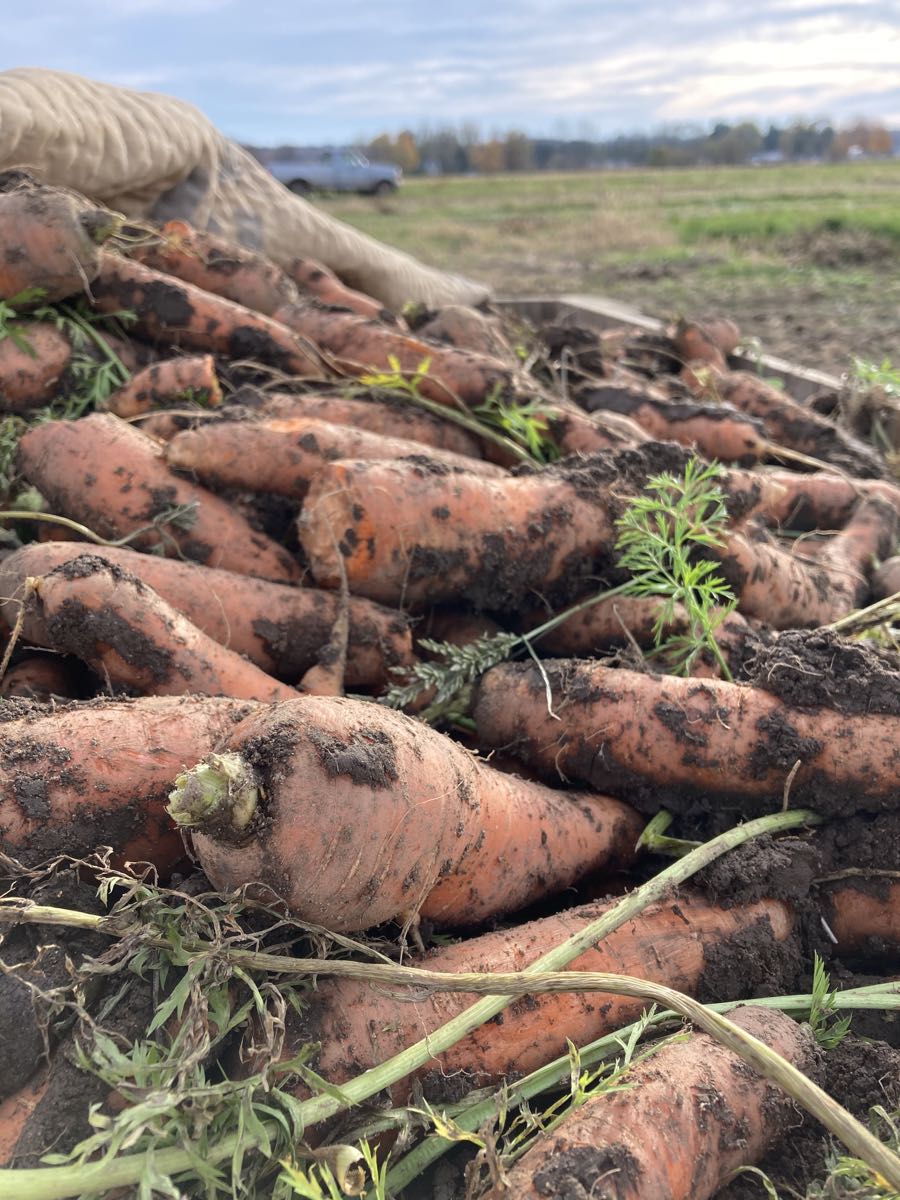
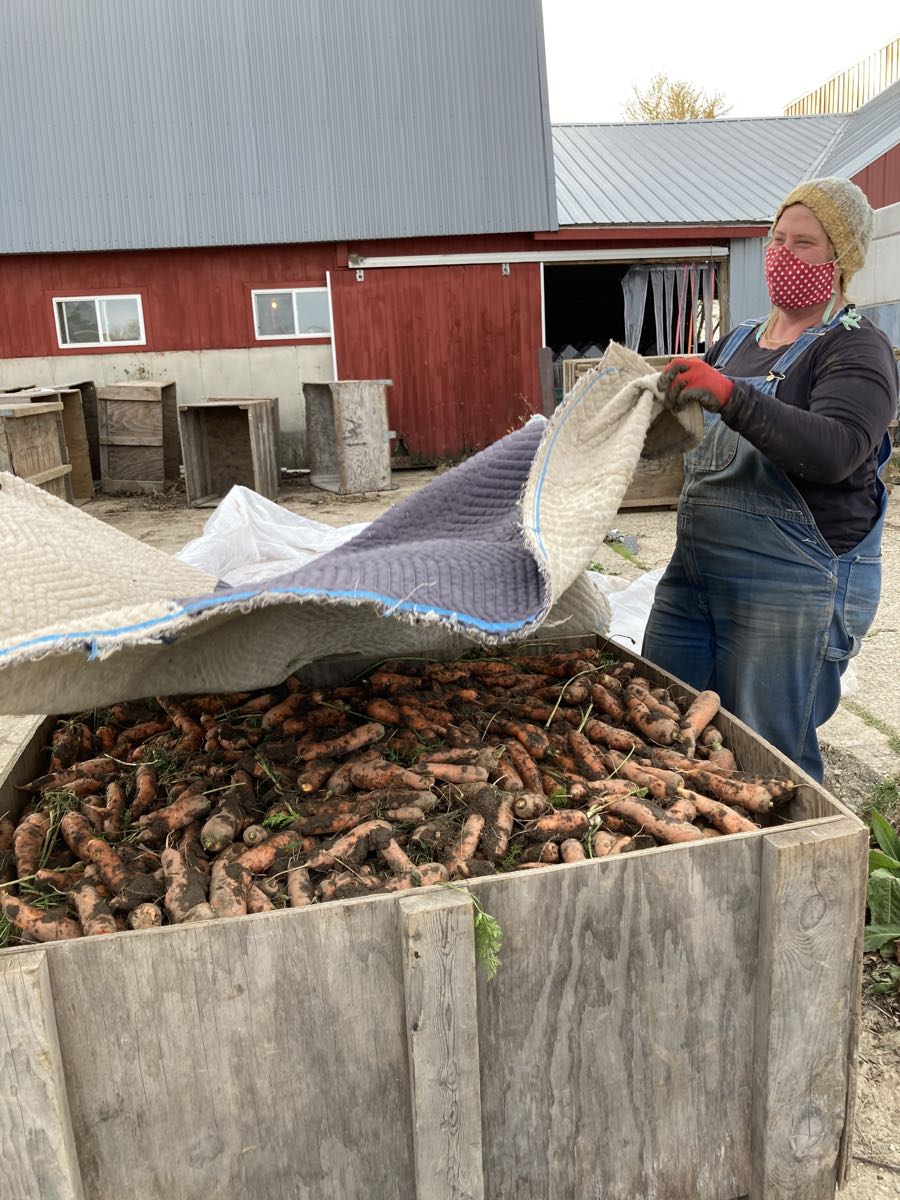
We are working hard to bring in our final root harvests. Carrots, parsnips, and some cabbages are still in the field. The weather forecast is excellent for the next ten days. We plan to have everything harvested by the end of that ten days. We will have to hustle but will make it happen. Our coolers will be filled to the brim and we will relax for winter.
Veggie List & Veggie Notes
Week #24, October 29/30, 2020
FINAL DELIVERY OF OUR REGULAR CSA SEASON.
– Weekly shares
– EOW/ purple
– Sampler/ moon
Red cabbage
Sweet potatoes, ~2.5 lb
Winter squash (Autumn Frost or a butternut)
Satina yellow potatoes, 3.5 lb
Brussels sprouts, ~1 lb
Celeriac
Japanese daikon radish
Snack peppers or a green bell pepper
Roulette chiles (not-hot habanero), a few
Poblano chiles (low or medium heat), 2
Yellow onion
Shallots, a few
Most sites get a bag of tender Amara kale. One or two sites get cauliflower or broccoli.
Red cabbage – Refrigerate. Stores well. Wonderful for colorful slaws.
Sweet potatoes – Store at room temperature. Sweet potatoes will suffer chilling injury in the fridge. It’s OK to either store in a paper bag, or out on your kitchen counter. Do not store in plastic. Sweet potatoes will store for a long time.
This week, some folks get our ‘Beauregard’ variety, some get ‘Orleans’. Both are orange-skinned.
– For best flavor, cook your sweet potatoes so they brown and caramelize. We have a simple, favorite way to roast sweet potatoes. We used to prepare sweet potato fries in the oven. Now we just quarter the potatoes, rub with olive oil, dust with salt and place cut-side-down on a cookie sheet. Roast in a 450 F oven without turning until soft. The flavors will caramelize (like sweet potato fries) but preparation is simpler and the cooking time less exacting. Slender sweet potato fries go from undercooked to overcooked in the blink of an eye. Larger slices are less exacting, and therefore are easier. Small sweet potatoes can be cut just in half. Jumbos will need to be chopped into pieces. Otherwise, they take a long time to cook.
– This first batch of sweet potatoes will need slightly longer cooking than ones from the supermarket, perhaps because they contain higher moisture so soon after harvest.
– Sweet potatoes are good at any size. We have cooked everything from tiny to jumbo and consistently find that all sizes taste good.
Winter squash – Store at room temperature, or above 55 degrees. Do not cover. You want good air movement to prevent spoilage.
This week, you will receive a small frosted squash (‘Autumn Frost’ or ‘Koginut’) or ‘Nutterbutter’ butternut.
The beautiful frosted squash have both pumpkin and butternut squash breeding in them. They cook and taste like an unusually good butternut. The seed companies tell us that they store very well, but I encourage you to eat them within a few weeks. These are new for us, so we don’t really know how well they will store.
‘Nutterbutter’ is our best-tasting butternut squash at this time of year. These are not intended for long storage. Eat within two weeks.
Satina yellow potatoes – These are from our friends Brad and Brian Igl’s farm near Antigo. Store dry at room temperature, in the paper bag to protect from light. These are good all-purpose potatoes. They roast very nicely.
Brussels sprouts – Refrigerate in the plastic bag. Eat within two or three weeks. They store well but the outer leaves will turn yellow. Don’t let them get too wet in the fridge.
Celeriac (knobby, round, bizarre-looking vegetable which smells like celery) – Refrigerate. Celeriac will store in your refrigerator for months. Cut off chunks as you need them. Peel before using. Flavorful celeriac is good raw or cooked. It is excellent in mixed roasted veggies or in soup. It’s especially good in cream soups, alone or mixed with potatoes. Grated raw celeriac is a great starting point for winter salads.
Japanese daikon radishes (long, white, freckled) – Refrigerate. Slice thinly and add to salads, cook lightly in mixed vegetable medleys or cut into matchsticks and add to pasta salads. Three weeks ago, we packed Korean radishes. While somewhat different, you can largely interchange Japanese and Korean daikon in recipes. Visit the Maangchi website (my favorite!) for many recipes for both Japanese radish and for Korean radish.
Green bell or snack peppers – Refrigerate. Eat soon. These were protected under row cover but exposed to cold nights, which shortens their storage life. Eat within 5 days.
‘Roulette’ chiles (small, orange or red) – This chile has been bred to have the aromatic taste of habanero chiles, with almost no heat. Snack on them to enjoy their flavor, or add them to any dish. To reduce all chances of spiciness, remove the seeds and midveins.
Poblano (dark green or red, shiny, triangular) – Refrigerate. Eat soon. These were protected under row cover but exposed to cold nights, which shortens their storage life. Eat within 10 days. These chiles have mild heat and lots of flavor.
Shallots (look like small red onions) – Store at room temperature. Shallots store for a long time. Excellent minced for salad dressing. They will sweeten considerably when fried.
Fried shallots – Thinly slice shallots. Heat 2 Tbsp peanut oil in a small skillet over medium-low heat. Add shallots and fry gently, mixing occasionally, until golden brown. When done, use the shallots and oil to top any dish, eg turkey salad.
Amara kale (tender, ruffled kale in bag) – Cover and refrigerate. This harvest is quite young and tender. Should be good for one week.
We’ve grown this variety just a few times. Here’s the seed catalog description: “While technically a mustard, Amara is known by several different names including Ethiopian kale, highland kale, Abyssinian mustard, and Texsel greens. The attractive, dark green leaves are tender, slightly savoyed with a wavy margin, and have an excellent rich flavor. Good in salads or as a cooked green.” This stuff is pretty interesting. It has the texture of kale but the spiciness of mustard. I’d say it’s about half as spicy as mustard greens.
‘Autumn Frost’ or ‘Koginut’ squash.
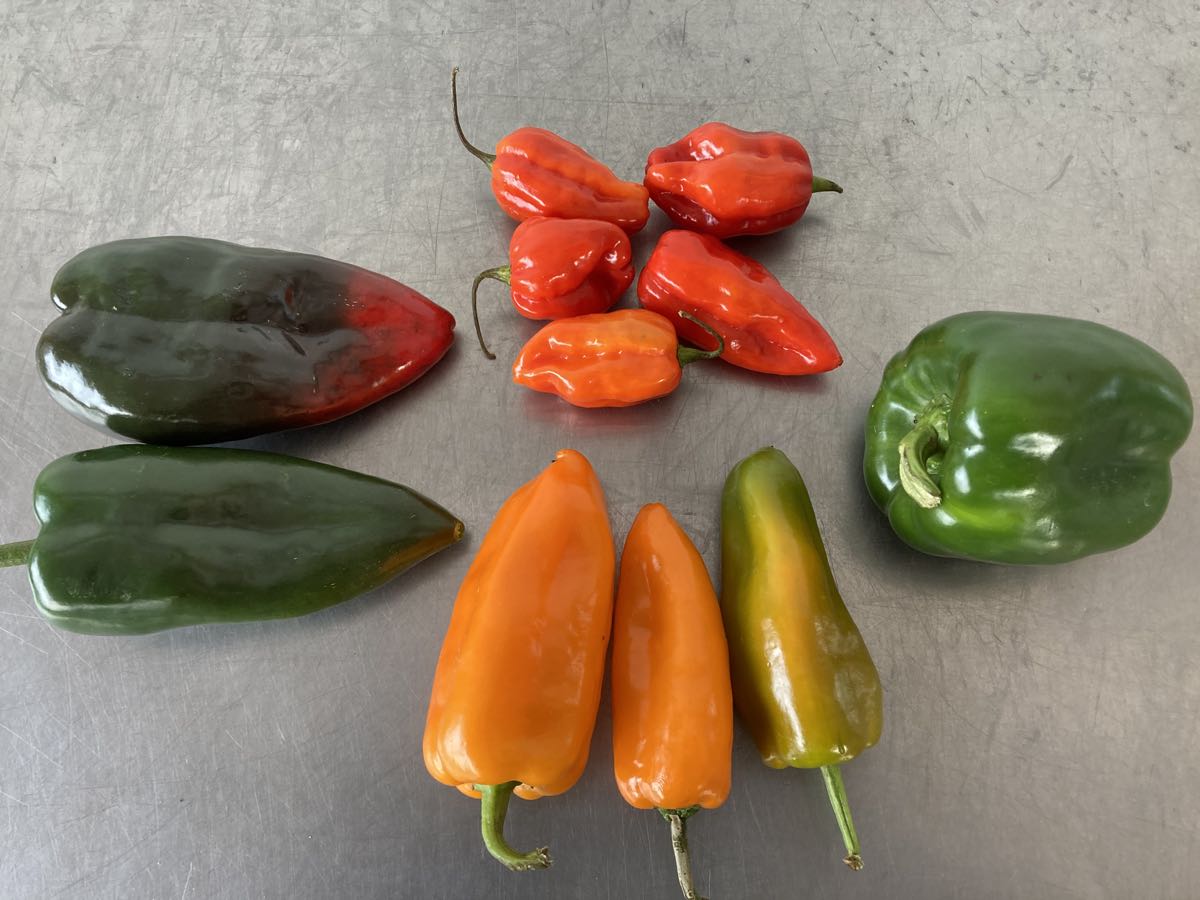
Pepper ID. You will receive some (but not all of these types). Clockwise from left,
Poblano chiles (dark green or red, shiny, triangular) – medium heat
Roulette (small, bright red or orange) – sweet and flavorful
Green bell pepper – sweet
Orano snack peppers (orange, red, yellow or green) – sweet
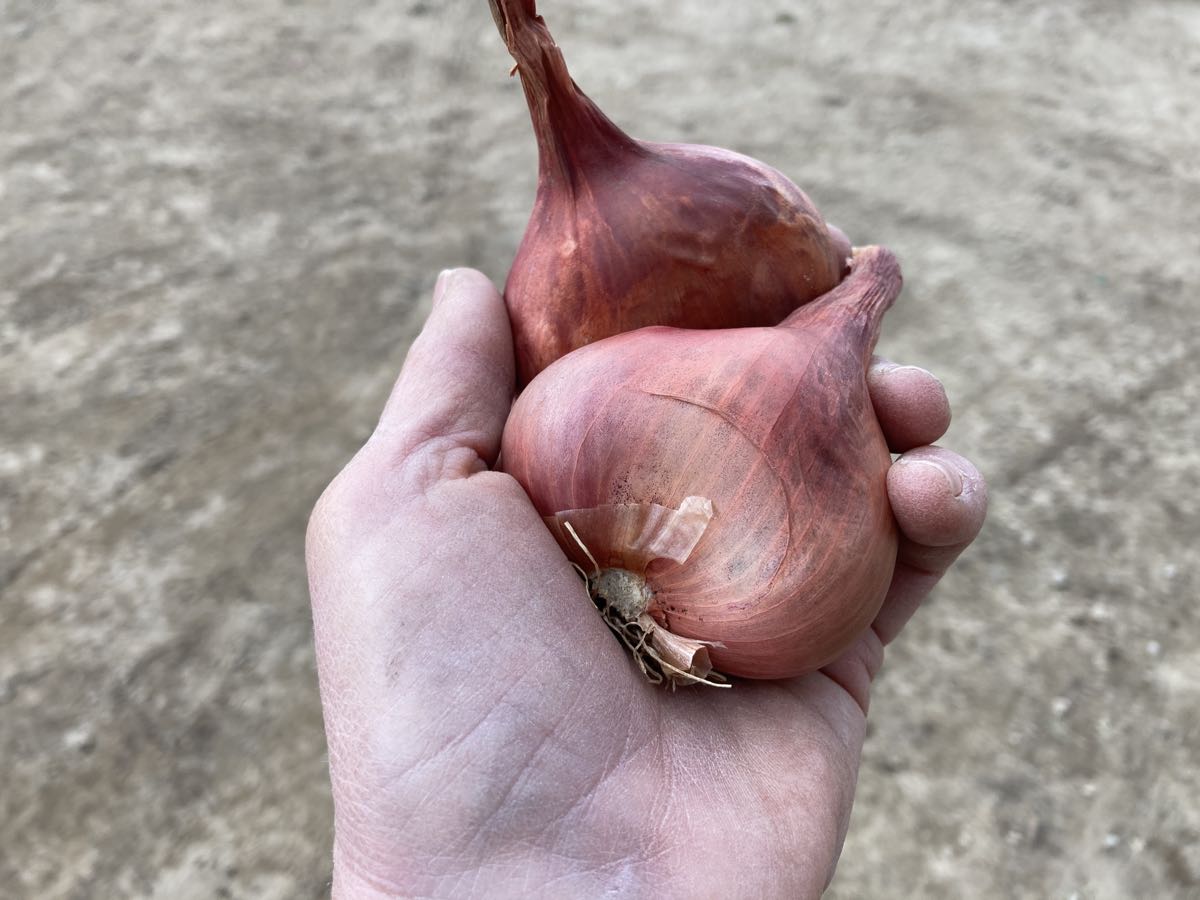
Shallots
RECIPES
Visit our 2020 Recipe Log or our 2019 Recipe Log or join our Facebook discussion group.
LOCAL THYME/ Cooking 101
Brussels Sprout Red Cabbage Slaw with Honey Poppy Seed Dressing
Irish White Bean and Root Vegetable Stew
Pot Roast over Egg Noodles
LOCAL THYME/ Cooking 202
Braised Red Cabbage With Apples, Bacon and Wine
Dijon Braised Brussels Sprouts
Celeriac Potato Hash Browns with Jalapeño and Cheddar
LOCAL THYME/ Quick & Easy Meal
Fusilli with Brussels Sprouts in Cheese Sauce
RECIPES FROM LAUREN
.
????
.
Takes 40 minutes
.
????
.
.
Week #23; Farm walk, Final EOW/green
- On: October 21, 2020
- 0
Our farm walk worked out quite well, despite the chilly weather. The rain stopped just before members began arriving. Whew. I’d like to share a little of the day, for those who couldn’t attend.
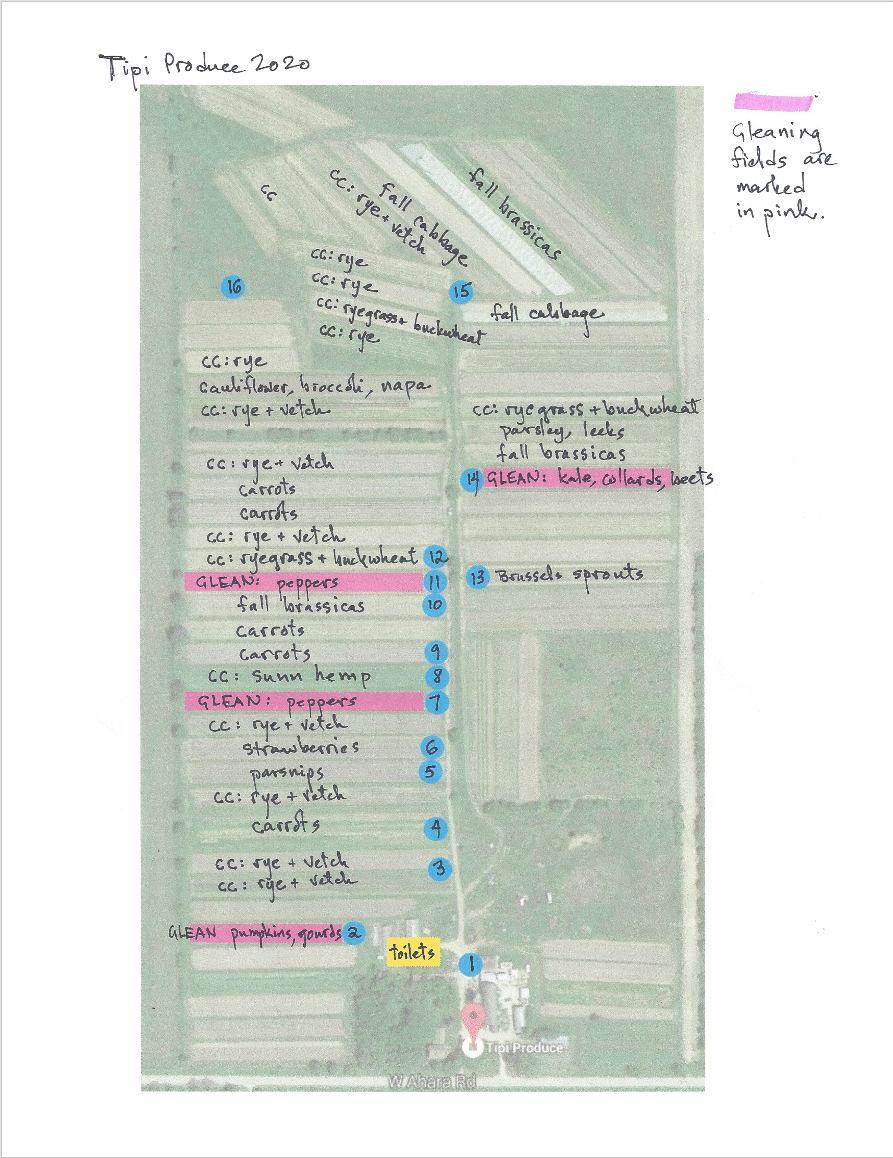
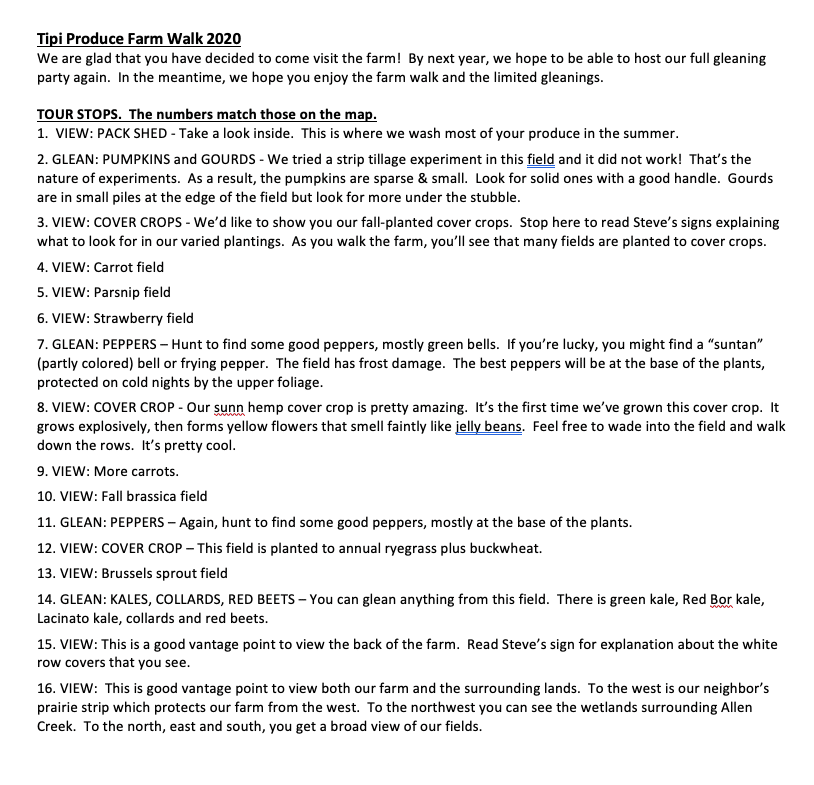
I distributed a map and list of tour stops before the farm walk, so people could print a copy at home, or view it on their phone.
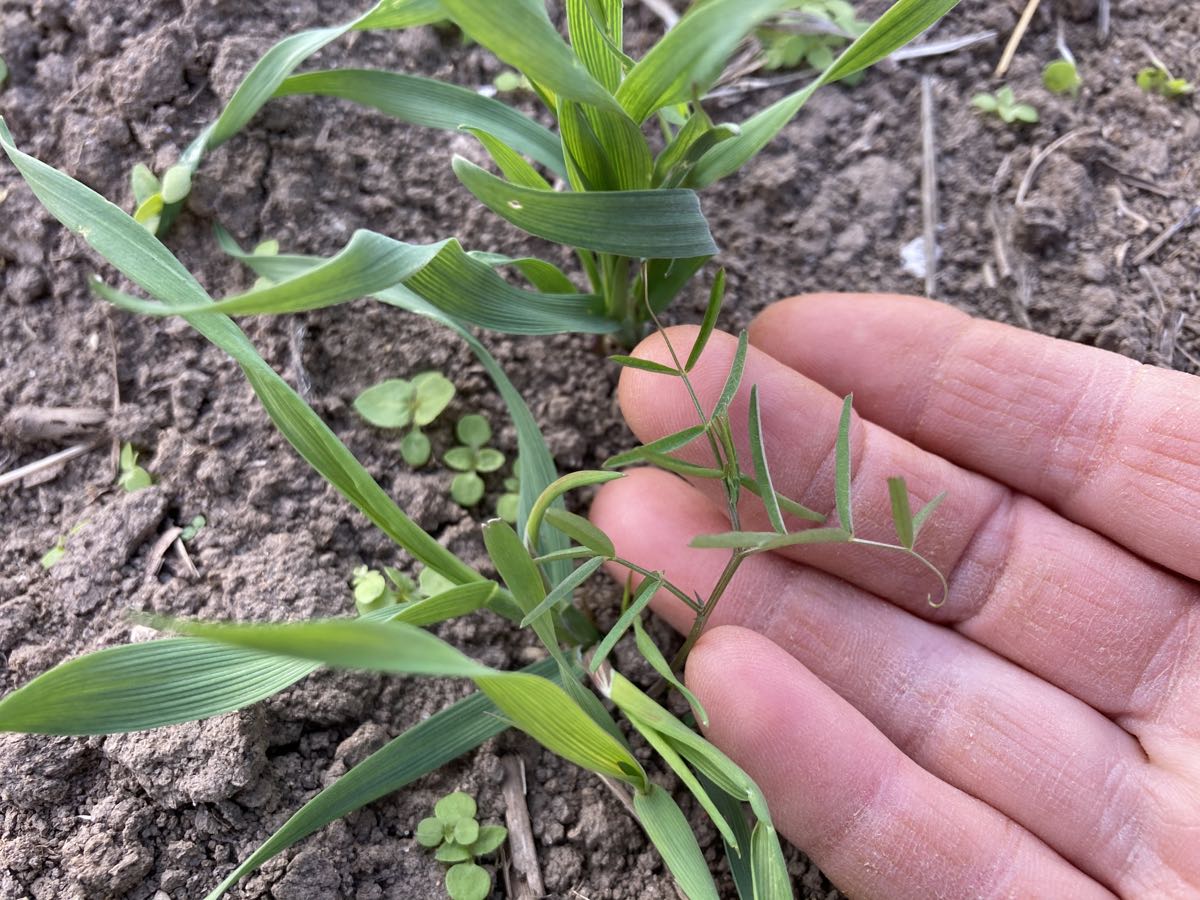
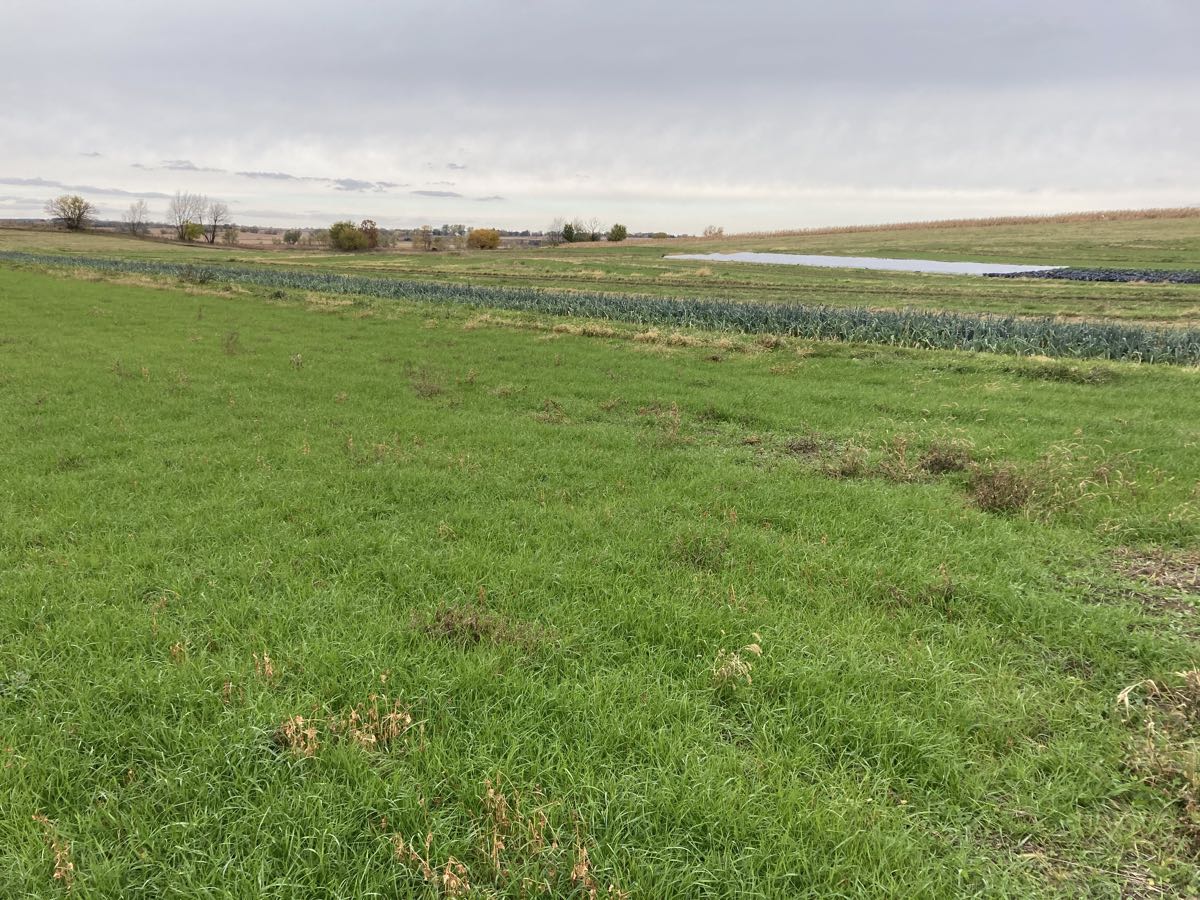
Tour stop #3. During the summer, Steve plants cover crops as we finish harvests from each field. By this time of year, many fields are planted to cover crops. Top; young rye (grass) and hairy vetch (tendrils). These seem fragile but will overwinter and explode into growth in spring. Bottom, a lush field of ryegrass. This cover crop should die over the winter, leaving the field ready for next year’s crop.
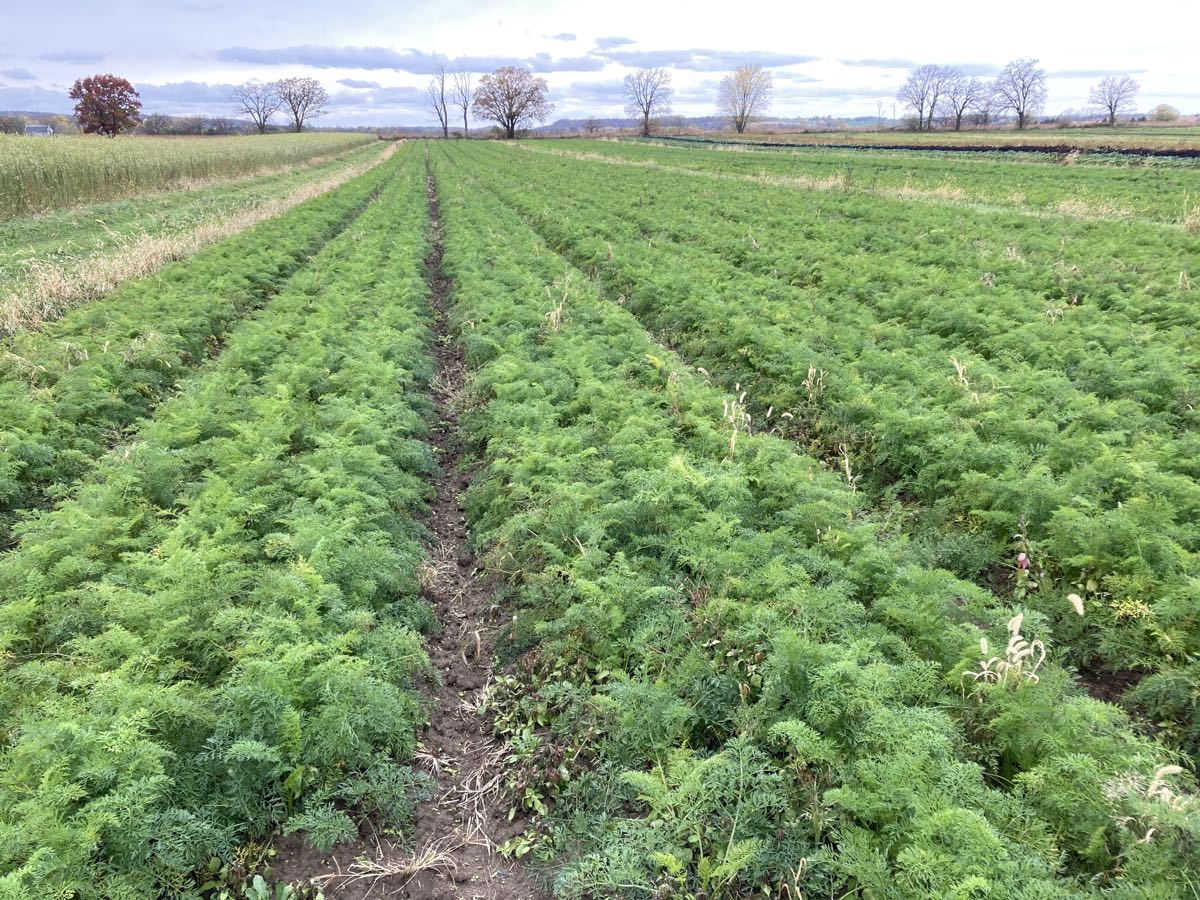
Tour stop #4. Our storage carrot fields are looking good. We’ll harvest these from now until early November, sooner if the weather hurries us. Carrots can handle some frost.
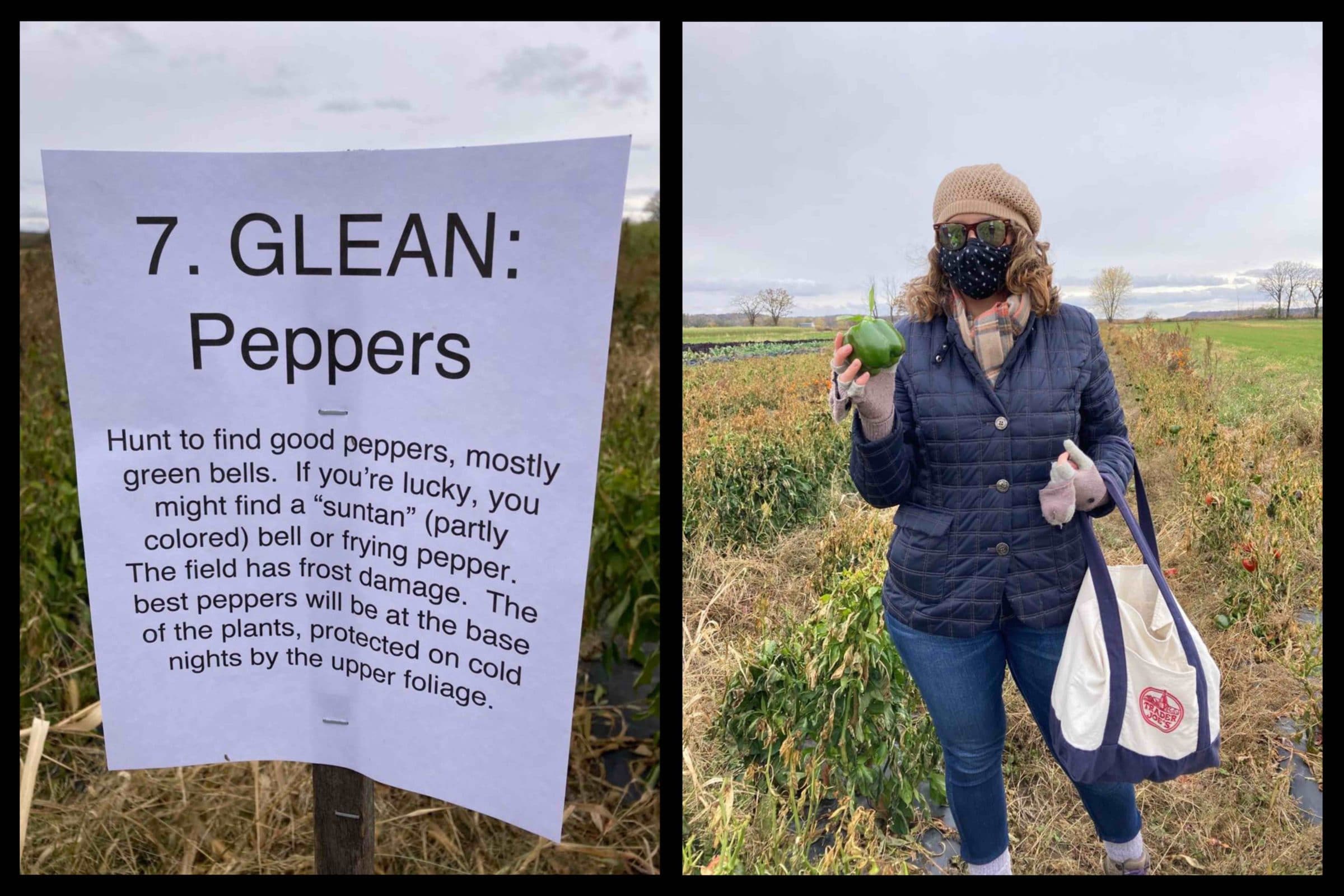
Tour stop #7. It’s worth the effort!
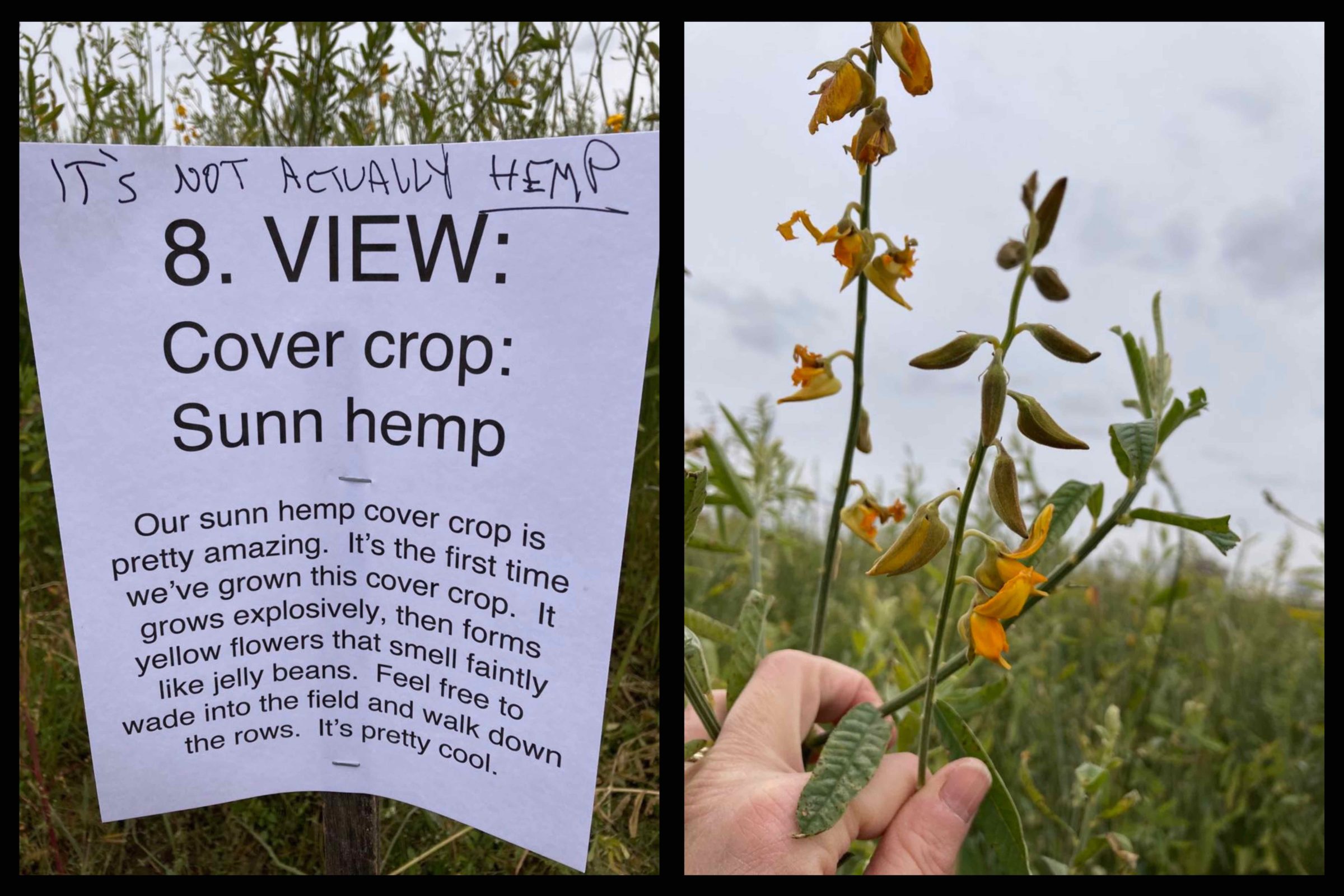
Tour stop #8. The golden flowers frosted on Thursday night but new blossoms opened by Sunday morning.
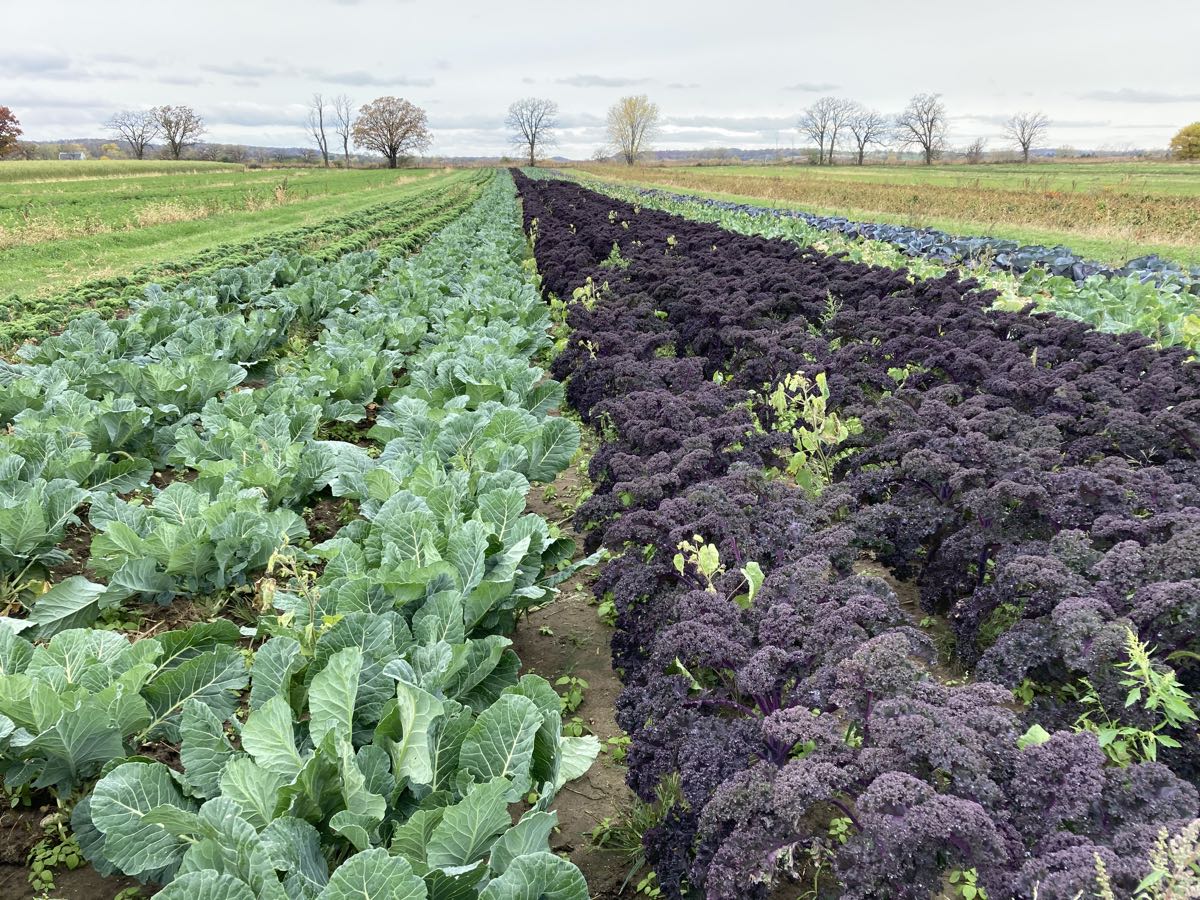
Tour stop #9. The brassica fields look great. These crops shrug off cold weather.
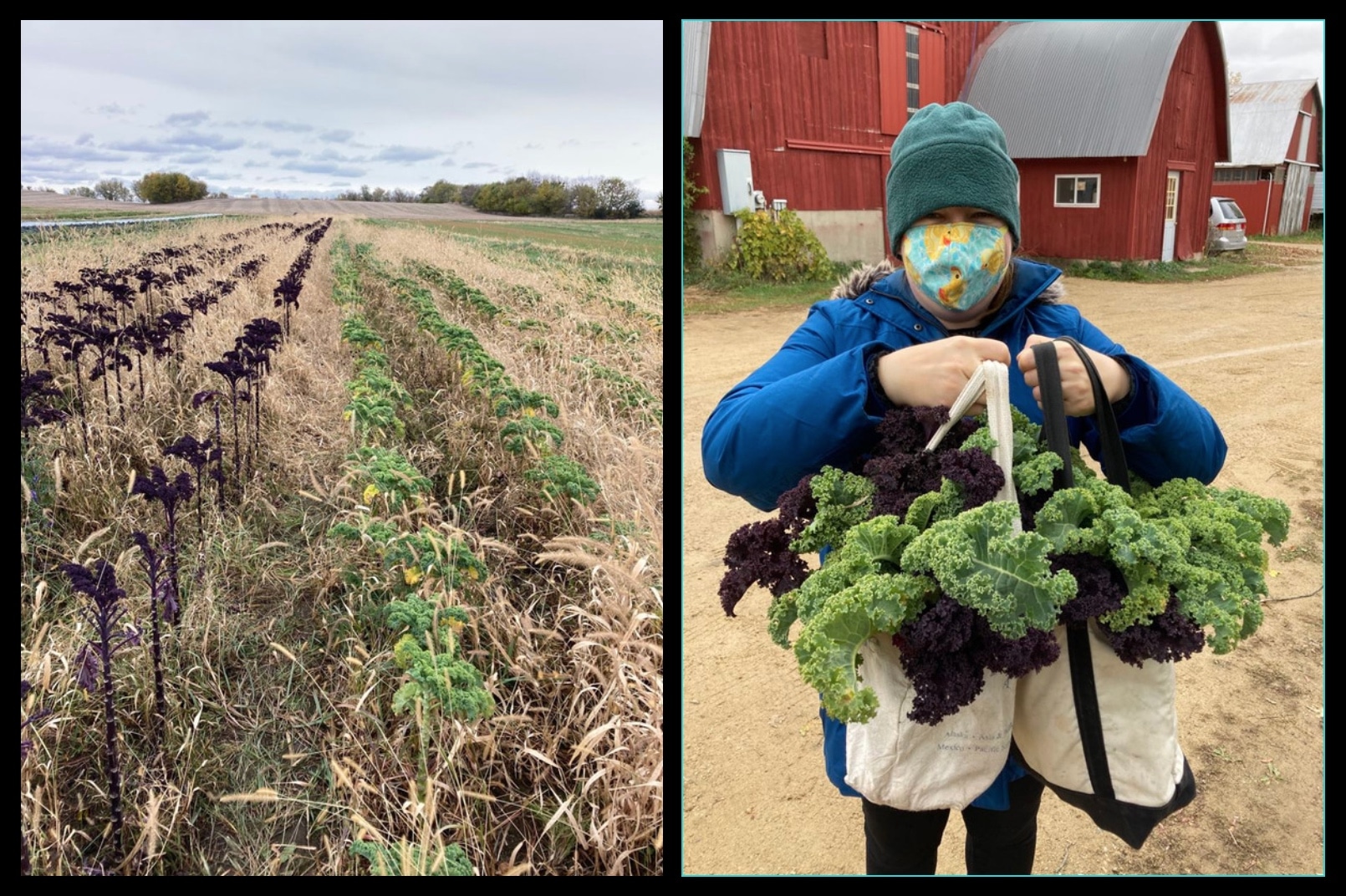
Tour stop #14. We opened our first kale & collards field for gleaning. We stopped harvesting from this field once our second planting was ready. The field is weedy but there’s good greens to be found.
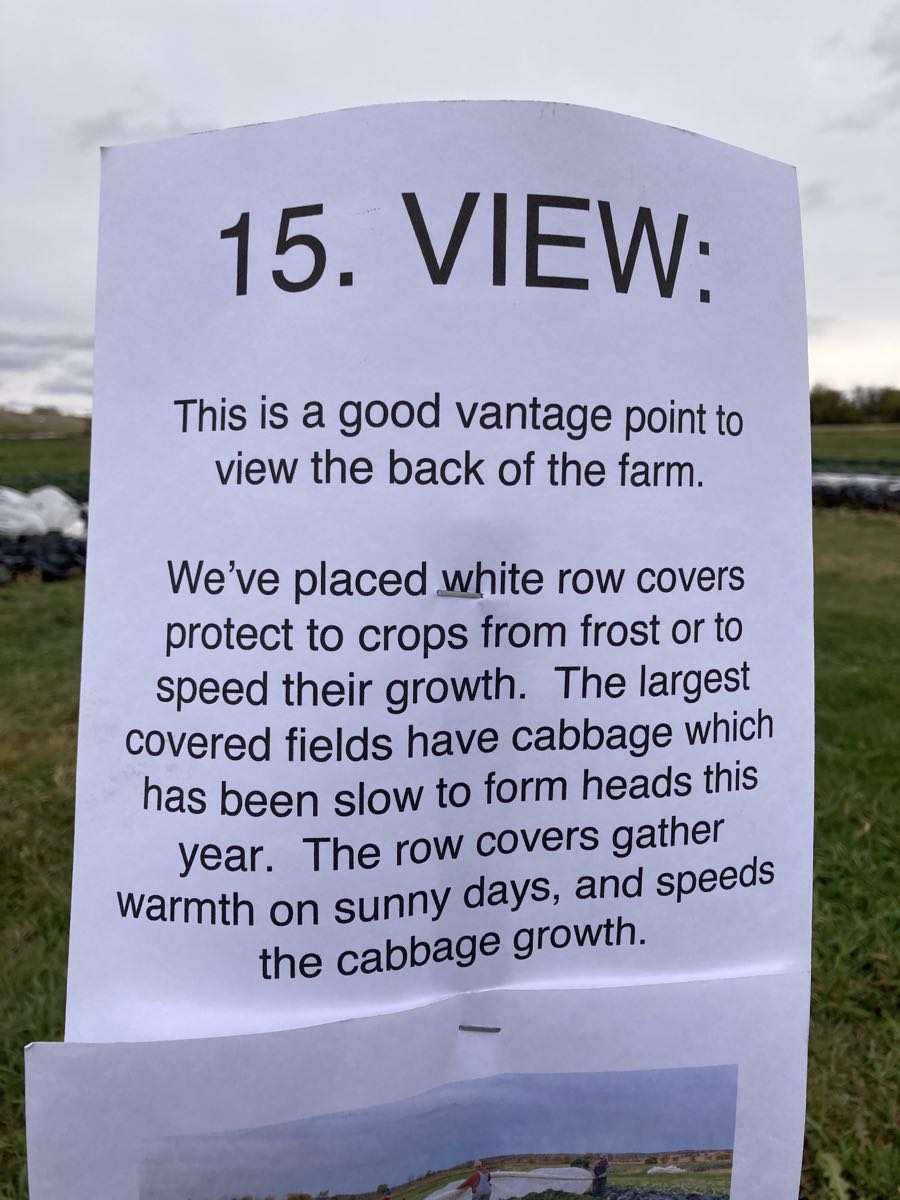
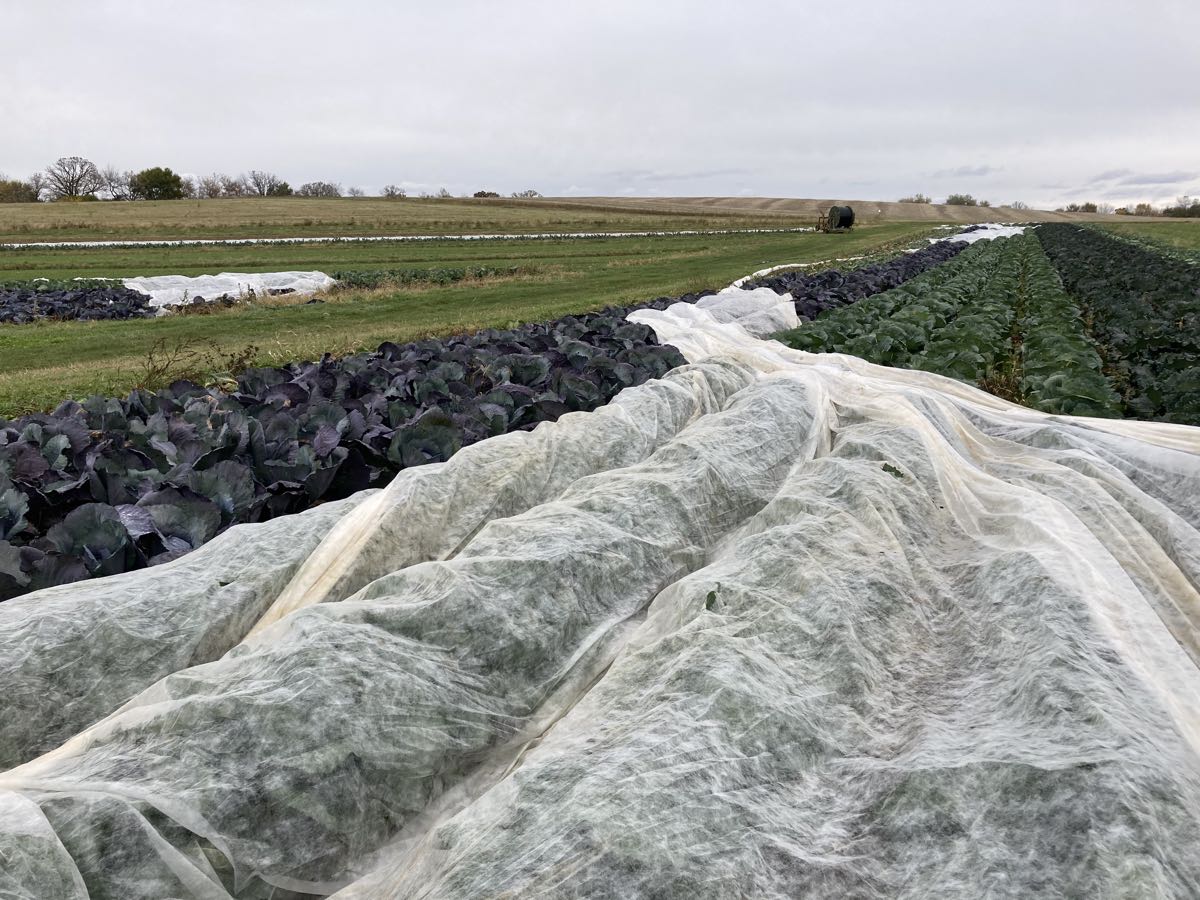
Tour stop #15. We posted the sign at top but then strong winds on Saturday ripped and blew about the row covers. We replaced them on Monday. It’s not unusual for weather to undo our efforts.
That’s it! I hope you enjoyed the tour, whether in person or remotely. Beth
Veggie List & Veggie Notes
Week #23, October 22/23, 2020
– Weekly shares
– EOW/ green
Sweet potatoes, ~2 lb
Brussels sprouts, ~1 lb
Koji greens
Leeks, about 1.25 lb
Carrots, ~2 lb
Parsnips, ~1.5 lb
Green peppers, 1 bell + 1 or 2 frying
Anaheim chiles, 2 (medium heat, in bag with carrots)
Scallions, 1 small bunch
Garlic
– Some sites get broccoli.
– Some sites get cauliflower.
– Some sites get a butternut squash.
Next week’s box will probably contain red cabbage, winter squash, sweet potatoes, yellow potatoes, Brussels sprouts, celeriac, onions, and more.
Sweet potatoes – Store at room temperature. Sweet potatoes will suffer chilling injury in the fridge.
Some folks get our ‘Beauregard’ variety (orange skin). Some get ‘Bayou Belle’ (purple skin, long roots)
– For best flavor, cook your sweet potatoes so they brown and caramelize. We have a simple, favorite way to roast sweet potatoes. We used to prepare sweet potato fries in the oven. Now we just quarter the potatoes, rub with olive oil, dust with salt and place cut-side-down on a cookie sheet. Roast in a 450 F oven without turning until soft. The flavors will caramelize (like sweet potato fries) but preparation is simpler and the cooking time less exacting. Slender sweet potato fries go from undercooked to overcooked in the blink of an eye. Larger slices are less exacting, and therefore are easier. Small sweet potatoes can be cut just in half. Jumbos will need to be chopped into pieces. Otherwise, they take a long time to cook.
– This first batch of sweet potatoes will need slightly longer cooking than ones from the supermarket, perhaps because they contain higher moisture so soon after harvest.
– Sweet potatoes are good at any size. We have cooked everything from tiny to jumbo and consistently find that all sizes taste good.
Brussels sprouts – If you are a new CSA member, please approach Brussels sprouts with an open mind. Many of us grew up eating awful, overcooked Brussels sprouts. These Brussels sprouts are completely different.
Here is our method to cook Brussels sprouts: Wash the sprouts and trim the cut ends. Cut an X in the stem end of large sprouts. Cut a single slit in small or medium sprouts. This does two things. It helps the Brussels sprouts cook evenly, plus it allows them to soak up any marinade or dressing. Place sprouts in a pot with one inch of water in the bottom and steam until tender, 7 to 10 minutes. If the sprouts are uneven in size, then set aside the smallest ones and add to the pot after the larger ones have cooked for a few minutes. Don’t overcook them! You can also oven-roast Brussels sprouts.
Here are a few dressing ideas for cooked sprouts:
– Sherry vinegar/olive oil/Dijon mustard/garlic/white wine/salt and pepper. This is our favorite, especially when you combine the Brussels sprouts with slivered peppers and thinly sliced onions. Delicious warm, cold, or at room temperature.
– Balsamic vinegar/olive oil/garlic/salt and pepper
– Lemon juice and zest/melted brown butter/poppy seeds/white wine/garlic/salt
Koji greens (head of dark green leaves) – Refrigerate.
Koji greens are a lot like Yukina if you know that one; dark green with a nice balance of bitter flavor but not too strong. Like tat soi but with larger, lusher leaves and not so many leaf stalks. Recipes that use mustard greens or bok choy will work with Koji. In a contest for my favorite fall green, Koji runs neck and neck with bok choy.
Leeks (look like big scallions) – These alliums have a milder flavor than onions. Nonetheless, they can be used in recipes that call for onions. To wash, split the leek lengthwise, from the green tops about halfway to the base, leaving the base intact. Rinse well under running water, separating the layers to flush. If necessary, split the leek further if soil has penetrated more than halfway down the leek. Shake dry. Leeks are generally eaten cooked. They can be sauteed, steamed or roasted. Intact leeks will store 2 to 3 weeks if covered loosely and refrigerated. The outer leaves will yellow. Just peel them off and discard. The inner leek layers will be fine.
Carrots – Refrigerate in a plastic bag.
Parsnips (These look like large white carrots) – Those long, white roots are not carrots, they are parsnips. The two vegetables are related. When cooked, parsnips are sweet and starchy. For the best flavor, brown them to caramelize the sugars. Here are a few ideas for parsnip preparation:
– Caramelize the parsnips by roasting them in a vegetable medley.
– Parsnip fries are delicious: cut like French fries, oil lightly, place on a cookie sheet and roast in a hot oven until brown and cooked through.
– Try substituting grated parsnips in a potato pancake recipe. They brown beautifully and are very tasty.
– Steve loves pan-fried parsnips with onions and garlic.
Peppers – Refrigerate. Eat soon. These were protected under row cover but exposed to cold nights, which shortens their storage life.
Anaheim chiles (long, slender, red or green; pack in carrot bag) – Refrigerate. Eat soon. These were protected under row cover but exposed to cold nights. That shortens their storage life.
These flavorful chiles have medium heat, although we find that these late-harvested ones seem to be pretty mild. They look deceptively like frying peppers, so we packed your Anaheims in the carrot bag, to make them easy to recognize.
Scallions – Refrigerate in a plastic bag.
Cauliflower or broccoli – Cover and refrigerate.
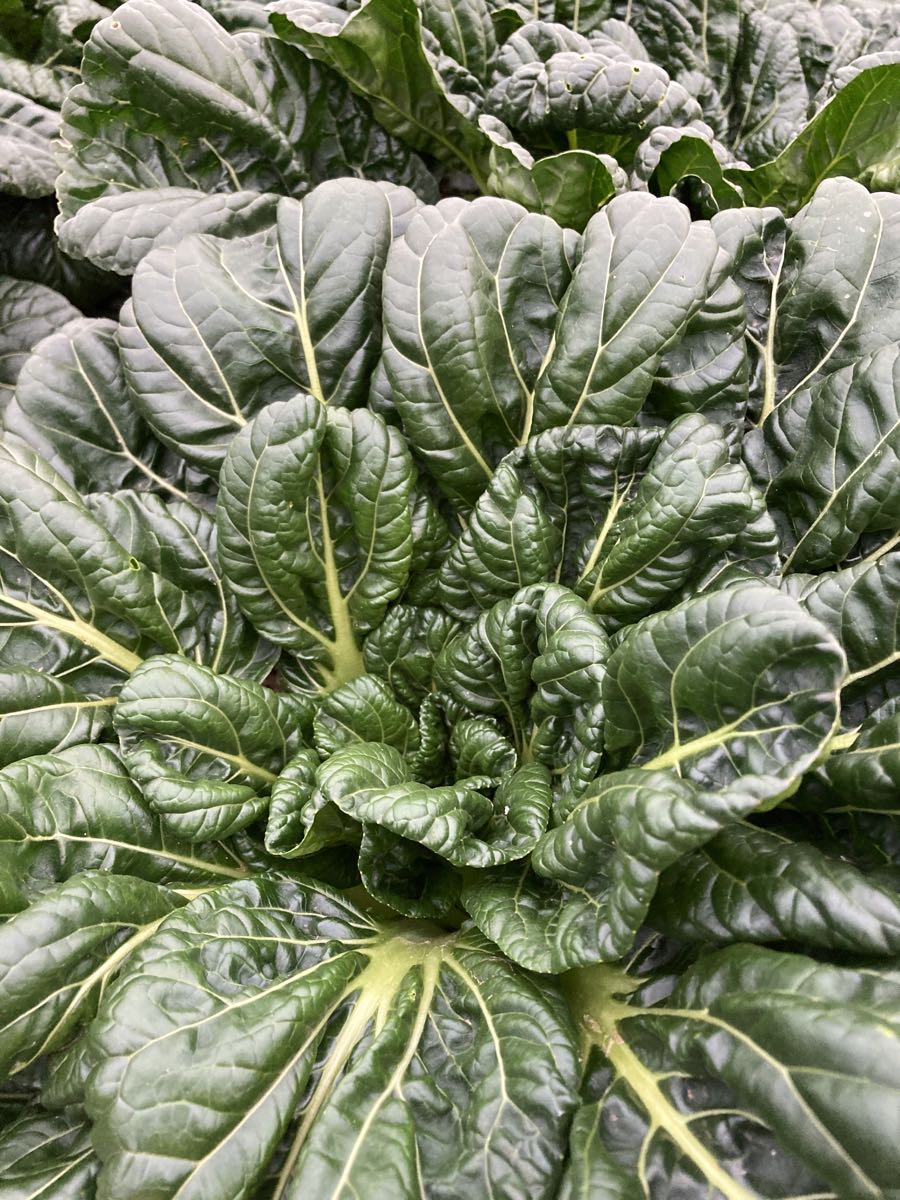
Beautiful, beautiful Koji greens
RECIPES
Visit our 2020 Recipe Log or our 2019 Recipe Log or join our Facebook discussion group.
LOCAL THYME/ Cooking 101
Veggie Pot Pie
Brussels Sprout and Sweet Potato Dressing
Koji Greens and Scallions Frittata
LOCAL THYME/ Cooking 202
Moroccan Lamb and Vegetable Tagine
Brussels Sprout Salad with Craisins, Pecans and Creamy Maple Balsamic Dressing
Quinoa, Koji Greens and Egg Breakfast Bake
LOCAL THYME/ Quick & Easy Meal
Rice Noodle Stir Fry with Carrots and Peppers
RECIPES FROM LAUREN
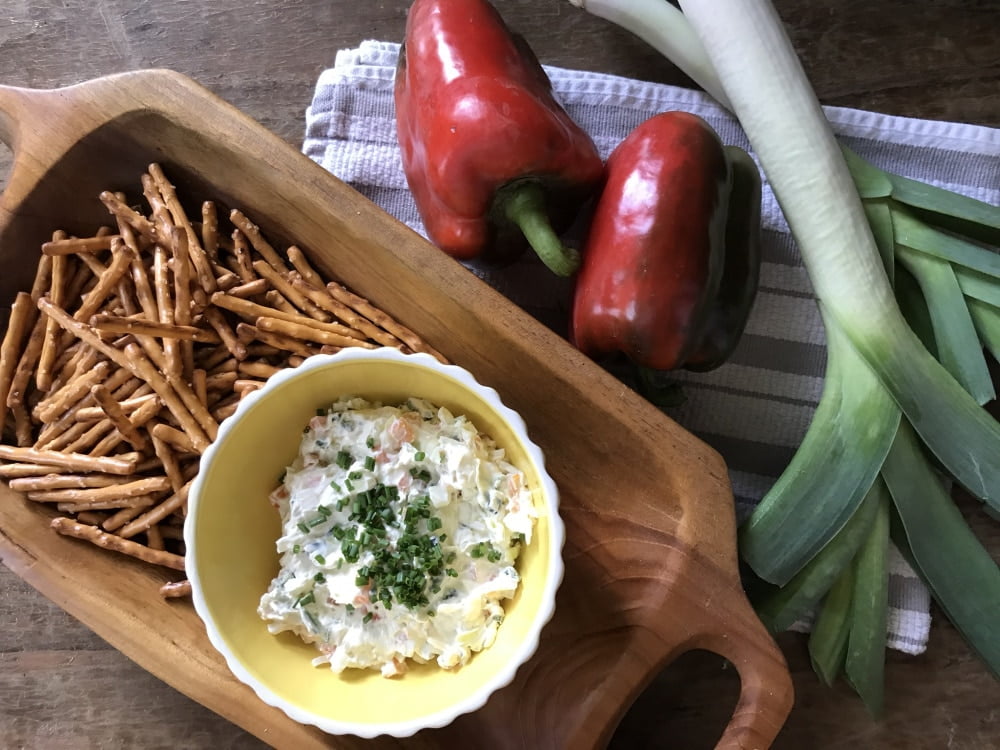
LEEK & PEPPER PRETZEL DIP
Takes 10 minutes
Makes 3 cups
Serves a crowd
8-ounce package cream cheese, softened
1 large leek, quartered and sliced
1 green pepper, seeded and diced very small
2-3 anaheim peppers, seeded and diced very small
2 tablespoons mayonnaise
1/4 teaspoon Kosher salt
In a medium bowl, beat the cream cheese until smooth. Add leek, peppers, mayonnaise and salt. Stir to combine until uniformly mixed. Taste and adjust seasonings as desired.
Serve immediately or chilled with pretzels. Dip lasts about a week.
.
????
.
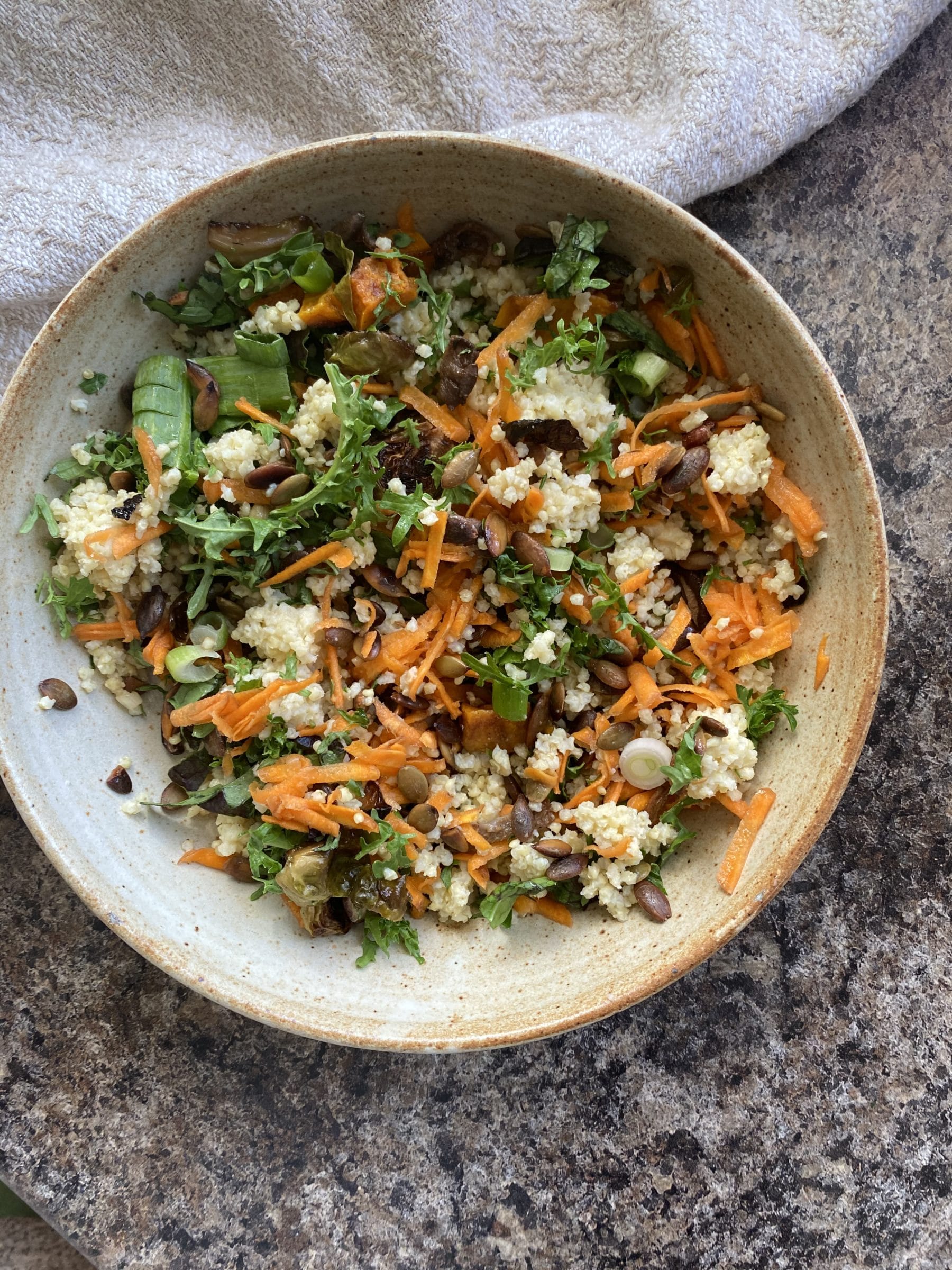
FALL GRAIN BOWL WITH MILLET & MUSHROOMS
Takes 1 hours
Serves 4-6 (as a main dish)
1-2 large carrot, shredded
1/4 cup rice wine vinegar
1 tablespoon sugar
1 pound peeled and cubed sweet potato (about 2 cups)
1 pound Brussels sprouts, trimmed and halved (about 2 cups)
2 tablespoons olive oil
1 teaspoon Kosher salt, divided
1/4 teaspoon freshly ground black pepper, divided
2 tablespoons butter, thinly sliced
1/2 pound cremini, shiitake or oyster mushrooms, sliced
1 cup millet (or other favorite grain)
2 cups water
1 tablespoon chicken (or vegetable) bouillon
1 bunch Koji greens, stems removed and leaves finely chopped
1 bunch scallions, sliced
1/2 cup toasted pepitas (or other favorite seed or nut)
Lime Maple Dressing:
1/4 cup walnut or hazelnut oil (or other neutral oil)
1 tablespoon toasted sesame oil
1/2 fresh lime, juiced
2 tablespoons rice wine vinegar
1 tablespoon maple syrup
1 teaspoon Dijon mustard
3 garlic cloves, minced
1/2 teaspoon Kosher salt
1/4 teaspoon freshly ground black pepper
1. Preheat oven to 425 degrees.
2. In a small bowl, combine carrots with vinegar and sugar. Toss to combine and let sit while you prepare the rest of your meal.
3. On a large rimmed baking sheet, combine sweet potatoes and brussels sprouts with oil, 3/4 teaspoon salt, and 1/8 teaspoon pepper. Place in oven and roast for 30-35 minutes, until Brussels are crisp and sweet potatoes are tender. Rotate pan at least once while cooking.
4. On a second large rimmed baking sheet, scatter butter slices across. Sprinkle mushrooms across the pan and finish with the remaining salt and pepper. Roast for 15 minutes until mushrooms are softened (but not dried out) and butter is browned.
5. While the veggies and mushrooms roast, prepare your millet. Toast dry grains in a medium saucepan for 5 minutes over medium heat, being careful not to burn. Add water and stock, and give it a good stir. Bring the mixture to a boil over high heat, cover and reduce to low. Cook for 15 minutes then turn off the burner, but leave the millet covered for 5 minutes to finish absorbing the liquid.
6. In a small bowl, prepare your dressing by whisking all ingredients together until smooth.
7. To serve, top millet with roasted vegetables and mushrooms. Add grains, scallions, and dressing and toss to combine. Serve warm or at room temperature. Add pepitas right before eating.
.
????
.
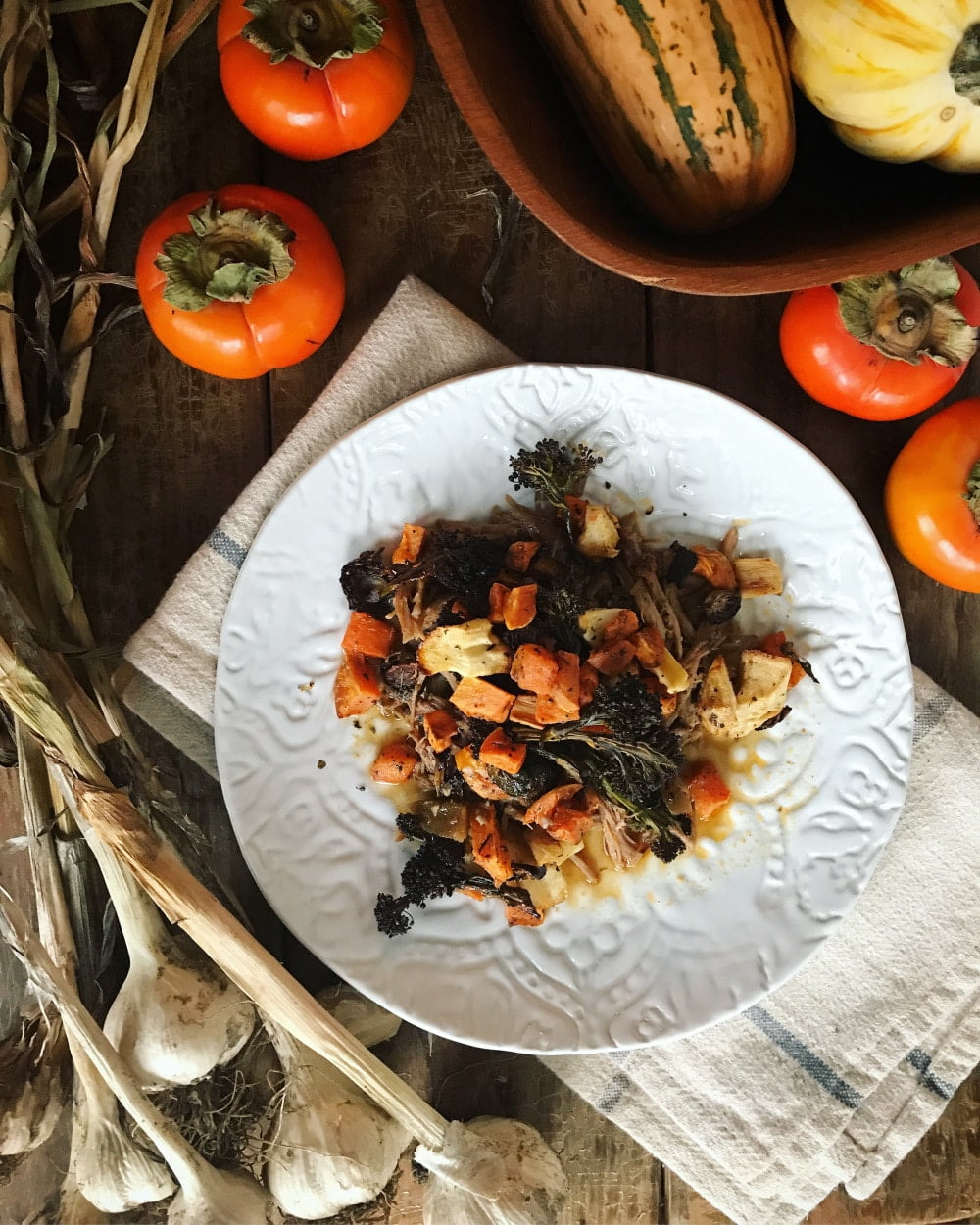
PORK CARNITAS WITH ROASTED VEGGIES
Serves 6-8
Takes 8 hours inactive time, 30 minutes active time
3 to 4 pound pork shoulder
2 teaspoons kosher salt
1/2 teaspoon freshly ground black peppers
1/3 cup salsa
1/4 cup Worcestershire
1/4 cup brown sugar
2 shallots, diced
3/4 cup water
2 teaspoons smoked paprika
2 teaspoon dried oregano
1/2 teaspoon Rosemary
Roasted Veggies:
4 cups cubed sweet potato
1-2 large carrots, peeled and cubed
1-2 large parsnips, peeled and cubed
1 large head broccoli or cauliflower (about 2 cups), cut into florets, optional
4 tablespoons olive oil
1 teaspoon kosher salt
1/2 teaspoon pepper
1/2 teaspoon thyme
1. In the morning before you head to work*, place pork shoulder roast on a cutting board and generously pat with salt and pepper. Turning and pressing onto any excess that falls onto the cutting board.
2. Place roast in crock pot. Add salsa, Worcestershire, brown sugar, and shallots all around the edges of the pork. Pour water over this mixture. Sprinkle pork with spices, cover and cook on low for 6-8 hours.
3. When you get home (or on Sunday when you have plenty of time), flip the pork over and turn your crock pot to keep warm then preheat the oven to 400 degrees.
4. In a very large bowl, combine sweet potatoes, carrot, parsnip, and broccoli or cauliflower with oil, salt, pepper and thyme. Stir until everything is evenly coated with oil and spices. Pour out onto two baking sheets or roasting pans. If you don’t have a very large bowl, just combine all ingredients on baking sheets as evenly as you can.
5. Roast for 40-50 minutes until veggies are tender and browned in places being sure to rotate pans at least once during baking for even cooking.
6. While the veggies roast, shred your pork with two forks and let soak in the delicious juices.
7. Serve pork with roasted veggies and a generous amount of that sauce remaining in the bottom of the crockpot.
*I also like to do the legwork of a crockpot overnight from time to time since I know I’ll be around in 6-8 hours whereas sometimes my work day can be longer than that. This means prepping the pork the night before and then just throwing it in a tupperware or pyrex and into your fridge in the morning.