Farm Newsletter
Week #3. Farm News.
- On: June 19, 2024
 0
0

We have two boxes of strawberries for everyone this week.
Farm news
Wow, that was a burst of heat and wind this week. Most of our crops love the heat. It’s striking how much the zucchini plants grew. We were surprised to have zucchini in your June 13 boxes, just as we were surprised to have strawberries for you on June 6. It was an early spring but now crops are settling into their usual schedules.
There was a three-week rainy spell in May and June, totalling 7.5 inches here at our farm. That is as much rain as we got last year in all of April, May, June, July, August and September combined. What a striking difference. Seven and half inches is a lot for three weeks. Less than 7.5 inches in six months is extraordinary. So we are not complaining about rain this year.
Strawberries dominate our life right now. The four u-picks we hosted have been fun but time-consuming. We spend a lot of time in the fields judging which varieties are ready to pick, then strategizing harvests and u-picks.
We are thrilled to have two pounds for you this week. The crew groaned when they learned that we needed 94 pails of berries but then I showed them the field section ready for harvest. It was great picking.
Final berry u-pick?
Saturday June 22. Reservations required.
This is probably our last berry u-pick of the season. I will post the reservation link here in this blog and here once I am ready to open reservations to the public. Tipi CSA members, I sent you the June 22 link via email, earlier today.
Thanks,
Beth
Farm photos

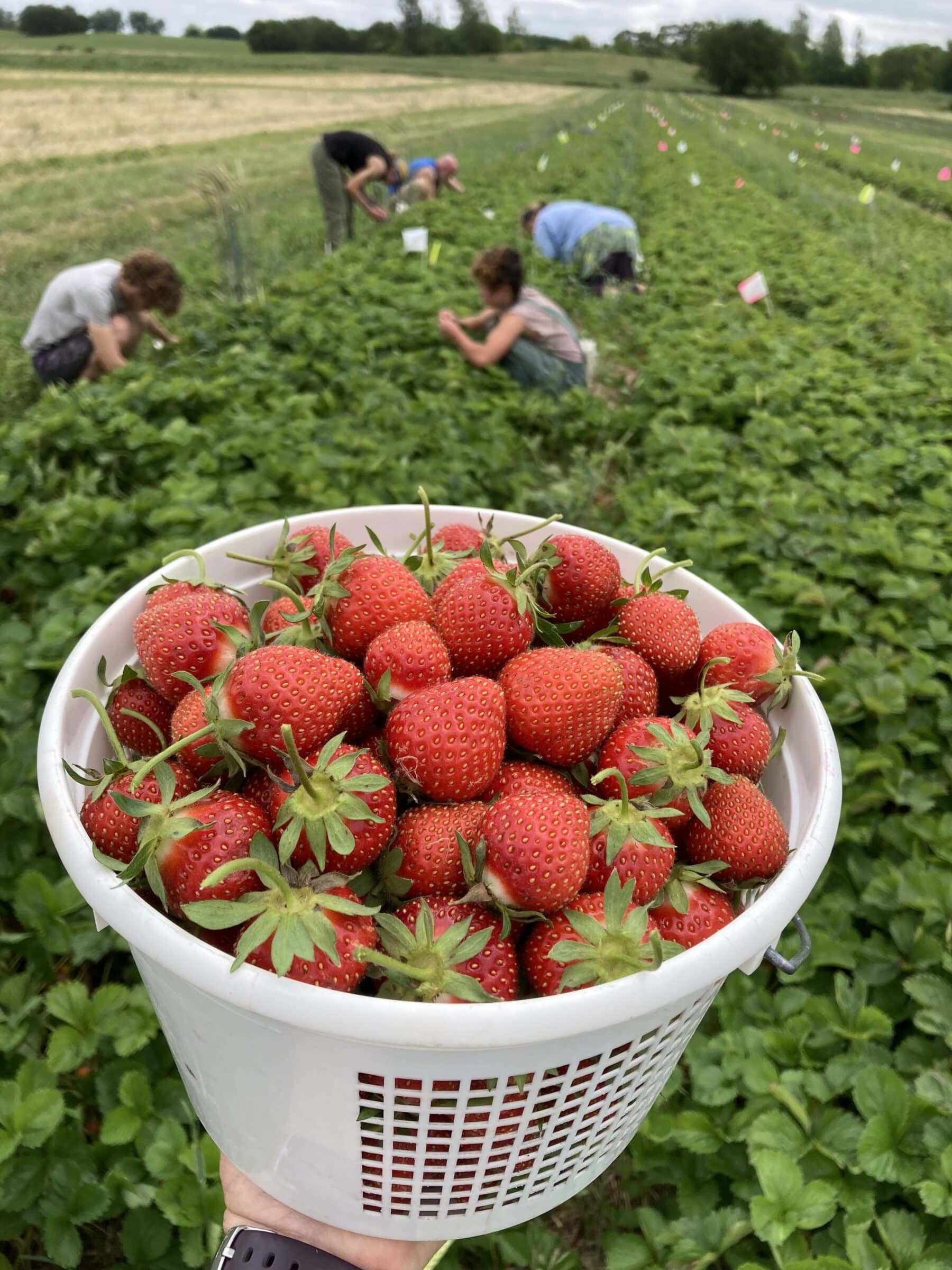
It takes a team to pick your berries. From left at top, Ari, Maggie, Aly, Ben, Ava and Madelline. Not in photo, Simone and me.

How’s that for a pretty field? Three beds of zucchini and Zephyr summer squash, plus two beds cucumbers at left. These will be harvested for next week’s CSA box, then for Willy Street Coop and Outpost Natural Foods Coops.

Zucchini love the heat.
Veggie List & Veggie Notes
Week #3, June 20, 2024
– Weekly shares
– BiWeekly/ A group
Strawberries, 2 lb
Lacinato kale
Zucchini &/or summer squash, ~3lb
Fennel, 1 bulb with fronds
Red bibb lettuce
White salad turnips (just roots, no tops)
Scallions
Garlic scapes, a handful
Next week’s box will probably contain snap peas, napa cabbage, zucchini, scallions, basil and more.
Strawberries – The berries are coming on strong! As usual, they are perishable so refrigerate and enjoy soon.
Lacinato kale (bundle of grey-green textured leaves) – This is our most beautiful cooking green and a super food! Use like any kale.
Storage: Cover and refrigerate.
Zucchini & summer squash – The plants love heat and have really taken off.
Storage: Zucchini and summer squash need refrigeration but do not do well at very cold temperatures, as they will soften and form pits in their surface. Refrigerate these squash but in the warmest part of your fridge.
Fennel (bulbs and lacy fronds) – Fennel is a ‘swing vegetable’; it can be used raw or cooked. Clean well and slice as thinly as possible for use in raw salads. It is good simply prepared with olive oil, lime or lemon juice, salt and shaved parmesan cheese. Cooking softens and sweetens fennel, and mellows its anise flavor. Both the bulb and leaves are edible. Here are ideas from Alice Waters of Chez Panisse about how to use fennel: ‘It’s strong anise characteristic seems to suit fish particularly well. … We use fennel all the time. We add the feathery leaves to marinades for fish and to numerous salads, sauces and soups and we use them as a garnish, too. … The bulbs are sliced and served raw in salads in various combinations with other vegetables, parboiled for pastas; caramelized and served as a side dish; braised whole; or cooked in vegetable broths & fish stocks.”
White salad turnips – We are sending just the white roots this time. The tops had too much insect damage so we cut them off.
Scallions (bundle of green onions) – These are useful raw or cooked. Thinly-sliced raw scallions can be folded into biscuit dough or sprinkled on top of soups or salads. Terrific garnish for pasta dishes. Think pad thai.
Garlic scapes (curly green things) – Garlic scapes grow at the top of garlic plants. We snap off the young scapes to direct the plants’ energy into forming garlic bulbs underground. Use scapes as a substitute for garlic cloves. They can be minced, mixed with olive oil, and added to stir fries or simple pasta dishes. The scapes can be sautéed, but will not brown like garlic cloves. Expect them to retain their crunch even when cooked, and to be milder than garlic cloves, closer in pungency to the green garlic we’ve sent.

Lacinato kale
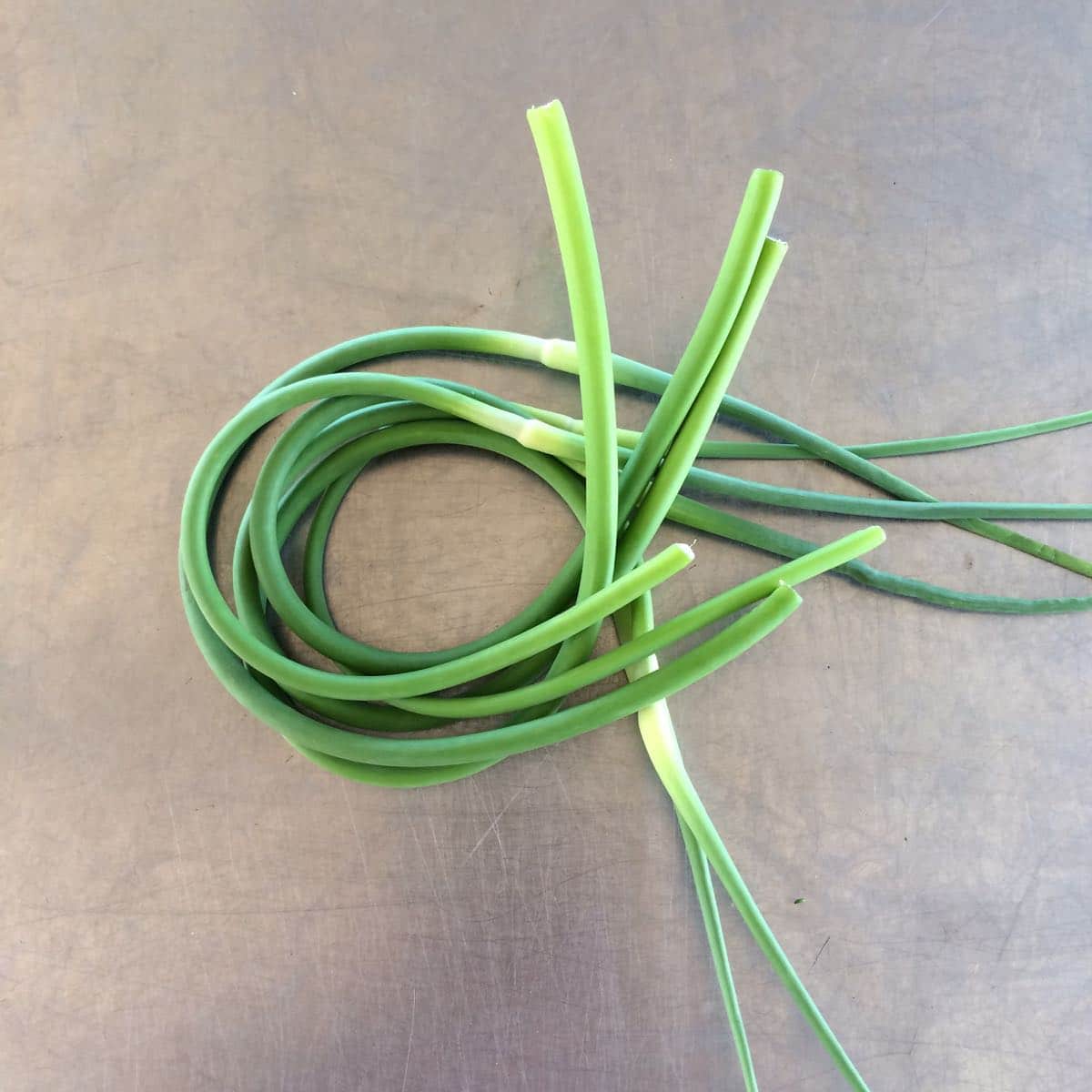
Garlic scapes
RECIPES by DEB
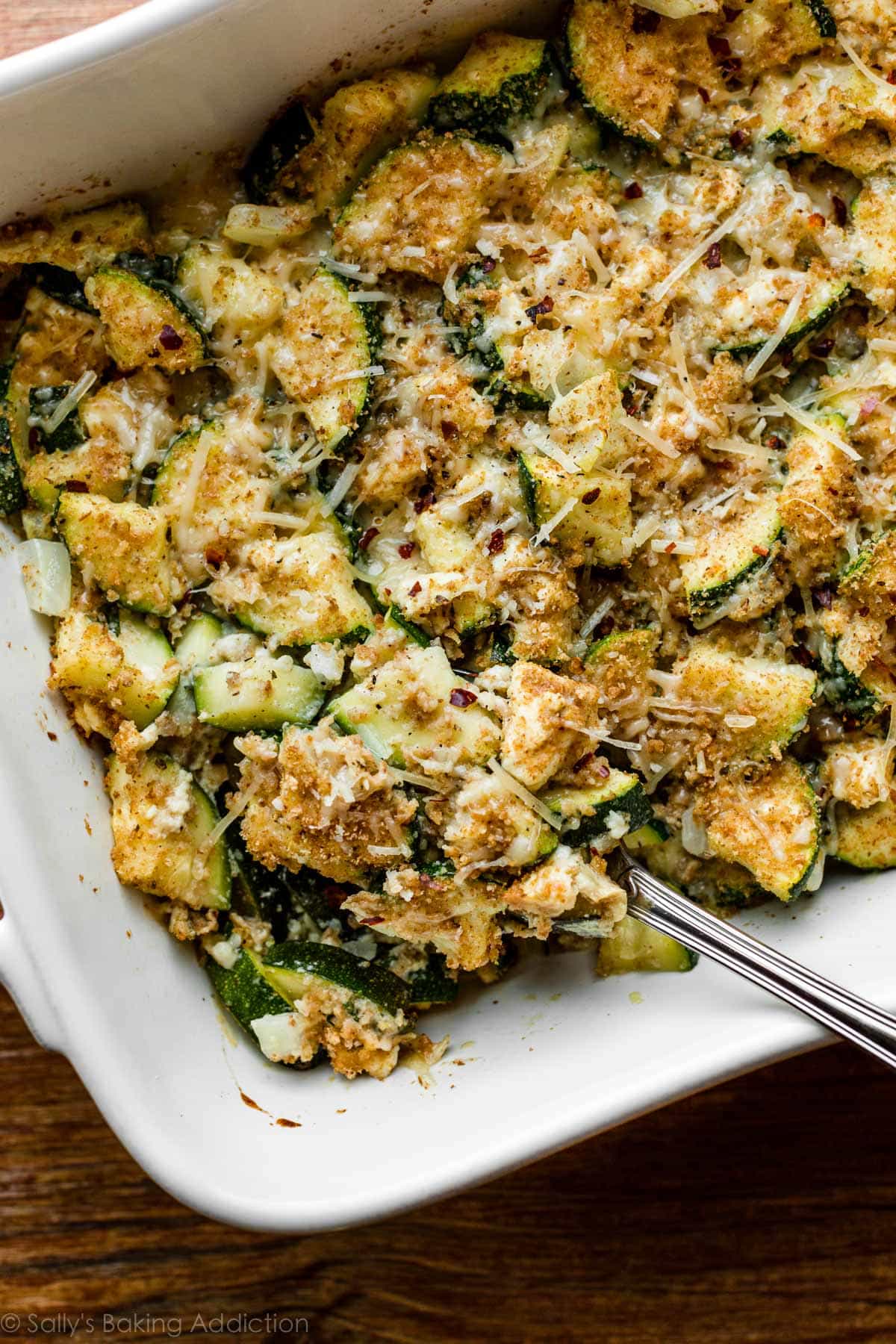
Photo credit: Sally’s Baking Addiction.
Zucchini Casserole
From Sally’s Baking Addiction
I’ve tended to turn to the Sally’s Baking Addiction website for sweet baked good, but here’s a savory, substantial recipe for zucchini, and of course once you’re at the site, you can follow links to sweet zucchini muffins and bread, etc. You can use either fresh or dried herbs in the casserole.
.
.
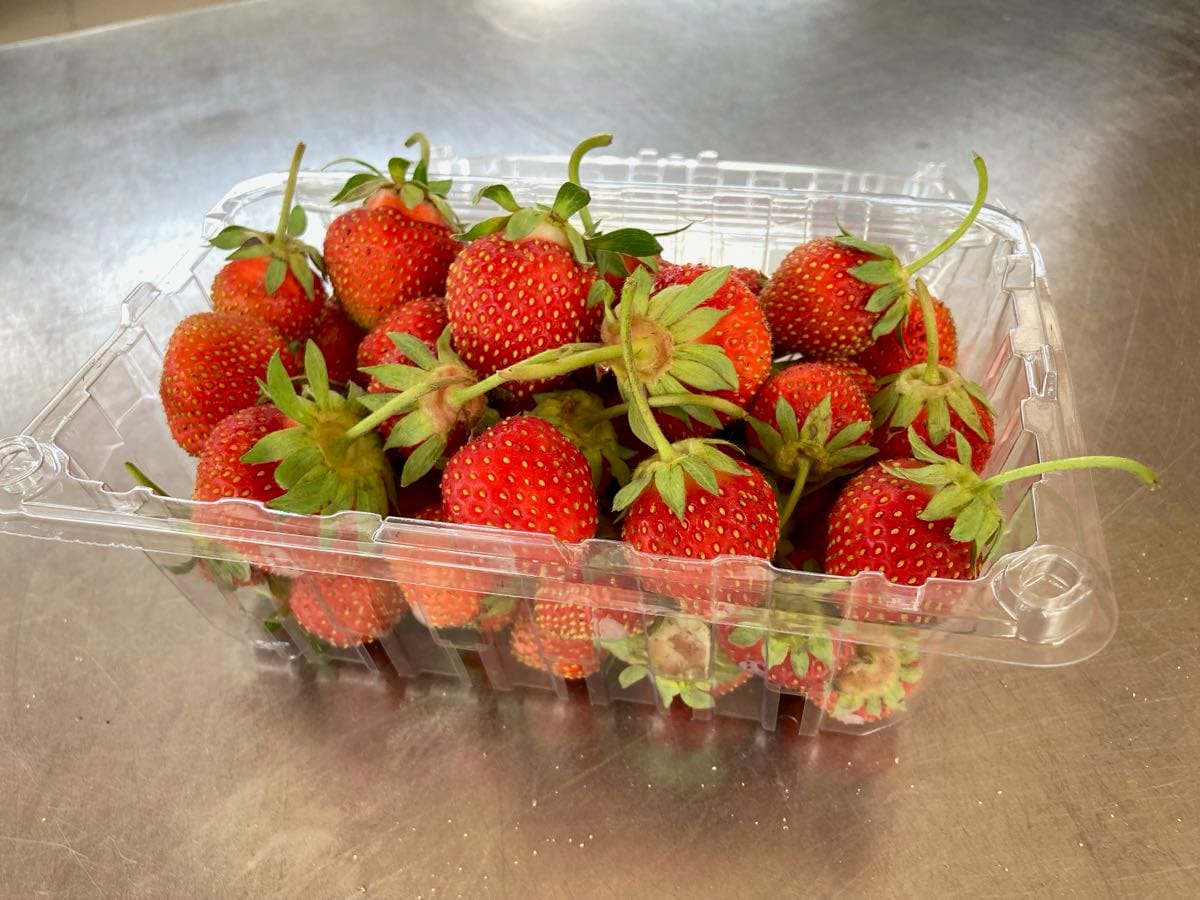
Photo credit: Beth Kazmar
Strawberry Icebox Cake Recipe
From The Kitchn
Here’s a fun no-bake dessert for these hot days. The recipe calls for 2 pounds of strawberries, but if you’d like to reserve some of this week’s strawberry haul for plain eating, I tested it as a half-batch in an 8×8 pan. You’ll only need one pound of strawberries and 1 3/4 cups heavy cream. I left off the chocolate, too.
.
.
Here are two options for fennel salads: the first is mainly fennel, the 2nd includes zucchini and greens.

Photo credit: Recipe Tin Eats
Fennel Salad
From RecipeTin Eats
This shaved fennel salad is, as the author says, quick and easy to make if you have a mandolin. If you don’t, a sharp knife will do it, or the slicing blade of a food processor. There are only 5 ingredients in this salad, fennel, lemon, olive oil, onion, and Parmesan. If you’d like a salad with less focus on the fennel, see the next recipe.
.
.
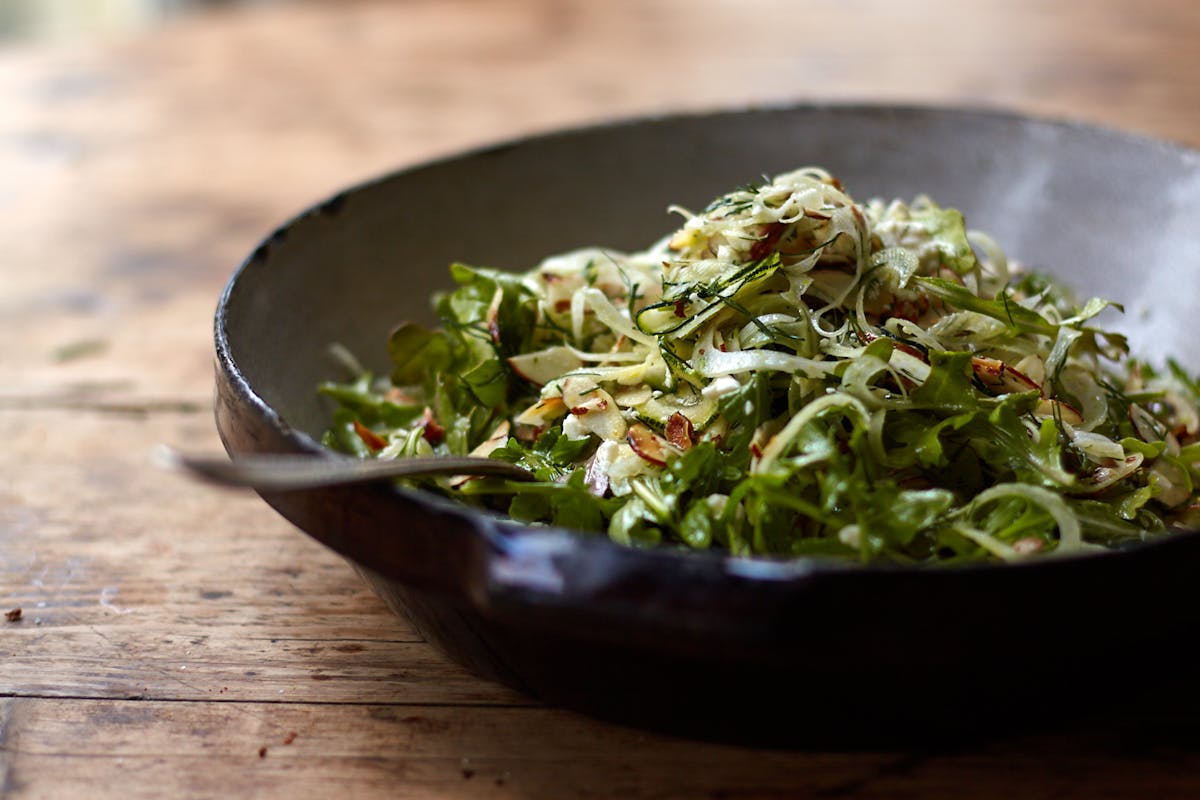 Photo by Heidi Swanson
Shaved Fennel Salad
From 101 Cookbooks
This fennel salad is from a cookbook titled Super Natural Everyday and made available online at 101 Cookbooks by the author, Heidi Swanson, and it was also in a late June newsletter from last year. It features fennel and zucchini, two of the vegetables we have in this week’s boxes, and is served over arugula, but you can certainly sub the Red Bibb lettuce instead.
.
.
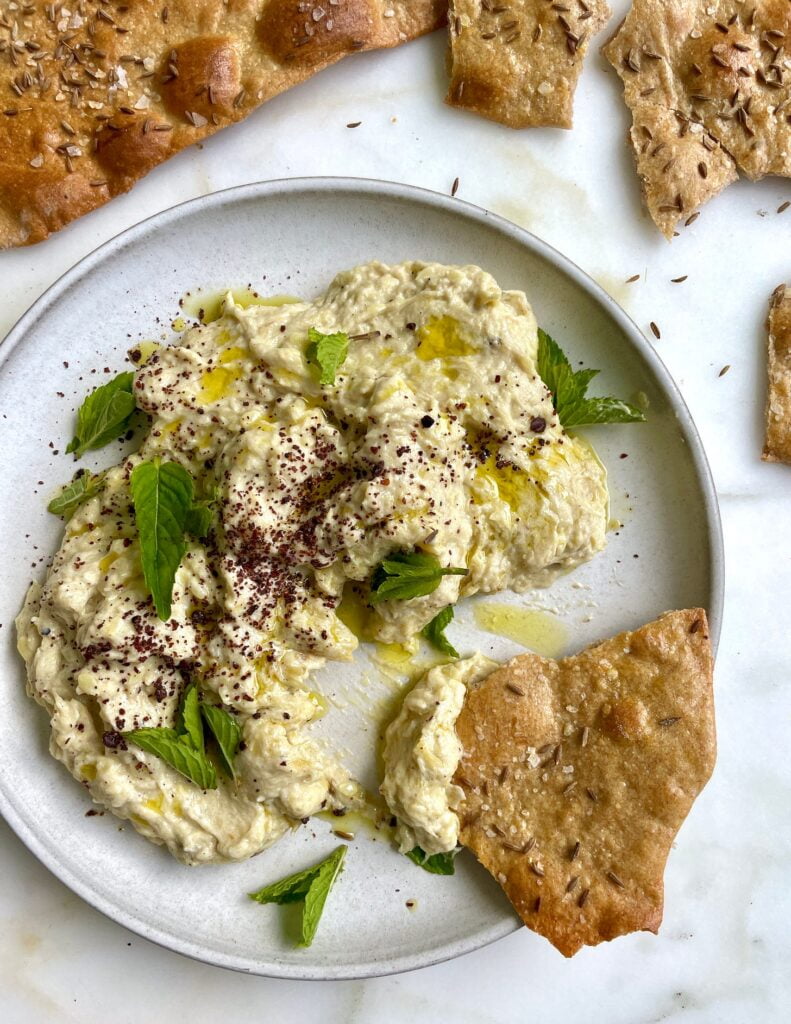
Photo by Susanality
Zucchini Baba Ganoush
By Susan Spungen, From Susanality
This recipe uses zucchini in place of eggplant to make Baba Ganoush, an idea that’s new to me, but looks like a great way to use up an abundance of zucchini. The recipe provides suggestions for charring the zucchini using a gas grill, your oven’s broiler, or charcoal, especially if you’re grilling something else.
.
.
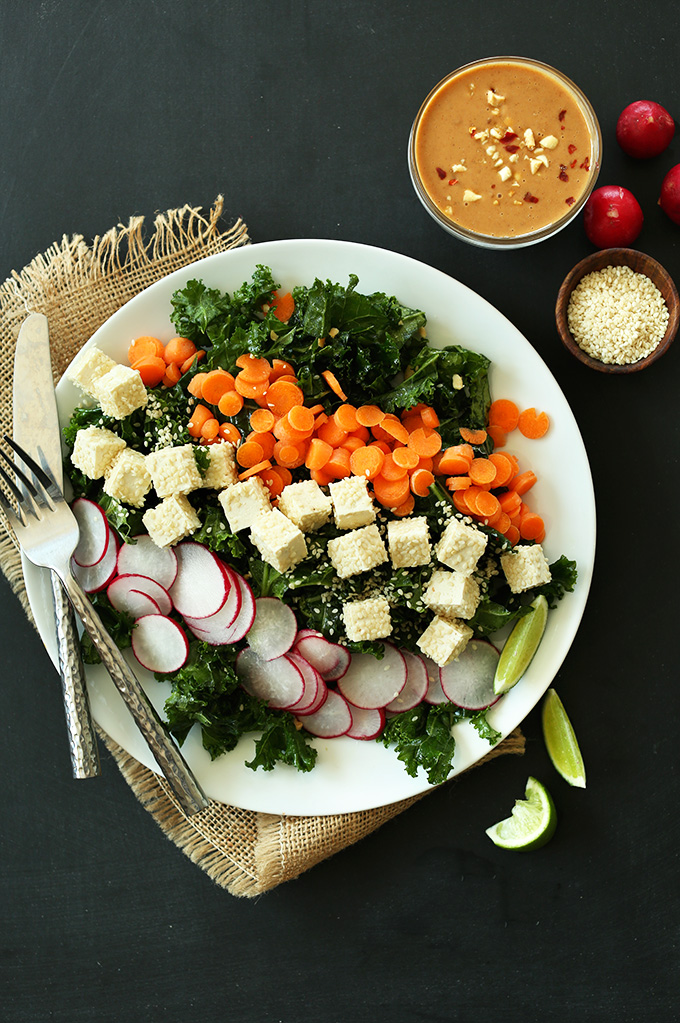
Photo credit: Minimalist Baker
Thai Kale Salad
From Minimalist Baker
Lacinto kale is great in salads since it’s usually more tender than other varieties, and this recipe gives it a nice twist with a Thai style peanut dressing. The salad is topped with raw tofu that’s been tossed in sesame seeds, and provides instructions for roasting the tofu if you prefer your tofu cooked. Thinly sliced salad turnips would be a good substitution for the carrots and radishes in the salad. And if you’d rather prepare the kale as a Caesar salad, the tahini Caesar salad dressing in last week’s newsletter would work great on kale.
.
.
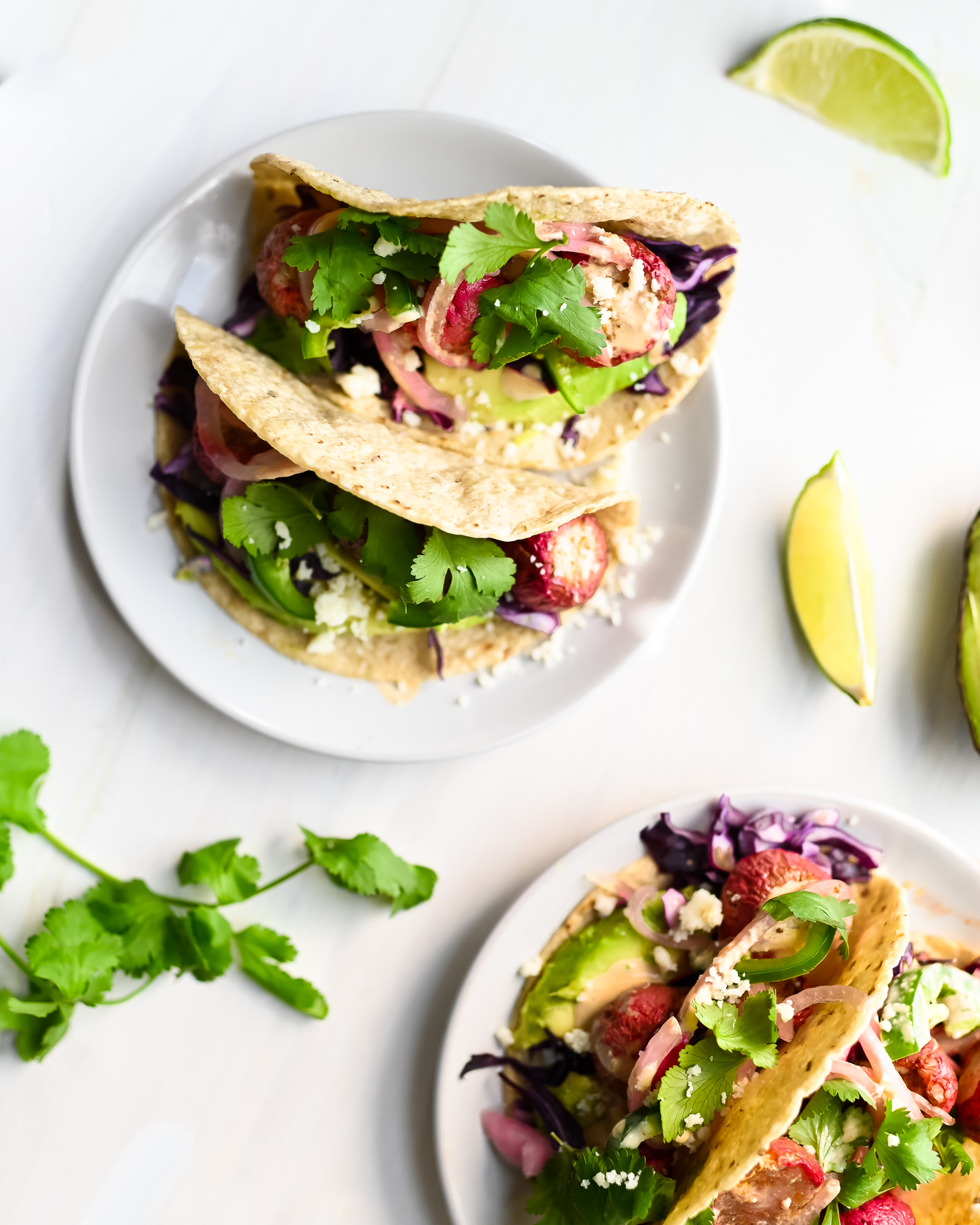
Photo credit: The New New England
Roasted Radish Tacos with Spicy Lime Sauce
From The New New England
OK, you might be wondering why a recipe for radish tacos is included this week, and it’s because the basic principle of the recipe is to roast early summer vegetables and use them for taco filling, and there are a couple of ways to sub in the veggies we have in this week’s box. One method would be to roast chunked salad turnips in place of the radishes (they’re similar in water content) and proceed with the recipe. Another method would be to roast zucchini cubes in place of the radishes and shred salad turnips to top your tacos in place of the cabbage called for in the recipe. The recipe also strongly recommends a brand of corn tortillas that I have never tried – they do seem to be widely available if you’d like to give them a try.

Week #2. Weekly + BW/B. Berry U-Picks.
- On: June 13, 2024
- 0
U-Picks by reservation
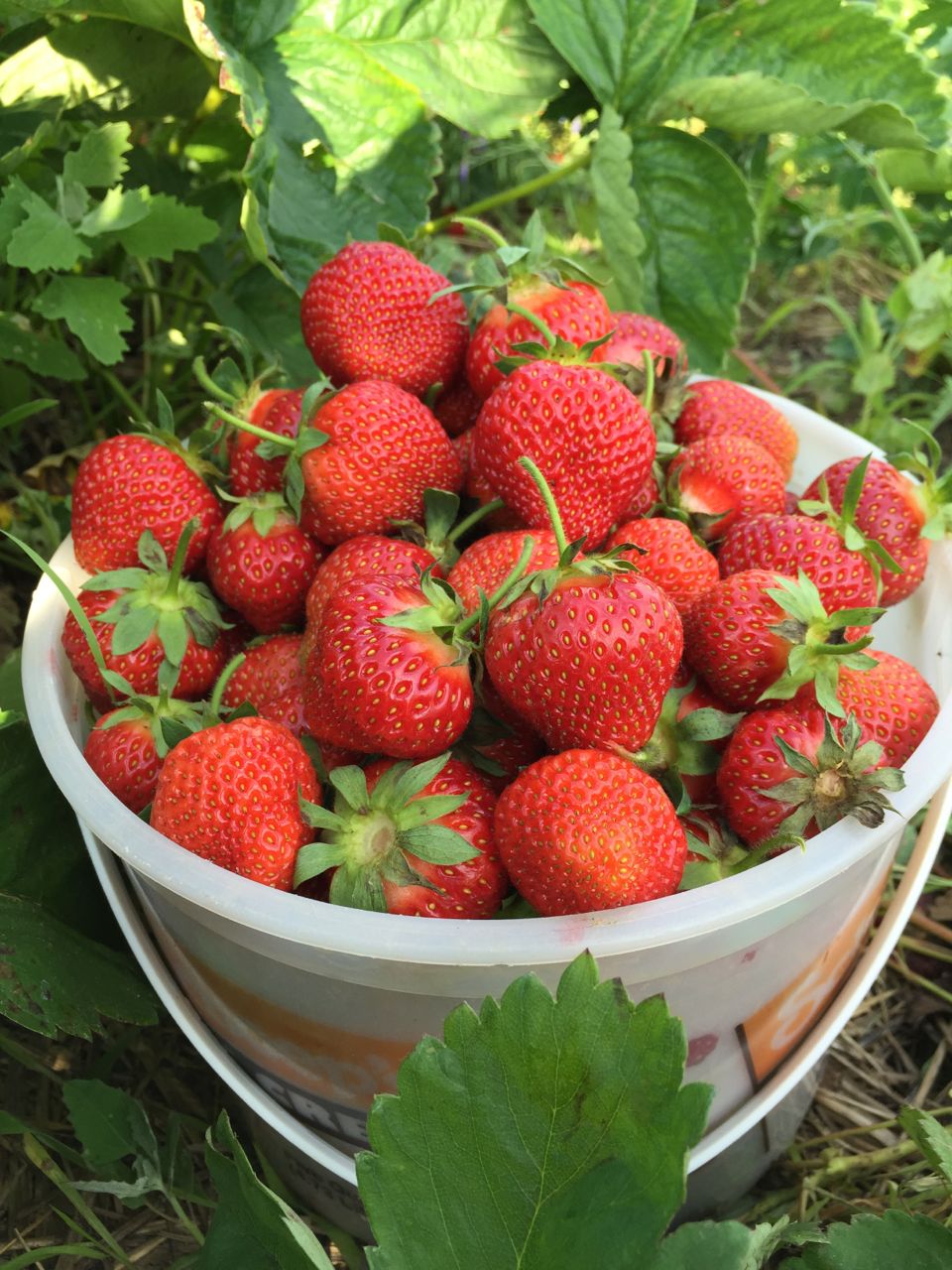
The berries are doing great! We will host several berry u-picks in the next few days. Reservations are required. Tipi members, check my email for links to reserve a picking time. Everyone else, join our email list so we can send you the reservation links.
Grit, grit, grit
This week’s produce has seen a lot of rain over the last month. The Romaine and asparagus need washing to get rid of grit. See last week’s notes about how to wash your greens efficiently.
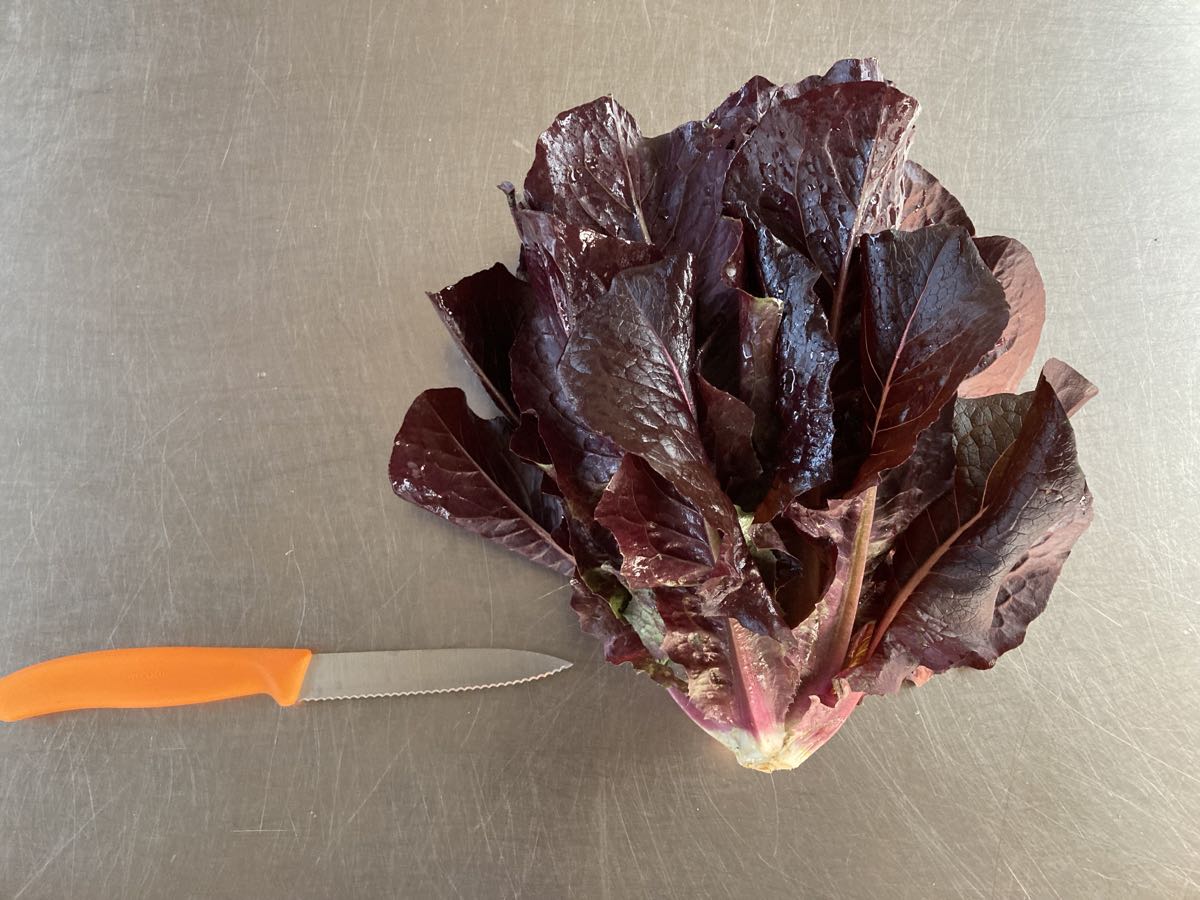
Cut your lettuce heads at one and a half inches above the base, then discard the base. In one stroke, you’ll eliminate a lot of dirt behind.
Veggie List & Veggie Notes
Week #2, June 13, 2024
– Weekly shares
– BiWeekly/ B group
Strawberries, 1 lb
Asparagus, 1.25 lb
Button mushrooms, 12 oz
Zucchini or yellow squash, 2 or 3 ct
Romaine lettuce
Spinach, 1 bunch
Mixed red & green kale, 1 bunch
White salad turnips, 1 bunch
Green garlic, 1 bunch
Next week’s box will probably contain strawberries, lettuce, white salad turnips, zucchini, cooking greens, scallions and more.
Strawberries – The berries are doing great this week, soaking up the sunshine.
Storage: Refrigerate and eat soon.
Asparagus – This is the final harvest. Enjoy!
Button mushrooms – These organic mushrooms are from Hidden Valley Mushrooms from Wisconsin Dells. We bring in mushrooms from Mary and Ed every spring because they combine so perfectly with our spring vegetables, for salads, quiches, etc.
Storage: Here are Mary’s suggestions for storing the mushrooms:
– Store separate from leafy greens, which hasten mushroom aging.
– If storing for more than a few days, remove from the box and refrigerate in a paper bag with holes punched in the side. Keep dry.
– Don’t wash to clean, just wipe with a damp cloth.
Spinach – This batch will be best cooked.
Kale – We’re sending mixed bunches of red and green leaves this time, just because they are pretty.
Storage: Cover and refrigerate.
White salad turnips (see photo) – I know that returning members look forward to these sweet and delicious turnips, which taste nothing like the turnips that are harvested in fall.
– Storage: Cover and refrigerate.
– Uses: Both the turnip roots and tops are edible. The roots are excellent raw; Slice and add to salads. They can be cooked and are especially good when lightly sauteed in butter. Stir as little as possible so they brown on at least one side. The turnips greens are excellent cooked. Treat them like mustard greens.
– Our favorite use: Slice the roots very thinly and combine with a mixture of rice vinegar, mirin, soy sauce, sesame oil. Eat immediately or marinate.
Zucchini – We have the first harvest already. This is early!
Storage: Cover and refrigerate.
RECIPES by DEB
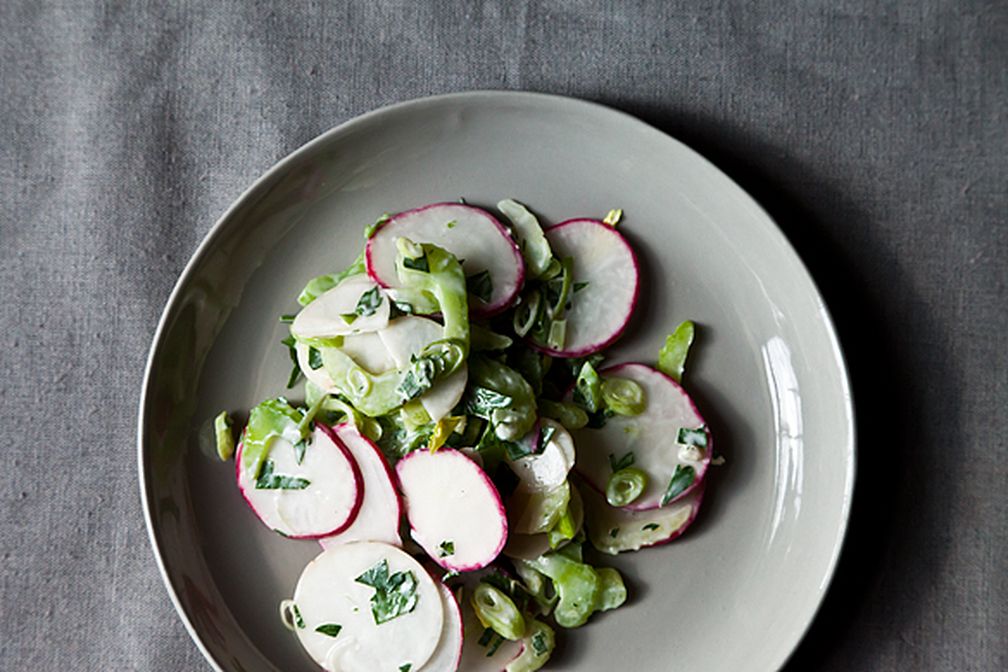
Crunchy Celery, Radish and Turnip Salad-Slaw in Blue Cheese Sauce
From Food52
If you have radishes left from last week you could add them to this salad, or simply omit – and if you do that, you might have extra blue cheese sauce, which could be a good thing, because it would be tasty on other salads!
.
.
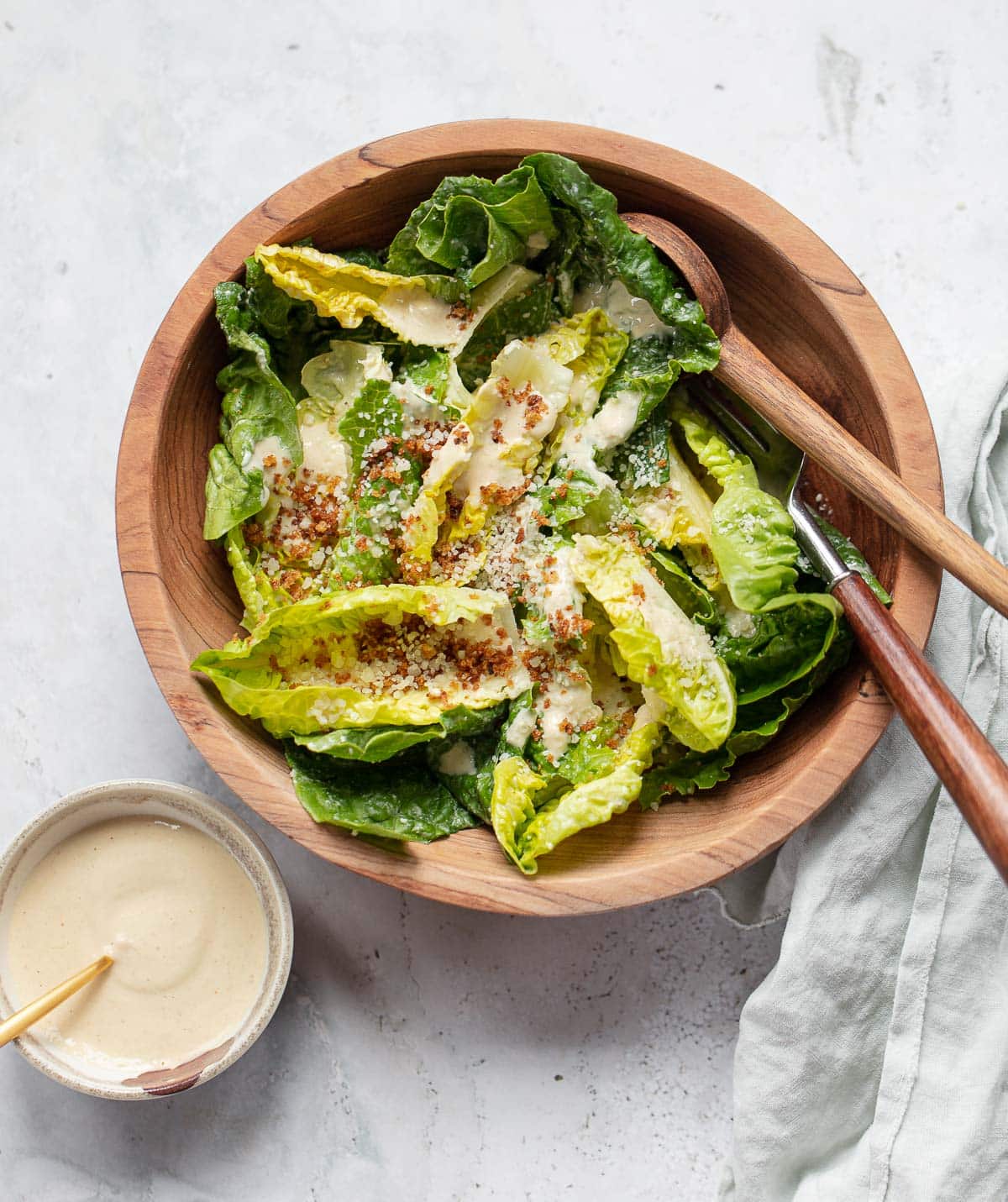
Tahini Caesar Salad with Olive Oil Breadcrumbs
From Familystyle Food
I love crunchy home made croutons in a salad, but recently I’ve been finding that toasty breadcrumbs are also a great way to top a salad, especially one with a creamy dressing like this. The recipe’s method of essentially making croutons first and then crumbling them to make the breadcrumbs sounds messy to me. Alternatively, you could make the crumbs first in a food processor – or purchase – and then brown the crumbs in the olive oil in a skillet. And throw a little garlic or green garlic in as the crumbs toast!
.
.

Bucatini with Sausage & Kale
From Taste of Home
This recipe is a version of a common combination for pasta: some kind of greens, sausage, and cheese. Some recipes also include heavy cream, unlike this one, making this version healthier! But if you are in a mood to indulge, you could add 1/4 to 1/2 cups cream when the sausage is browned. Bucatini is like fat, hollow spaghetti, so a different long noodle like spaghetti or linguini or fettuccine would work here, or you could also use a short pasta like penne.
.
.
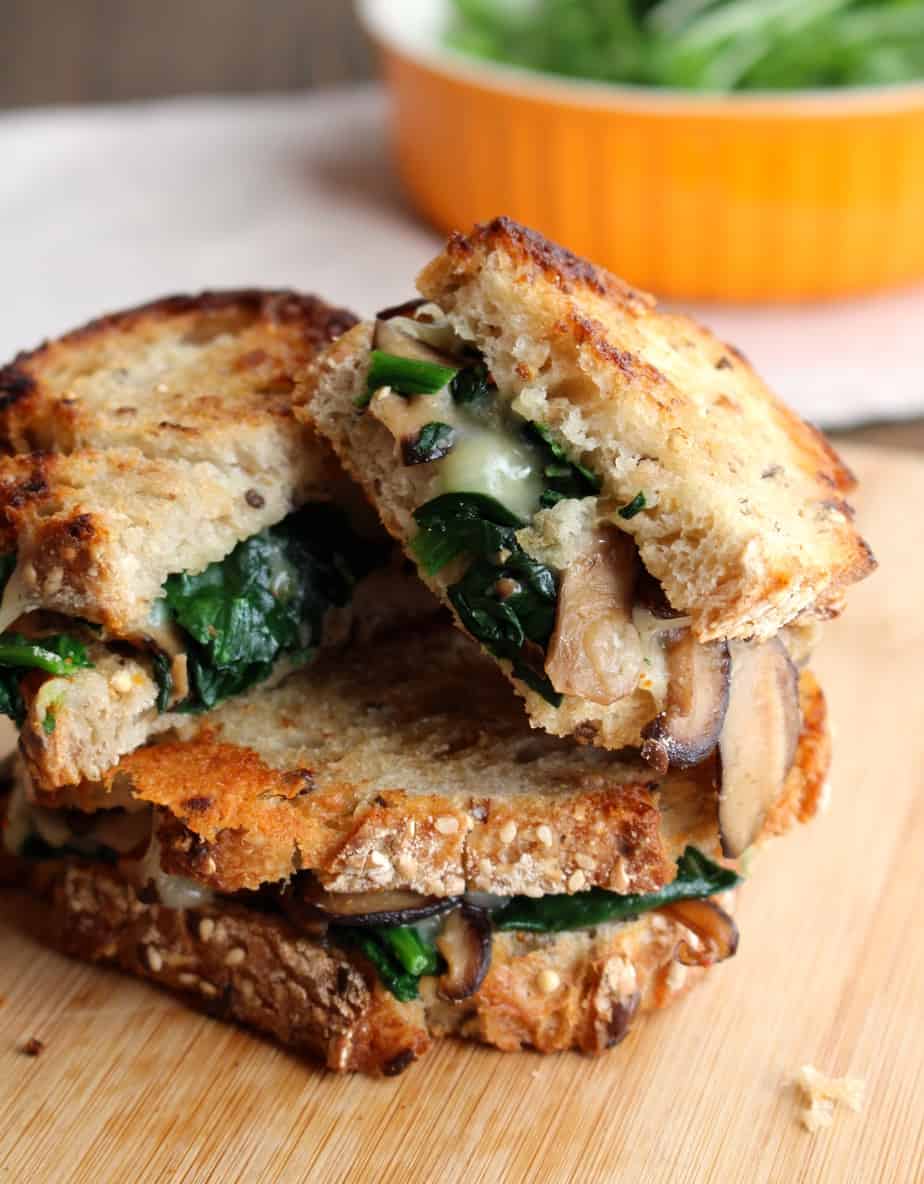
Mushroom Melt Grilled Cheese
From Frugal Nutrition
Here’s a quick and easy way to eat up the mushrooms and spinach from this week’s box, without turning on your oven. The recipe supplies a handy multiplier to help you figure amounts for up to six sandwiches.
.
.

Leafy Greens Pesto
From The Fountain Avenue Kitchen
As most CSA members most likely already know, you can make pesto with lots of other types of greens and herbs, not just basil. I’m pretty sure there’ve been recipes for kale and even broccoli pesto in prior newsletters. The nice thing about this recipe is that it provides proportions for using just about any type of greens, and there’s also a dairy-free variation.
.
.

Photo by Robby Lozano
Easy Upside Down Sheet-Pan Asparagus Tart
From Serious Eats
If you’re on Instagram, you’ve probably seen Dominic Franks’ upside down puff pastry recipes, as well as others. The topping/filling ingredients are laid on a pan, then covered with a sheet of puff pastry. This helps the toppings cook, for example in this recipe where there’s no need to precook the asparagus, and also helps the puff pastry rise and brown, then the dish is flipped for serving.
Week #1. The June Share begins.
- On: June 05, 2024
- 0
Hello everyone!
We are back, with an action-packed box. There are unexpected strawberries in this box, the result of a mild winter and early spring. These members receive a box on June 6 (unless they rescheduled):
– Weekly Shares
– BiWeekly/ A group.
If you don’t remember your share type, log in online and look at your scheduled dates under Orders.
Strawberry u-picks.
Keep your fingers crossed – it looks like a good strawberry year. We doubled our berry field and expect to have lots of u-pick opportunities. Reservations required, as usual. I will offer reservation links to these groups, in this order below. There will probably be just a few hours separating the groups, so watch your emails.
1. 2024 Tipi CSA members – You folks get the first chance to reserve a picking time. Watch for emails with instructions to place a reservation.
2. 2022 and 2023 Tipi CSA members and our u-pick email list – This is the second group to receive offers to reserve a picking time. Watch for emails from me.
3. When there are still open reservation slots, I’ll offer them on our U-Pick berry page and on Facebook.
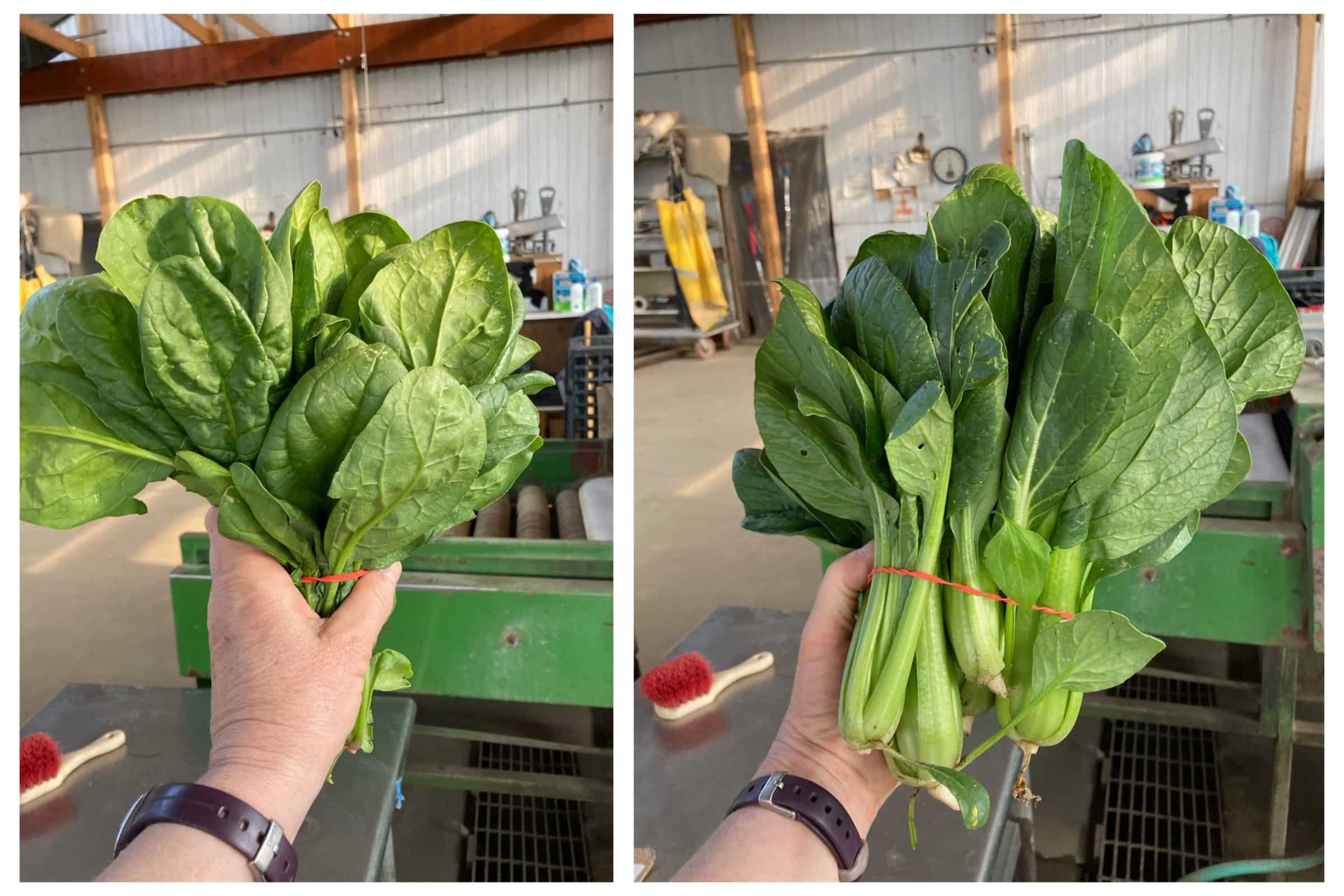
Spinach (left) and komatsuna greens (right). Both are bundled with a rubber band but you can tell them apart by the stems. The komatsuna stems are thicker and resemble bok choy stems, which they are related to.
There will be grit in your produce this week, a side effect of recent rain. We appreciate the rain, but those were intense downpours!
Thoughts:
– Cut your lettuce one and a half inches above the base and you’ll leave a lot of dirt behind.
– Expect to spend extra time cleaning this week’s greens. Let’s talk about how to do that efficiently.
Cut your lettuce heads at one and a half inches above the base and you’ll leave a lot of dirt behind.
How to wash greens efficiently and to maximize storage life
Washing and drying your lettuce, spinach, and other greens prolongs their storage life. And they will be ready to use on busy weeknights! Here’s our approach. It works.
1. Fill your sink or a basin halfway with cold tap water. If you have two sinks, fill one sink partway with cold water.
2. Chop your lettuce, spinach, escarole or other green to the size you wish.
3. Dump it into the water and swish around gently but thoroughly.
4. Working in two batches (for average lettuce head) or more batches (big spinach bunches, Romaine), pull handfuls out of the water and drain in the basket of a salad spinner.
5. After all the greens have been rinsed one time, dump the water. Rinse the sink/basin and refill with cold tap water.
6. Repeat the process.
7. Spin your greens dry and store in a dry container. They store much longer when spun dry.
This works because …
– pre-chopping the greens frees soil trapped in the head.
– the large amount of water washes and dilutes away the grit.
– By pulling the greens out of the water, you take advantage of the draining action to pull the grit with it.
– Drying (spinning) the greens before storage reduces spoilage.
Veggie List & Veggie Notes
Week #1, June 6, 2024
– Weekly shares
– BiWeekly/ A group
Strawberries, 1 pint
Asparagus, 1 lb
Shiitake mushrooms, 8 oz
Red leaf lettuce
Spinach, 1 bunch
Komatsuna greens, 1 bunch
Salad radishes, 1 bunch
Cilantro, 1 bunch
Green garlic, 1 bunch
Rhubarb, ~1.5 lb
Next week’s box will probably contain strawberries, mushrooms, spinach, lettuce, green garlic, tender cooking greens and more.
Strawberries – Eat soon. This week’s berries look a little rough but are tasty. They survived many recent storms. We are lucky to get those storms out of the way early in the berry season. We have good weather ahead and the younger berries will be in good shape for the u-picks.
Storage: Refrigerate.
Asparagus – This is my favorite spring treat!
Prep: Wash your asparagus thoroughly to remove hidden grit. Submerge in water with the tips pointing down, soak briefly, then swish vigorously and pull out of the water. The draining action helps pull the grit out of the asparagus tips. Repeat several times.
Storage: Asparagus is perishable, so eat it as soon as possible. Store in a paper towel, cloth or paper bag, then wrap loosely in a plastic bag. The paper bag protects the asparagus tips from direct contact with the plastic bag. The plastic bag keeps the asparagus from wilting.
Preparation: We snap our asparagus at harvest, rather than cutting. Therefore, there is no need to snap the stalks to remove fibrous ends. For the same reason, it is not necessary to peel the asparagus stalks. It’s OK to trim the cut end a bit.
Cooking: If your asparagus stalks vary greatly in size, you will want to cook the thicker ones longer. Put an empty steamer pot over water, and bring the water to a boil. Add the asparagus. Cover and steam over medium heat until just tender. Use two forks or a spatula to turn the asparagus during cooking, rotating the bottom spears to the top. Drain and serve. Alternatively, you can lay spears flat in the bottom of a broad pan, with ½ inch of water. Also excellent broiled or grilled. Good dressed with vinaigrette, or with lime juice, salt and pepper.
Shiitake mushrooms – These are from Hidden Valley Mushrooms, the same people who grow button mushrooms for us. I love shiitakes cooked with spinach or other greens. Shiitakes must be cooked. A small subset of people can have a toxic reaction to raw or undercooked shiitakes. Once cooked, they are harmless. And tasty! Lightly sauté in butter and add to any dish. We use ours in frittatas, as well as sautéed and mixed into pasta salad or any dish. Sautéed shiitakes and spinach are a great topping for pizza or rice bowls, e.g. bibimbap.
Storage, general: Refrigerate in a dry paper bag, but not in your crisper drawer with other vegetables, especially brassicas. It’s OK to put a loose plastic bag over the paper bag but don’t close. Mushrooms are perishable so use soon.
Lettuce – The lettuce very tender so handle gently.
Storage: Refrigerate in a bag or other container.
Spinach – This spinach is OK for salads but probably better cooked.
Storage: Refrigerate in a bag or other container.
Komatsuna greens (bundle of dark green leafy heads. See photo) – This is our favorite spring cooking green. They are similar to mustard greens but with great flavor and are more mild than mustard greens. We’ve enjoyed learning to grow them over the past few seasons.
Preparation: Use in any recipe that calls for mustard greens or bok choy. Use both leaves and stems.
Storage: Cover and refrigerate.
Salad radishes – These are so good right now; tender, crisp and not too spicy. They are great in salads or thinly sliced on sandwiches. A few years ago, I was served open-faced radish and butter sandwiches on toast and was impressed with how tasty they were. Use good quality butter.
Storage: Cover and refrigerate.
Cilantro (small bunch, fragrant leaves) – Used in both Mexican and some Asian cuisines. Good to season stir-fries, salad dressing, salsa, etc.
Storage: Cover and refrigerate.
Green garlic (looks like scallions, tastes like garlic) – Last fall, we planted garlic cloves that grew into the stalks we harvested this week. If left to grow until mid-summer, the slim white bulb on this week’s garlic will divide and form the usual cluster of cloves in a garlic bulb.
Preparation: Green garlic is more pungent than scallions, so slice thinly and use sparingly when raw. It mellows when cooked. Chop and add to any cooked dish that would benefit from garlic. Use the white bulbs and pale green stems. Avoid the dark green stems and leaves, as these are fibrous.
Rhubarb – Storage: Refrigerate in a plastic bag. FYI, 1.75 lb of rhubarb yields 5 – 5.5 cups when chopped.
Stewed rhubarb: This is the simplest way to prepare rhubarb. Chop rhubarb into one inch chunks. Stir over medium heat with a small amount of water in the bottom of the pan. The rhubarb will release moisture as it cooks. Stew until it softens and falls apart. Sweeten to taste with honey or sugar. Eat warm on its own, over vanilla ice cream, on pancakes, etc.
Storage: Refrigerate.
Preserve: Rhubarb is extremely easy to freeze. Wash, chop and pop it in a freezer bag. That’s it; no need for blanching. When baking muffins or cakes, add the frozen rhubarb directly to the batter.
RECIPES by DEB

Spanakopita Spirals with Flaky Phyllo Dough
From Well Seasoned Studio
Rolling the phyllo and filling into cigars and then spiraling them is a fun alternative to the more traditional layered spinach cheese pie. You can bake the rolls in a heat-proof skillet as shown here, or I recommend a 9 x 13 metal pan, lined with parchment. If there’s not quite enough spinach in the box, sub in a few leaves of the Komatsuna. And a little green garlic to season in place of the fresh oregano would also be nice.
.
.

Radish Salsa
From The Live-In Kitchen
Here’s a quick, fresh salsa using the radishes and cilantro in this week’s box. You can sub some green garlic for the clove of garlic called for, and if you don’t have a fresh jalapeño, try using jarred pickled jalapeños or canned chipotle chile to add some heat to your salsa.
The following two rhubarb recipes, one savory and one sweet, each only use a small amount of rhubarb – so you can easily make both with what’s in the box!
.
.

Rhubarb Dressing (part of Rhubarb Salad with Little Gems, Hazelnuts & Parmesan recipe)
From Justine Snacks
The rhubarb dressing pictured is one component of Justine Doiron’s salad, but possibly the most versatile. Doiron’s full salad recipe calls for hazelnuts, Parmesan cheese, little gem lettuce, and strawberries. I used the blender method to make the dressing and poured it over a salad of leaf lettuce, Parmesan, and a few almonds, and I’m sure it was just as tasty.
.
.
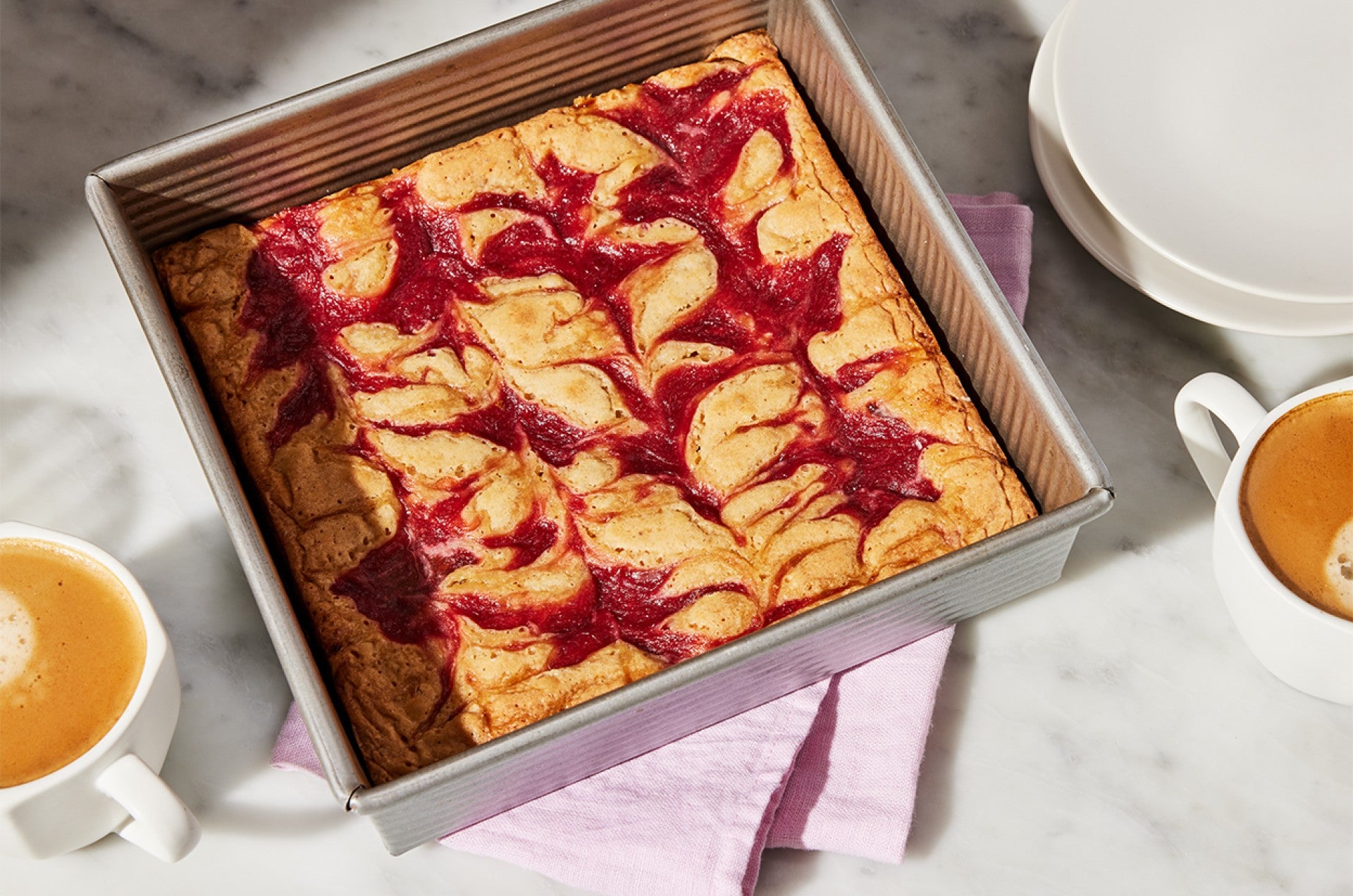
Swirled Rhubarb Bars Recipe
From King Arthur Baking
These bars are like a butterscotch brownie with tart rhubarb jam swirled in – that is, delicious. The recipe says to melt the butter in the same pot you made the rhubarb jam in, but I don’t think doing this imparts an additional essence of rhubarb into the bars, and you still end up with the same number of pots to wash!
.
.
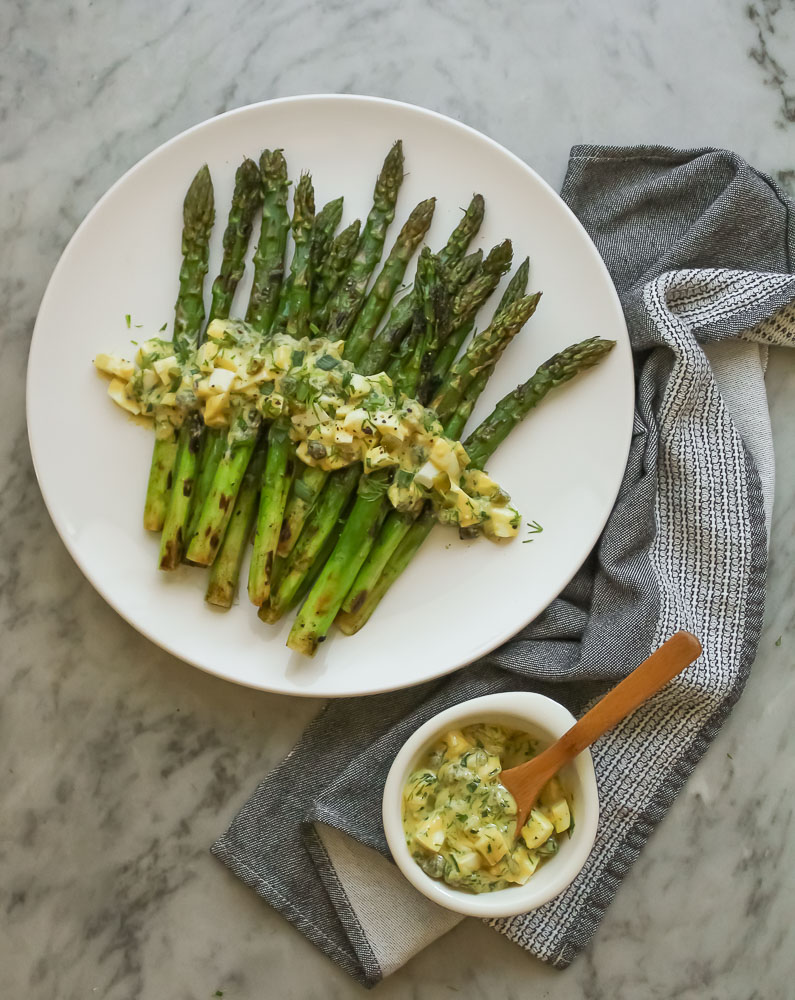
Asparagus with Sauce Gribiche
From Girl on the Range
Sauce gribiche is a traditional French sauce that compliments asparagus and just about any other green vegetable. The recipe provides instructions for grilling the asparagus but you could also roast it in the oven or even steam it before adding the sauce.
.
.
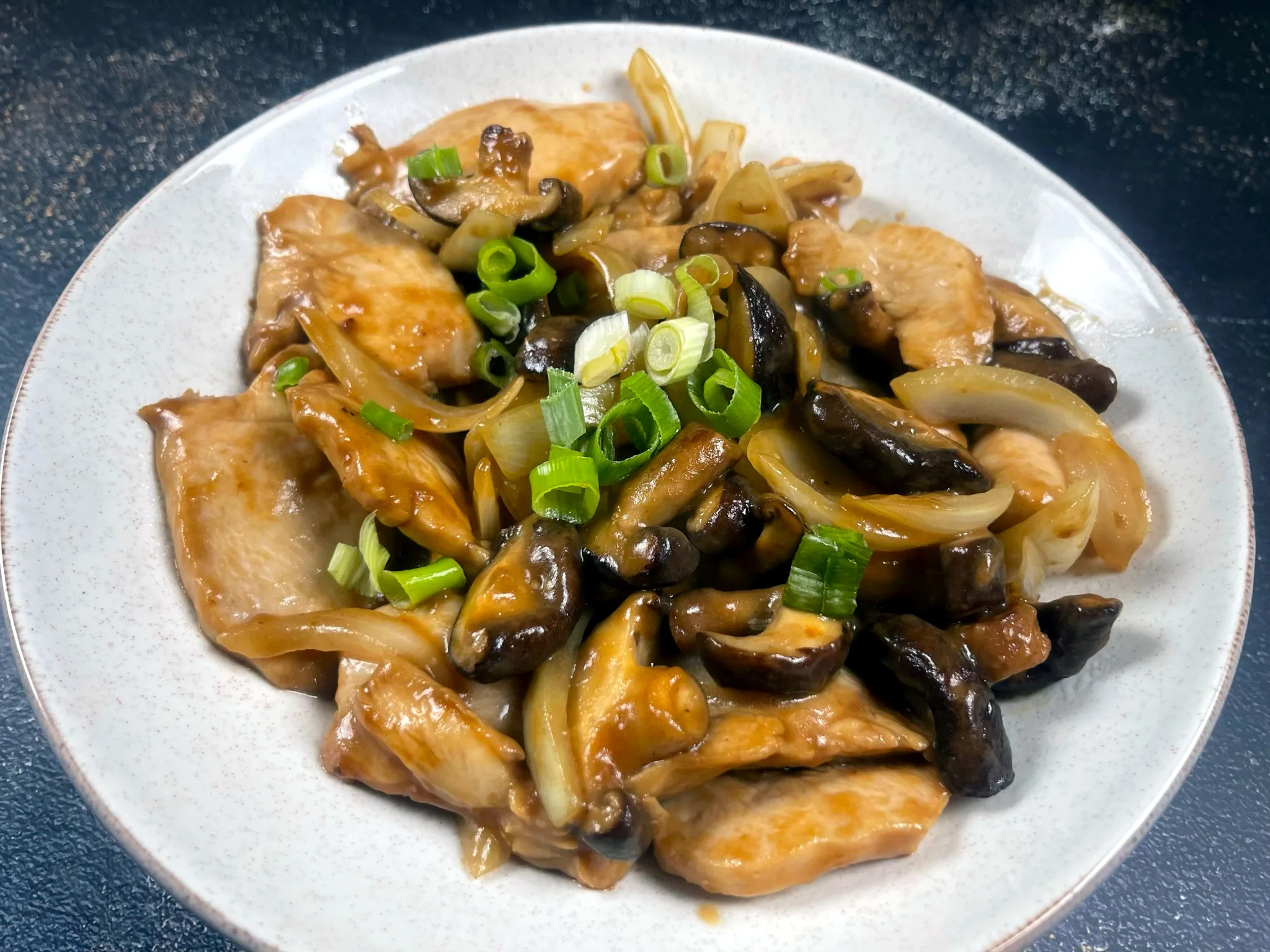
Chicken Shiitake Mushrooms Stir Fry
From Oh Snap! Let’s Eat!
This quick chicken and mushroom stir fry can be made with boneless chicken breast or thighs, or you could omit the meat and use tofu.
.
.
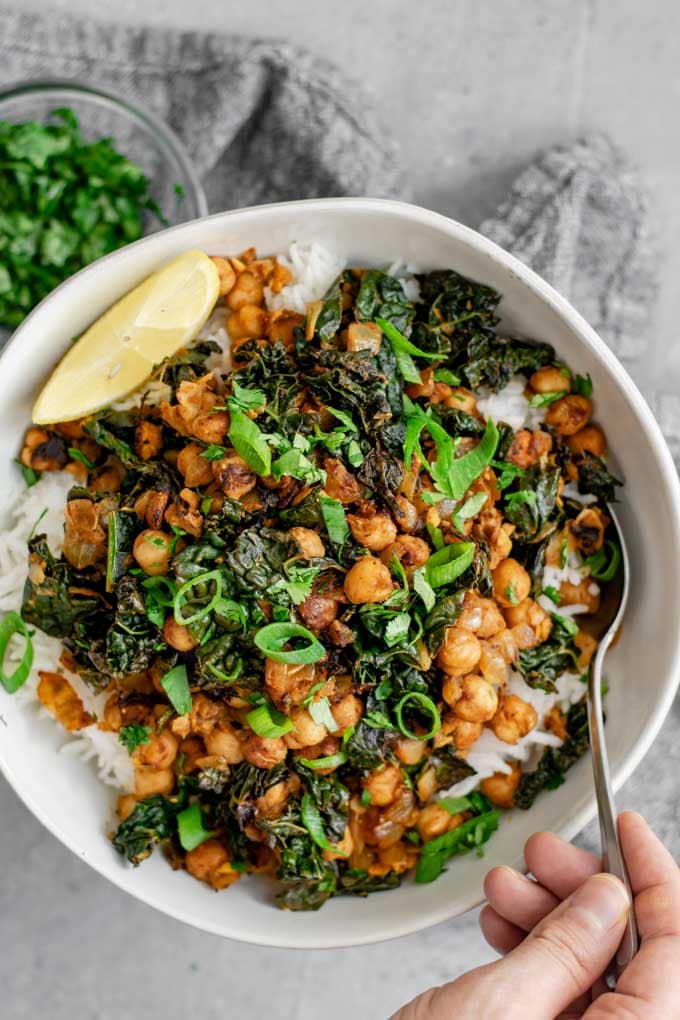
Indian Spiced Chickpeas and Greens
From The Curious Chickpea
This vegan curry can be made with any greens including the Komatsuna in the box, and you could add some of the spinach as well. The recipe allows you to adjust the heat level to your taste, too.
Storage Share, 2023
- On: November 15, 2023
- 0
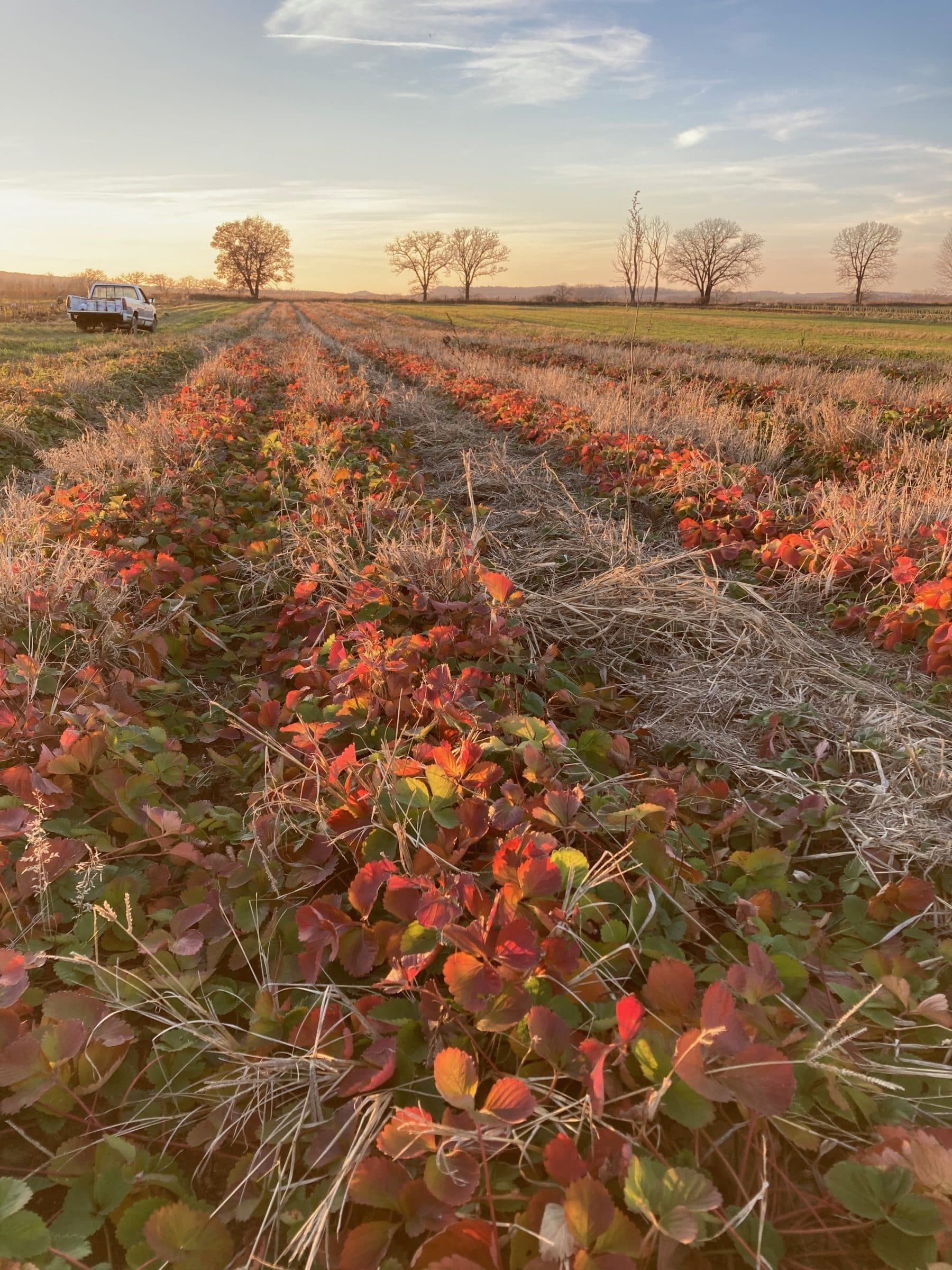
Even the strawberry plants are showing fall colors.
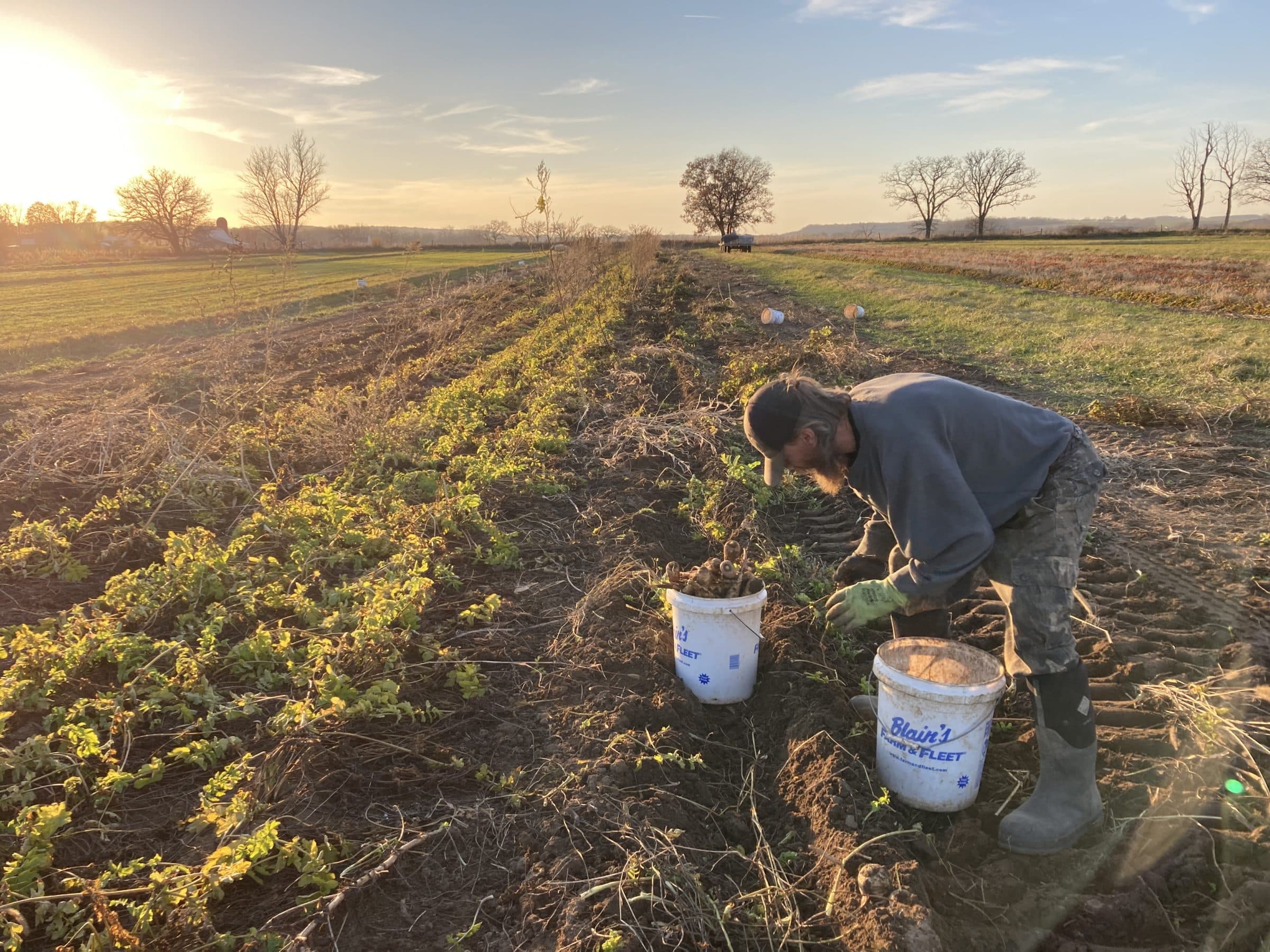
We are using the mild weather to bring in fall bumper crops. Here, Ken picks up stray parsnips. The harvester picks up most roots but some are skipped. The parsnips go into cold storage. We’ll wash and ship to food coops through the winter, plus carrots, cabbage, radishes, celeriac, turnips, etc etc.
Storage Share this week
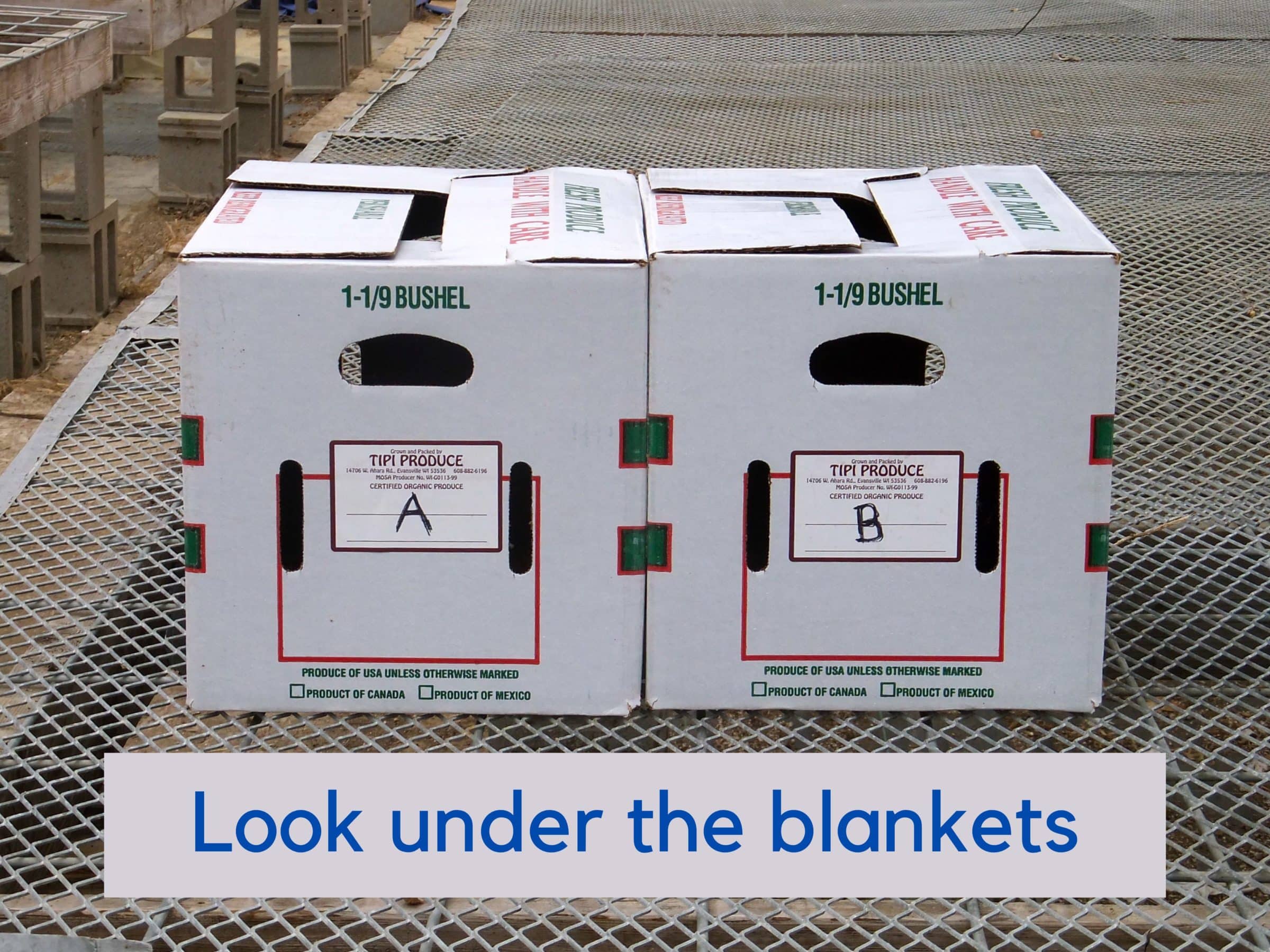
Your produce is in one box labelled “A” and one box labelled “B”. Bring lots of bags and containers.
Things you need to know about your winter share
* Your delivery will consist of two different boxes, labeled “A” and “B”. Take produce from one “A” box and one “B” box. The boxes contain different vegetables. The stacks may be covered with blankets. Look around.
* Please pick up your boxes on the day of delivery, during the normal hours for your site.
* Bring extra bags or containers this time. Leave the Tipi boxes at your site, take the produce home in your own bags/containers.
* If you send someone to pick up your produce, make sure they know what to do.
Strategy
We hope you enjoy this shipment of veggies. Strategize to use them well, as some will last longer than others.
* These are the most perishable vegetables: Fennel, Romanesco.
* These are the next-most perishable: Brussels sprouts, leeks.
* Onions are next in line. We sent you our best long-storing onions but you should still store them cool if possible (but don’t let freeze). If you don’t have room in your fridge, find a cool spot in your house.
*Keep an eye on your butternut, potatoes and sweet potatoes. These last well but the last two are susceptible to drying out. Expect the largest butternuts to last the longest.
* These will last the longest: beets, cabbage, carrots, celeriac, daikon, garlic, parsnips and shallots.
Veggie List
Storage Share, Nov. 16/17, 2023 (Th/Fri sites)
Box “A”
Everything in this box can be stored cool or at room temperature. See notes below for more detail.
Garlic, 3 – 4 bulbs, some bulbs might be split in half
Shallots, 1 or 2
(Garlic and shallots are in same bag.)
‘Autumn Frost’ winter squash
Butternut squash, several
(Combined, squash are ~10 lb total)
Sweet potatoes, ~10 lb
Onions, red & yellow, 5 lb total
Russet potatoes, 5 lb
Yellow potatoes, 5 lb
Box “B”
Refrigerate everything in this box.
Beets, 3 lb, mixed red and golden
Brussels sprouts, 1.5 lb
Cabbage, 1 head
Carrots, 6 lb mixed orange, red, yellow & purple
Celeriac, 1
Daikon radishes, white & purple & red
Fennel, 1 bulb
Leeks, ~2 lb
Parsnips, 2 lb
Romanesco cauliflower, 1 head
Beets – Your bag will have mostly red beets, with a few golden beets mixed in. Refrigerate in a bag or container. Beets will store for two months or longer.
Brussels sprouts – Eat within 2 to 3 weeks.
Cabbage – Refrigerate. You can cut off sections as needed.
Carrots – Refrigerate in a plastic bag. Will keep for weeks.
Celeriac – Will store for months in your fridge. Cut off chunks as needed. Peel before using. I find it easiest to cut the celeriac into flat slices, then peel.
Daikon radishes (white, purple, red) – Cover and refrigerate. They are susceptible to drying out in your fridge so put them in a container or bag. If the skins look dry, a quick peel freshens them up.
Fennel – Cover and refrigerate.
Leeks. Refrigerate. In general, leeks are not a long-storage crop. You may need to strip off one or two outer leaves to freshen the leeks before you cook them.
Garlic – Store at room temperature. We’re sending a mix of large and small bulbs, German Extra Hardy (white wrapper leaves, large cloves) and Korean Red (purple wrapper leaves, smaller cloves). Some bulbs might be in halves, leftover from when we cracked nice bulbs for planting.
Onions: Refrigerate or store in a cool, dark spot and protect from light. Exposure to light stimulates sprouting.
Parsnips (These look like large white carrots.) – Refrigerate in a plastic bag. Parsnips will store for several months but will darken in color. That is a harmless change.
Potatoes – Can be stored at room temperature or in a cool spot, but must be kept in the dark so they do not turn green. A cloth or loose plastic bag draped over the paper bag will slow moisture loss, but do not close the plastic bag. Potatoes store longer if kept cool. Around 40 – 50 F is ideal. These organic potatoes were grown by the Igl family near Antigo.
Russets – We got the big ‘baking’ grade so you have nice bakers for Thanksgiving. Excellent for baked or mashed potatoes.
Yellows – These are good all-purpose potatoes.
Romanesco cauliflower – Refrigerate. These should store for two weeks.
Shallot (look like a small red onion) – Good for salad dressing or to caramelize.
Sweet potatoes – We’re sending a mix of two indistinguishable varieties, Beauregard and Orleans. Both have excellent flavor and sweetness. Store at room temperature, no lower than 55 F, but 60+ F is better. Keep them on your kitchen counter where it’s easy to keep an eye on them. I like to keep ours in a paper bag so they don’t dehydrate. Cook promptly if they start to soften. The roots come in a wide ranges of sizes and all are good.
WINTER SQUASH – Store all winter squash cool and dry. 60 F is ideal. Do not put in a plastic bag. Check your squash regularly and eat promptly if flaws develop.
Autumn Frost (frosted pumpkin) – This beautiful frosted squash has both pumpkin and butternut squash breeding. It cooks and tastes like an unusually good butternut, with rich, smooth texture. The skin is edible.
Butternut winter squash (tan, oblong) – All are our favorite ‘Metro’ variety. If your butternuts show signs of drying or wrinkling, use them promptly. They will still taste great, but it’s a sign that they are nearing the end of their storage life. Remember, you can cook, mash and freeze the squash for future use. I find that you can refrigerate cut raw squash for up to one week. This runs counter to the accepted way to store squash, but is useful if you want to cook just half a squash. Some of them are big!
Safety tip: Microwave your squash for one to two minutes before cutting or peeling. This softens the squash and makes a squash easier and safer to cut.
Thanksgiving Menus
Right now, websites are loaded with great recipes suited to your Storage Share vegetables. Peruse and bookmark soon. The Thanksgiving collections are taken down quickly after the holiday but individual recipes are not. This is a good chance to gather recipes to try this winter.
Smitten Kitchen
You could begin and end your Thanksgiving planning with Deb Perelman. She’s an amazing cook who publishes workable recipes. She has an extensive list of Thanksgiving dishes collected over the years. I really trust her recipes.
Food52.com
Check out their Automatic Holiday Menu Maker. They have collected soooo many vegetable and salad recipes, especially under the Soups & Salads and the Vegetables sections but also Hors D’Oeuvres and Main Attractions. I am relieved to see that they stripped out the ads this year. This section was overrun last year and disappointing.
Love & Lemons
They have a beautiful collection of “50 Thanksgiving Side Dishes”.
Squash & Sweets Share
- On: November 02, 2023
- 0

Golden asparagus ferns at dusk.
Squash & Sweets Share
– November 2 / 3, 2023 (Thurs/Friday sites)
– These pre-ordered boxes will be available during the usual hours for each CSA sites.
– If you chose a new site for this week, please make sure you have updated site info from me. If you don’t have that info, just ask me.
Veggie List & Veggie Notes
Sweet potatoes, about 10 lbs
Winter squash, about 16 lbs.
The sweet potatoes are washed but the winter squash is only brushed and has some soil. Thanks for washing your squash this year!
Sweet potatoes (about 10 lb) – These are either Beauregard or Orleans variety, which are virtually indistinguishable.
Storage: Store covered at room temperature. 60 F is ideal. I store mine in a paper bag or cardboard box to slow moisture loss a bit. Sunlight does not harm them.
Winter squash (about 16 lb total) – We packed two Autumn Frost and the balance is butternuts.
Storage: All should be stored uncovered at room temperature. 60 F is ideal. Your kitchen counter or shelves are perfect. Keep an eye on the squash. If you see a flaw developing, cook that squash first.
Safety tip: Microwave your squash for one to two minutes before cutting or peeling. This softens the squash and makes it easier and safer to cut.
‘Autumn Frost’ squash – This beautiful frosted squash has both pumpkin and butternut squash breeding. They cook and taste like an unusually good butternut, with rich, smooth texture. This is a fairly new variety. The breeders really knocked it out of the park with this one. The skin is edible.
Butternut squash – The workhorse of squash! We are sending the flavorful ‘Metro’ variety, good for roasting or soups or casseroles or baked goods.